Adding a Bigger Eye to the Asteroid Hunt
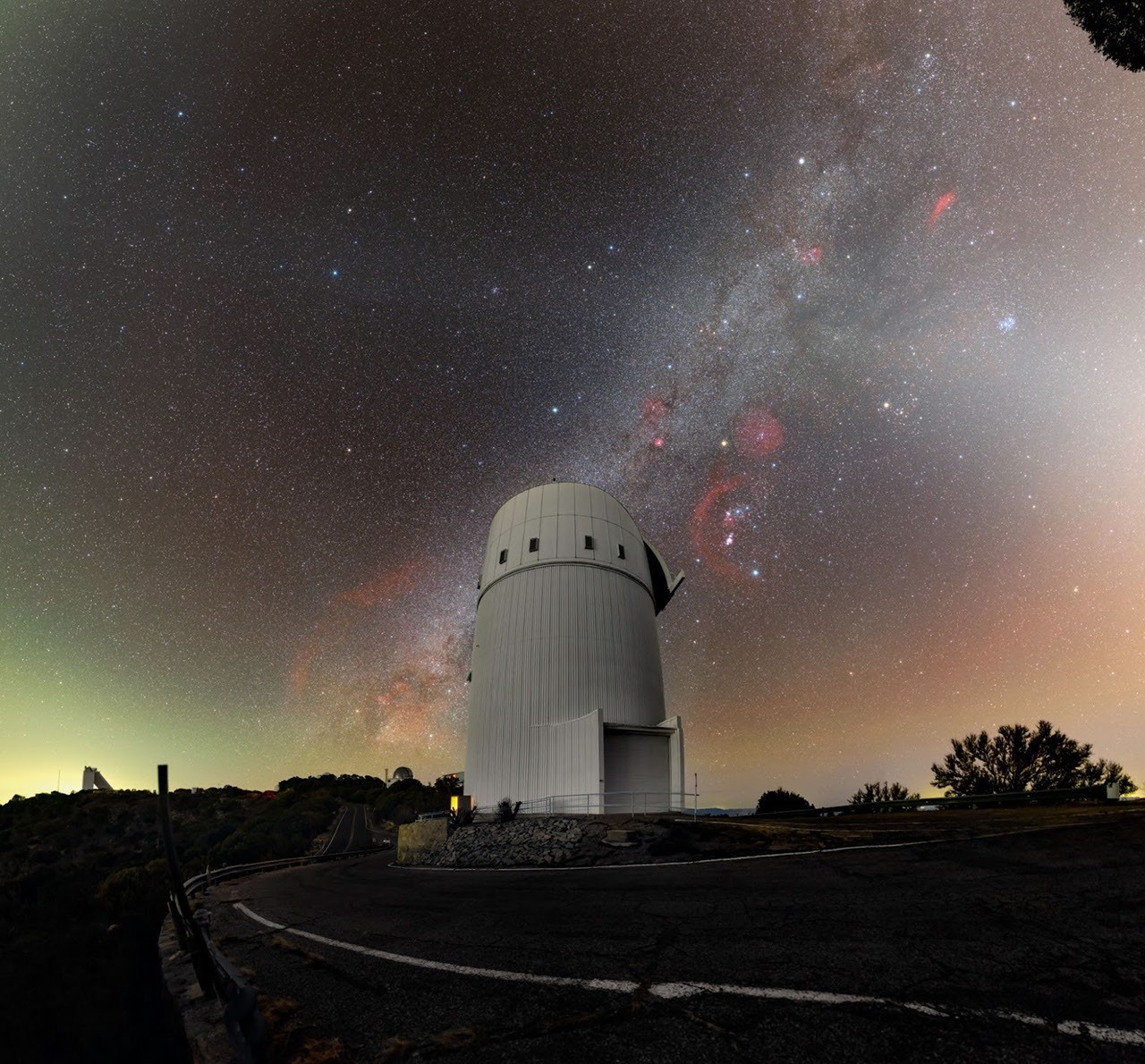
The search for near-Earth asteroids — rocks whose orbits cross Earth's path and could potentially pose an impact threat — has a new tool. The Daily Minor Planet, a NASA citizen science project that asks volunteers to help identify asteroid candidates in nightly telescope data, has expanded to include observations from the Bok 2.3-meter telescope at Kitt Peak National Observatory in Arizona.
The Bok telescope is a significant upgrade from the project's original data source, the Catalina Sky Survey's Mt. Lemmon telescope. Where Mt. Lemmon probes the sky to a certain sensitivity, the Bok can detect objects approximately two to three times fainter — meaning it can find asteroids that are smaller, more distant, or darker than those visible to Mt. Lemmon. In the asteroid search context, more sensitive observations translate directly into earlier detection of potential threats.
Why Citizen Science for Asteroid Detection?
The task of identifying new asteroids in telescope data sounds like it should be handled entirely by computers. And much of it is: automated pipelines process raw telescope data and flag potential moving objects for further examination. But automated systems struggle at the faint, ambiguous end of the detection envelope — exactly where the Bok telescope's deeper imaging operates.
Human visual pattern recognition is remarkably good at identifying faint, slow-moving objects against a background of stars and image artifacts. Volunteers in the Daily Minor Planet project look at sets of images taken on the same night and identify whether any sources appear to have moved between exposures — the telltale sign of a nearby solar system body. By aggregating observations from thousands of volunteers, the project generates the redundant confirmation that distinguishes real detections from image artifacts. This is not symbolic volunteer work — the data goes directly into real scientific databases and contributes to the discovery and recovery of actual asteroids.

The Stakes of Planetary Defense
The motivation for building a comprehensive catalog of near-Earth asteroids is planetary defense. The vast majority of near-Earth asteroids large enough to cause regional or global damage have already been identified and tracked. The remaining concern focuses on smaller objects in the 100-meter to 1-kilometer range that could cause significant local damage and that comprehensive surveys have not yet fully cataloged.
NASA's DART mission successfully deflected asteroid Dimorphos by impacting it in 2022, demonstrating that humanity has a tool for altering an asteroid's trajectory — given sufficient warning time. Finding asteroids decades before a potential impact is far preferable to finding them years or months before. The Bok telescope data, with its focus on the ecliptic where asteroids and comets preferentially travel, will substantially increase the number of near-Earth objects found and confirmed, strengthening humanity's planetary defense catalog.
This article is based on reporting by science.nasa.gov. Read the original article.
Originally published on science.nasa.gov