రెటినల్ వ్యాధి నిర్ధారణ కోసం ఏఐ సహాయకుడు ట్రయల్లో బలమైన ఫలితాలు సాధించాడు
Nature Medicineలో ప్రచురితమైన ఒక multicenter randomized trial, artificial intelligence-based clinician decision support system, సాధారణ సంరక్షణలో త్వరగా మరియు కచ్చితంగా వర్గీకరించడం కష్టమైన suspected inherited retinal diseases కోసం diagnostic performanceను గణనీయంగా మెరుగుపరిచిందని నివేదిస్తోంది.
Retina4IRD అనే ఈ system, retinal imaging ఆధారంగా specialistsకు సాధ్యమైన genotype categoriesను అంచనా వేయడంలో సహాయం చేయడానికి రూపొందించబడింది. ట్రయల్లో, ఈ toolను ఉపయోగించిన specialists, దానిని ఉపయోగించని specialistsతో పోలిస్తే top-5 genetic prediction accuracyలో గణనీయంగా మెరుగైన ఫలితాలను సాధించారు. ఈ ఫలితం ophthalmologyలో చాలా కాలంగా ఉన్న bottleneckను పరిష్కరిస్తుంది, ఎందుకంటే inherited retinal diseases తరచుగా ఖచ్చితమైన diagnosisకు ముందు intensive phenotyping, multidisciplinary interpretation, మరియు genetic testingను అవసరం చేస్తాయి.
Inherited retinal diseases, లేదా IRDs, ఒకే రుగ్మత కాదు, retinaను ప్రభావితం చేసే genetic conditions సమాహారం. వాటి clinical presentationలు ఒకదానికొకటి మేళవించవచ్చు, అంటే physicians సాధ్యమైన కారణాన్ని తగ్గించే ముందు పలు రకాల evidenceను కలపాల్సి ఉంటుంది. ఆ ప్రక్రియ నెమ్మదిగా, resource-heavyగా, మరియు care settings మధ్య అసమానంగా ఉండవచ్చు, ముఖ్యంగా లోతైన subspecialty expertise పరిమితంగా ఉన్న చోట.
Retina4IRD ఎలా రూపొందించబడింది
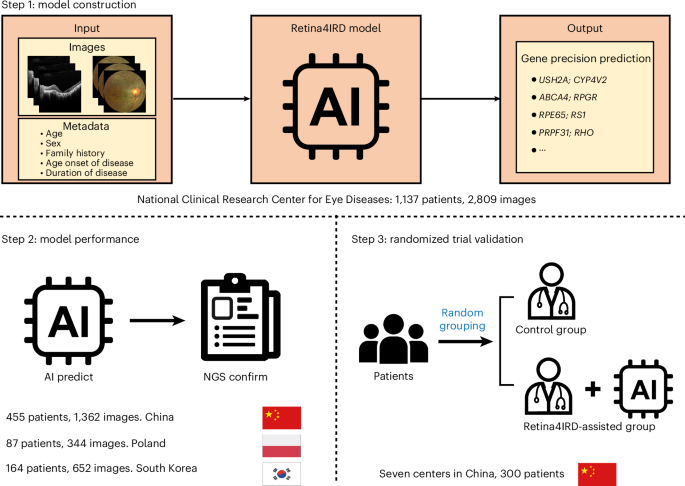
అధ్యయనం ప్రకారం, Retina4IRD retinal images నుండి 17 genotype categoriesను అంచనా వేస్తుంది. Research team, RETFoundతో pretrained చేసిన Vision Transformer architectureను ఉపయోగించి modelను అభివృద్ధి చేసింది, తరువాత China, South Korea, మరియు Polandలో genetically confirmed patients నుంచి సేకరించిన multimodal imaging dataతో దాన్ని శిక్షణ ఇచ్చి ధృవీకరించింది.
ఈ datasetలో 1,843 genetically confirmed patients నుంచి color fundus photographs మరియు optical coherence tomography scans ఉన్నాయి, ఇది 3,376 eyesను సూచిస్తుంది. ఈ international training and validation set ముఖ్యమైనది, ఎందుకంటే IRD diagnosisపై disease diversityతో పాటు sites మధ్య imaging practice తేడాలు కూడా ప్రభావం చూపవచ్చు. అందువల్ల external validation performance అనేది systemను అది నిర్మించబడిన సంస్థకు మించి ప్రయోగించగలమా అనే ముఖ్య పరీక్ష.
Internal validationలో, model 0.904 top-5 prediction accuracyను సాధించింది, 95% confidence interval 0.896 నుండి 0.912 వరకు ఉంది. External validationలో top-5 accuracy 0.856గా ఉంది, 95% confidence interval 0.850 నుండి 0.863 వరకు ఉంది. ఈ గణాంకాలు development environment వెలుపల కూడా model బలమైన performanceను నిలుపుకున్నట్లు సూచిస్తున్నాయి, అయితే internal testingతో పోలిస్తే ఆశించిన తగ్గుదలతో.
ఈ study, toolను clinical judgment లేదా genetic sequencingకు ప్రత్యామ్నాయంగా కాకుండా, diagnostic pathwayలో ముందుగానే అత్యంత సాధ్యమైన genetic explanationsను clinicians ప్రాధాన్య క్రమంలో పెట్టడానికి సహాయపడే decision support systemగా చూపిస్తోంది.
Randomized trial specialist performanceలో లాభాలను చూపింది
పేపర్లోని అత్యంత బలమైన evidence, suspected IRD ఉన్న 300 participantsను కలిగిన randomized controlled trial నుండి వచ్చింది. Participantsను 1:1 నిష్పత్తిలో Retina4IRD-assisted specialist arm లేదా specialist-only armకు కేటాయించారు. నమోదు అయిన వారిలో 295 participantsకు available next-generation sequencing reports ఉన్నాయి మరియు final analysisలో చేర్చబడ్డారు.
విశ్లేషించినవారి median age 33 years, మరియు 114 participants, అంటే 38.6%, female. అధ్యయనం యొక్క primary endpoint సాధించబడింది. AI support toolను ఉపయోగించిన specialists 88.5% top-5 genetic accuracyను సాధించారు, specialist-only groupలో అది 67.3%గా ఉంది, మరియు ఈ తేడా గణాంకపరంగా ముఖ్యమైనదిగా paper పేర్కొంది, P 0.001 కంటే తక్కువ.
పేపర్ top-1 నుంచి top-4 accuracy వరకు ఉన్న secondary endpoints అన్నీ Retina4IRD-assisted armకు అనుకూలంగా ఉన్నాయని కూడా చెబుతోంది. మొత్తంగా, ఈ ఫలితాలు system కేవలం పొడవైన జాబితాలో అదనపు అవకాశాలను చేర్చడమే కాకుండా మరింత చేసింది అని సూచిస్తున్నాయి. ఇది prediction stack అంతటా ranking qualityను మెరుగుపరచింది, అందువల్ల అత్యంత సంభావ్య genetic categories పైభాగంలో కనిపించే అవకాశం పెరిగింది.
ప్రాక్టీస్లో ఆ తేడా ముఖ్యమైనది. Imaging నుండి specialist చిన్న, అధిక నాణ్యత కలిగిన సాధ్య genotype categories సమితిని గుర్తించగలిగితే, downstream testing మరియు interpretation మరింత కేంద్రీకృతంగా మారవచ్చు. Genetic testing capacity పరిమితంగా ఉన్న సందర్భాలలో, మెరుగైన front-end triage signal specialist attentionను మరింత సమర్థవంతంగా కేటాయించడానికి సహాయపడుతుంది.
ఈ కనుగొన్నవి ఏమి మార్చగలవు
పేపర్ యొక్క ప్రాముఖ్యత అది అందించిన evidence రకంలో ఉంది. అనేక medical AI studies retrospective validation వద్దనే ఆగిపోతాయి, అక్కడ algorithmsను చరిత్రాత్మక డేటాపై పరీక్షిస్తారు కానీ live లేదా quasi-live clinical workflowsలో మూల్యాంకనం చేయరు. ఇక్కడ, పరిశోధకులు AI-assisted మరియు unassisted specialists మధ్య randomized comparison నిర్వహించి మరింత ముందుకు వెళ్లారు.
అయితే ఇది deploymentకు సంబంధించిన ప్రతి ప్రశ్నను పరిష్కరించదు. అందించిన study text Retina4IRD స్వతంత్రంగా తుది diagnosisను స్థాపిస్తుందని చెప్పదు, అలాగే genetic testingను వదిలేయవచ్చని సూచించదు. బదులుగా, ఫలితాలు rare-disease medicineలో AIకి మరింత ప్రాయోగికమైన near-term పాత్రను సూచిస్తున్నాయి: ప్రస్తుతం diagnosis limited expertise మరియు time-intensive reviewపై ఆధారపడే చోట decision supportను మెరుగుపరచడం.
Cross-border development dataset కూడా విస్తృత ఆశయాన్ని సూచిస్తోంది. IRDs అరుదైనవి కాబట్టి బలమైన training dataను సేకరించడం కష్టం, మరియు clinically meaningful variationను పట్టుకోవడానికి తరచుగా international collaboration అవసరం. మరిన్ని studies విస్తృత populations మరియు care systemsలో ఫలితాలను నిర్ధారిస్తే, retina imaging models image acquisition మరియు molecular confirmation మధ్య increasingly important layerగా మారవచ్చు.
ప్రస్తుతం, ముఖ్య finding సూటిగా ఉంది. ఒక randomized, multicenter settingలో, AI-based support system suspected inherited retinal disease వెనుక ఉన్న genetic categoryను అంచనా వేయడంలో specialists సామర్థ్యాన్ని గణనీయంగా మెరుగుపరిచింది. Diagnostic delay treatment decisions, counseling, మరియు భవిష్యత్తు gene-targeted interventionsకు eligibilityపై ప్రభావం చూపే రంగంలో, ఇది ఒక ముఖ్యమైన ముందడుగు.
ఈ వ్యాసం Nature Medicine నివేదిక ఆధారంగా ఉంది. మూల వ్యాసాన్ని చదవండి.

Originally published on nature.com

