A Strategic Acquisition for US Solar
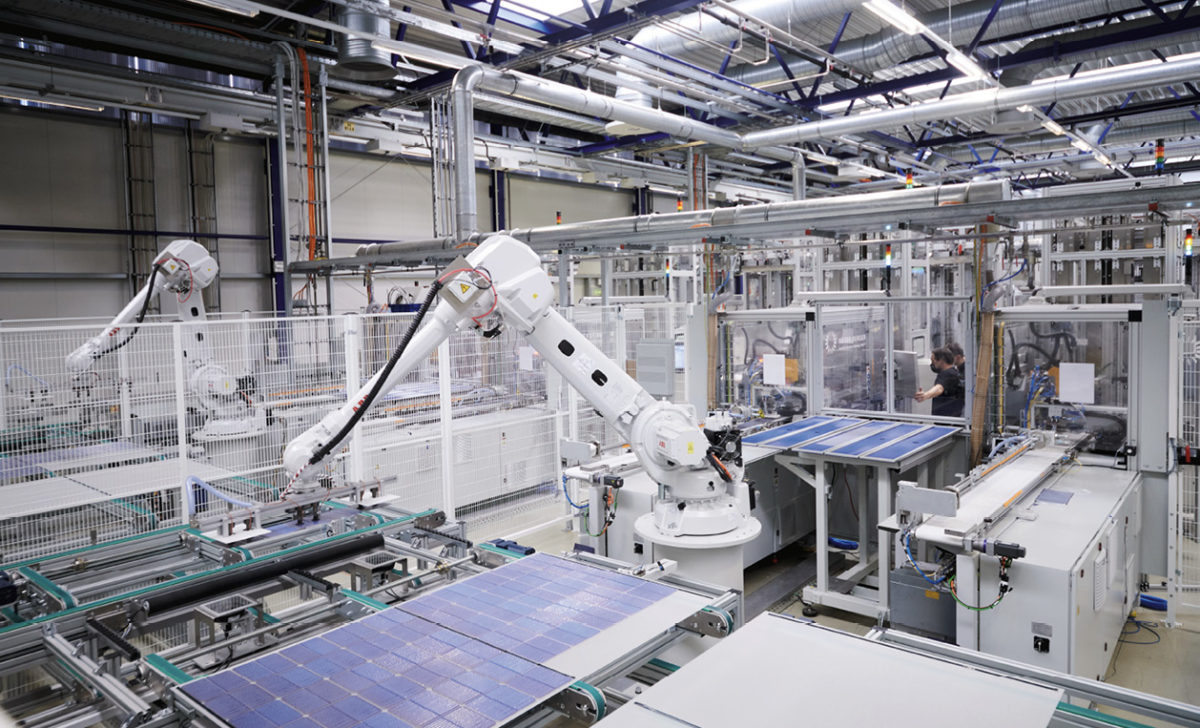
Swift Solar, a company focused on next-generation solar cell technology, has acquired the intellectual property and manufacturing assets of Swiss solar equipment maker Meyer Burger. The deal positions Swift Solar to establish domestic production of heterojunction solar cells in the United States while advancing its mission of bringing perovskite solar technology to commercial scale.
The acquisition comes at a pivotal moment for the US solar industry, which is racing to build domestic manufacturing capacity after years of near-total dependence on Chinese and Southeast Asian supply chains. Federal incentives under the Inflation Reduction Act have created strong financial motivation for US-based production, but building the manufacturing base from scratch has proven challenging.
What Meyer Burger Brings
Meyer Burger was once one of Europe's most promising solar manufacturers, known for its proprietary heterojunction cell technology that achieved industry-leading conversion efficiencies. HJT cells combine crystalline silicon with thin layers of amorphous silicon, creating a structure that converts more sunlight into electricity than conventional designs while performing better in high temperatures and low-light conditions.
However, the company struggled to compete against the relentless cost reductions achieved by Chinese manufacturers, which dominate global solar cell production with roughly 80 percent market share. Despite its technology advantages, Meyer Burger could not match the pricing of Chinese competitors who benefited from massive economies of scale and extensive government support.
For Swift Solar, the deal represents an opportunity to acquire proven, high-efficiency cell manufacturing technology at a fraction of the cost of developing it internally.

The Perovskite Connection
Swift Solar's ultimate goal is not simply producing conventional silicon solar cells. The company has been developing perovskite solar cell technology, which promises to dramatically reduce cost while achieving even higher efficiencies than silicon alone.
Perovskites are a class of crystalline materials that can be manufactured from abundant, inexpensive chemicals using low-temperature processes similar to printing. When layered on top of a silicon cell in a tandem configuration, perovskites can boost overall efficiency well beyond what silicon achieves on its own. Laboratory demonstrations of perovskite-silicon tandems have achieved efficiencies above 33 percent, compared to the 26-27 percent practical limit for silicon alone.
The Meyer Burger acquisition gives Swift Solar a production-ready silicon cell platform onto which it can integrate its perovskite technology. HJT technology is particularly well-suited as a tandem partner because its processing temperatures are compatible with the temperature-sensitive perovskite layers.
Domestic Manufacturing Push
The Inflation Reduction Act provides substantial tax credits for domestically produced solar cells and modules, creating a financial incentive structure that partially offsets cost disadvantages against Asian competitors. Supply chain security concerns, trade tensions with China, and the risk of tariff disruptions have made domestic sourcing increasingly attractive to project developers.
Swift Solar's production roadmap envisions starting with conventional HJT cells using the acquired technology, generating revenue and refining manufacturing processes while simultaneously developing the perovskite tandem integration. This staged approach reduces technical and financial risk compared to attempting to commercialize unproven tandem technology all at once.
Challenges on the Path to Scale
Significant challenges remain. Perovskite solar cells have demonstrated impressive performance in laboratories but have struggled with long-term durability in field conditions. The materials are sensitive to moisture, heat, and UV radiation, precisely the conditions solar panels are exposed to during their expected 25-30 year operational lifetimes.
Swift Solar and other perovskite developers have made substantial progress on stability, with recent accelerated aging tests showing commercially viable lifetimes under some conditions. But the technology has not yet been proven at the scale and duration that conservative solar project financiers require.
Manufacturing scale presents another hurdle. Meyer Burger's production capacity is modest compared to the gigawatt-scale factories operated by Chinese leaders like LONGi and JA Solar. Scaling US production to a level that meaningfully contributes to domestic demand will require substantial additional investment.
A Bet on the Next Generation
Despite these challenges, the acquisition represents one of the most concrete steps toward commercializing perovskite solar technology in the United States. The combination of Swift Solar's perovskite expertise with Meyer Burger's proven HJT manufacturing platform creates a vertically integrated pathway from laboratory innovation to factory floor production. If successful, the effort could help the United States establish a meaningful position in next-generation solar manufacturing, a sector worth hundreds of billions of dollars as the global energy transition accelerates.
This article is based on reporting by PV Magazine. Read the original article.
Originally published on pv-magazine.com