A second incident in two days
Security concerns around the AI industry intensified after San Francisco police arrested two people in connection with an alleged shooting near the home of OpenAI chief executive Sam Altman. According to the source text, the arrests came on Sunday, April 12, 2026, just one day after a separate 20-year-old man was arrested for allegedly throwing a Molotov cocktail at Altman's house and then driving to OpenAI headquarters to attack the building.
The sequence is what makes this story especially significant. It is not a single isolated disturbance. It is an apparent second incident in rapid succession, both tied to one of the most visible executives in artificial intelligence. That transforms the story from a local crime report into a broader warning about executive security, public hostility, and the increasingly charged politics surrounding AI.
The San Francisco Police Department said officers responded at about 2:56 a.m. on April 12 in the Russian Hill area over a suspicious occurrence involving possible shots fired. Investigators later determined that a vehicle with two occupants had driven past a residence around the time of the possible shooting. Police identified the vehicle as belonging to 25-year-old Amanda Tom of San Francisco. Tom and 23-year-old Muhamad Tarik Hussein were arrested without incident, and three firearms were seized, according to the statement cited in the source text.
From alleged vandalism to targeted threat
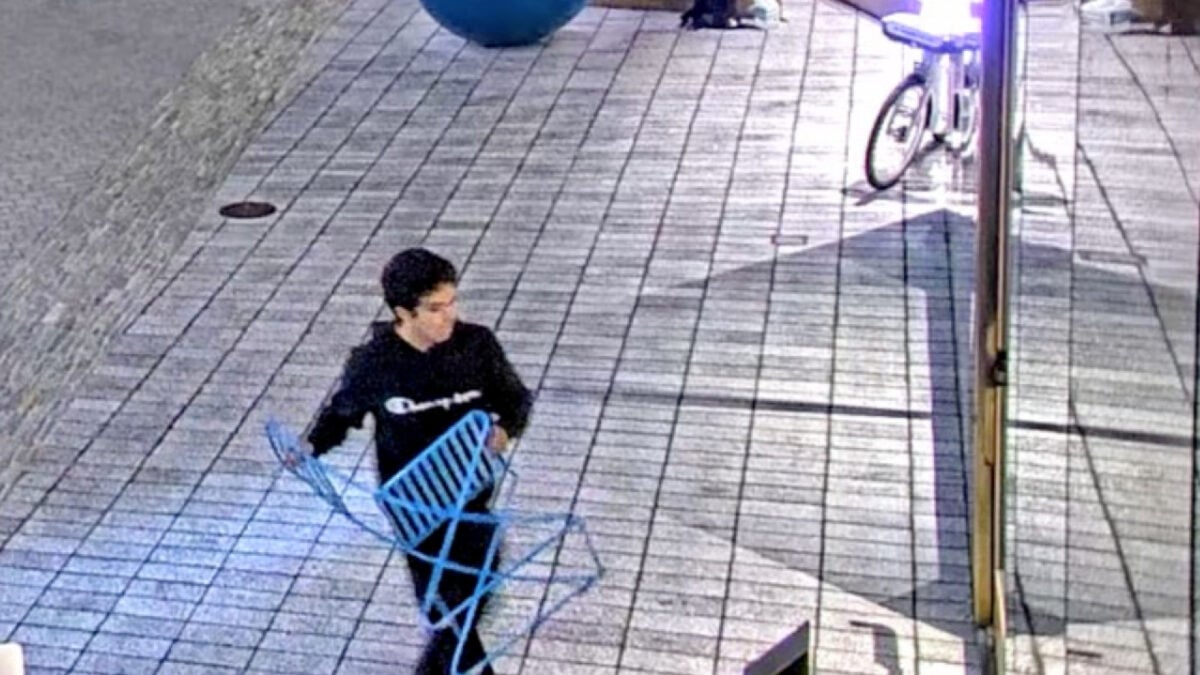
The account reported in the source material suggests an escalating pattern. Surveillance footage and information from Altman's security team reportedly indicated that a passenger in the vehicle appeared to fire a round near the property. That followed the earlier incident on Friday, when 20-year-old Daniel Moreno-Gama of Texas allegedly threw an incendiary device at Altman's home and then went to OpenAI headquarters, where he reportedly struck the building's glass doors with a chair.
Federal charges were filed against Moreno-Gama on Monday, April 13, 2026. The complaint described in the source text says he wanted to burn down the OpenAI office and kill anyone inside, though that specific intent was summarized by OpenAI security rather than quoted directly. Authorities reportedly recovered incendiary devices, a jug of kerosene, a blue lighter, and a document from his possession.
The most troubling element in the report is the suggestion that the document contained writings opposing AI and references to multiple executives, board members, and investors connected to AI companies. Gizmodo notes that it could not independently verify the contents of the document, an important qualification. Even with that caveat, the allegation points to a threat environment shaped not only by personal grievance, but by wider ideological hostility toward artificial intelligence and its leadership.

The meaning of targeted hostility in AI
Altman is one of the most visible figures in the technology sector, and that visibility has made him a focal point in public debates over AI's risks, power, and direction. The incidents described here suggest that, for at least some individuals, those debates may be mutating into direct confrontation. That is a serious development. Technology executives have long faced protests and criticism. A pattern of alleged physical attacks raises the stakes considerably.
This matters beyond one company or one executive. Artificial intelligence has become a symbol of broader anxieties around automation, economic displacement, surveillance, power concentration, and existential risk. Most of that anxiety is expressed lawfully through politics, criticism, organizing, or public debate. But when violence or attempted violence enters the picture, the discussion shifts from controversy to security.
The back-to-back nature of the incidents is particularly striking. It implies that AI leaders may now need to think about threat exposure in ways more commonly associated with political figures or executives at the center of deep social conflict. Whether this remains an isolated burst of incidents or marks a broader pattern is not yet clear. But the reported events are severe enough to force the question.
Why dates and details matter
Because stories like this can quickly become distorted online, the timeline is important. The alleged Molotov cocktail attack took place on Friday, April 10, 2026. The alleged shooting near the residence occurred early Sunday, April 12, 2026. Federal charges against the first suspect were filed Monday, April 13, 2026. Keeping those dates straight matters because the story is about repetition and escalation over a very short period.
The source also includes limits that should be preserved. Some claims are attributed to police statements. Others are attributed to the San Francisco Standard or to the criminal complaint. Gizmodo explicitly says it could not independently verify the contents of the suspect's document. Those distinctions are essential, especially in a fast-moving case where allegations and verified facts can diverge.
A warning for the AI era
The deeper significance of this story is not celebrity or spectacle. It is what it says about the temperature surrounding AI. The technology is no longer discussed only as a product category or research frontier. It has become a site of intense public emotion, and in rare cases that emotion may spill into physical threats.
For companies, that means security can no longer be treated as a background function detached from public controversy. For the public, it is a reminder that fierce disagreement about AI's future must remain distinguishable from violent action. And for law enforcement and policymakers, it raises the question of whether the emerging AI sector is entering a new phase of targeted risk.
The reported attacks near Altman's home and at OpenAI's headquarters are not just alarming because of who was involved. They are alarming because they show how debates about technology can become personalized, radicalized, and dangerous. That possibility now has to be taken more seriously than before.
This article is based on reporting by Gizmodo. Read the original article.

Originally published on gizmodo.com