New
SpaceMore in Space→
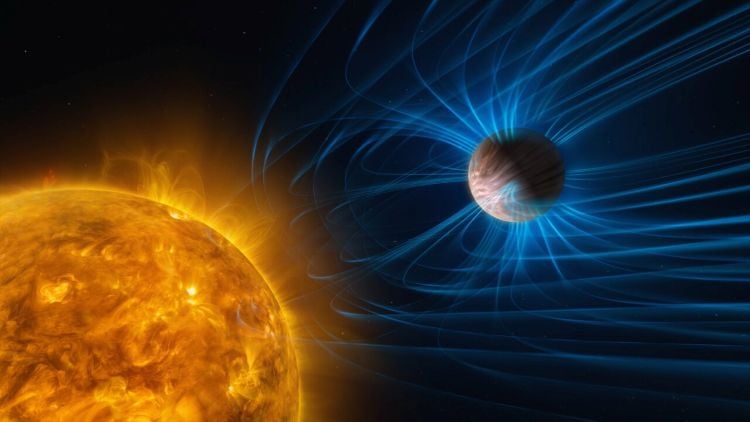
SKA Could Unlock Magnetic Field Detection on Distant Exoplanets
Key Takeaways
- A chapter in the 2026 book Advancing Astrophysics with the SKA II, sponsored by the Square Kilometre Array Observatory, argues the SKA could study magnetic fields on exoplanets and ultracool dwarfs.
- Astronomers increasingly view a planet's magnetic field, which shields Earth from harmful radiation, as a key marker of Earth-like conditions, since habitable-zone planets around active stars can still face intense radiation.
- Ultracool dwarfs — including brown dwarfs that never achieved nuclear fusion — have been emitting detectable radio waves for decades, making them useful test beds for exoplanet magnetic field research.
- The SKA could potentially detect auroral radio signals and use them to characterise an exoplanet's magnetic field, radiation belts, and possible satellites, with the term "exomoon" appearing once in the paper.
DE
DT Editorial Team··via universetoday.com