SpaceMore in Space→
JWST's Exomoon Drought Around LP 890-9 c Is a Win for Astronomy
Key Takeaways
- JWST has so far confirmed no exomoons, with red noise from instruments and stars blamed for masking faint signals.
- A new arXiv preprint by Columbia astronomer David Kipping argues repeated transits, not single observations, are the key to detection.
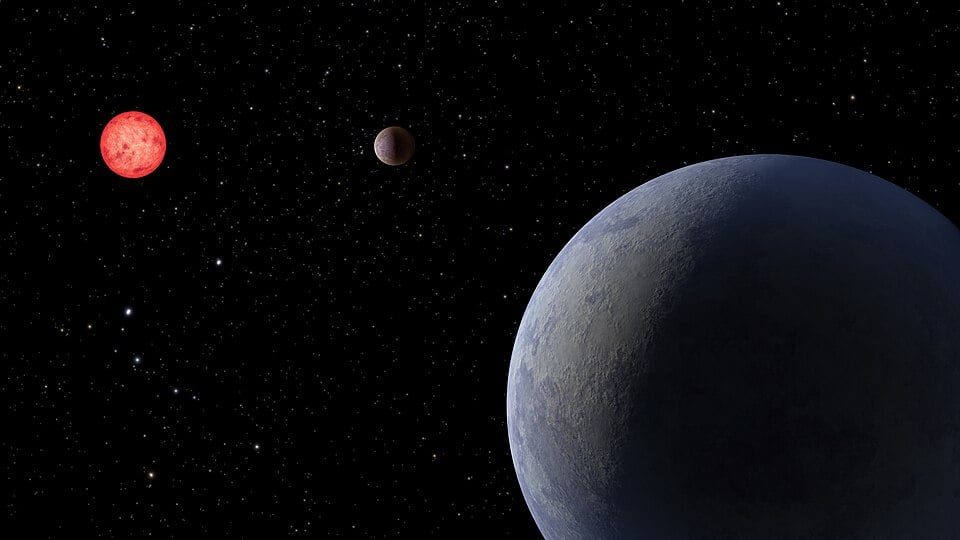
- Kipping analyzed twelve JWST transits of LP 890-9 c, an exoplanet 105 light years away with an 8.46-day orbit around an ultra-cool red dwarf.
- Combining one noisy transit with a single clean one significantly improved sensitivity, showing that averaging can smooth out red noise.
DE
DT Editorial Team··via universetoday.com