Redemption on the Test Stand
After its predecessor literally cracked open on the test stand, SpaceX's second Super Heavy V3 booster has sailed through a grueling multi-day cryogenic proof campaign at Starbase, Texas, clearing the single biggest hurdle that stood between the company and the next Starship test flight. SpaceX confirmed the milestone in a post that read: "Cryoproof operations complete for the first time with a Super Heavy V3 booster. This multi-day campaign tested the booster's redesigned propellant systems and its structural strength."
The achievement is especially sweet given what happened to the previous vehicle. Booster 18, the first fully stacked Block 3 Super Heavy, suffered a catastrophic liquid-oxygen tank rupture during an ambient pressure test on November 21, 2025. Photographs of the aftermath showed a massive hole torn through the tank structure, with investigators pointing to a possible composite overwrapped pressure vessel (COPV) failure at the base of one of the vehicle's larger chines that triggered a chain reaction up the airframe. The booster was a total loss.
How the Testing Worked
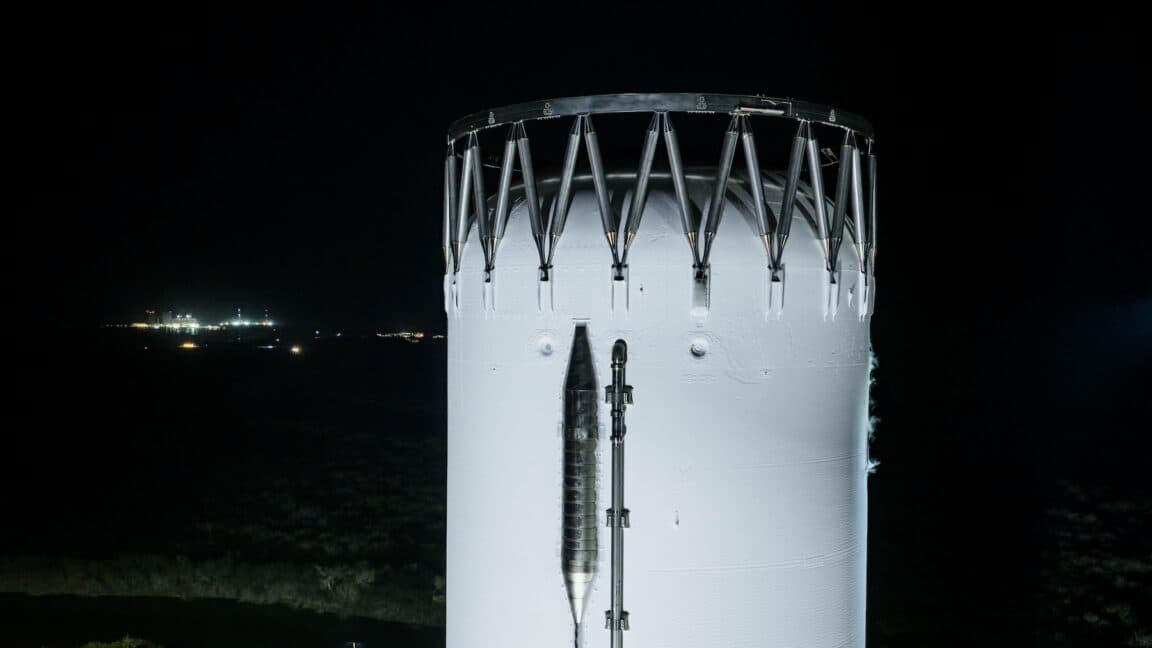
Booster 19, the replacement V3 vehicle, was rolled out of SpaceX's Starbase factory and transported to the nearby Massey's Test Site, where ground crews subjected the 237-foot-tall stainless-steel structure to a carefully sequenced battery of thermal and pressure trials.
Technicians began with an ambient-temperature pressure test to verify the basic structural margins of the redesigned propellant tanks. Once those results checked out, the team loaded super-cold liquid nitrogen into the booster on four separate occasions over the course of six days, cycling the vehicle through repeated thermal shocks that simulate the conditions it will endure when filled with cryogenic liquid methane and liquid oxygen on launch day.
Liquid nitrogen serves as a safe stand-in for the actual propellants because it reaches similarly frigid temperatures without the flammability and reactivity concerns of methane and oxygen. Each fill-and-drain cycle stresses tank welds, structural joints, and plumbing connections, exposing any latent manufacturing defects before they can become flight-day disasters.
What Changed From Booster 18
SpaceX has not published a detailed fault-tree analysis of the Booster 18 failure, but the company's description of the V3 campaign as testing "redesigned propellant systems" suggests engineers made meaningful structural and plumbing changes between the two vehicles. The fact that Booster 19 withstood not one but four cryogenic fill cycles without incident indicates the modifications addressed the root cause of the earlier rupture.
Why It Matters for Starship Flight 12
The successful cryoproof clears Booster 19 for its next major milestone: a static fire test, in which all of the booster's Raptor engines ignite while the vehicle remains clamped to the test stand. If the static fire goes smoothly, Booster 19 will be stacked with a Starship upper stage for the program's twelfth integrated flight test, which SpaceX has targeted for the first quarter of 2026.
Flight 12 is expected to be a landmark mission for the Starship program. The V3 Super Heavy booster introduces upgrades to the propellant feed system, avionics, and structural architecture that are designed to bring the vehicle closer to the rapid reusability cadence SpaceX needs to fulfill contracts with NASA's Artemis program and to realize its own ambitions for Mars transportation.
A Program Built on Iterative Risk
The Booster 18 failure and Booster 19 redemption arc illustrate the iterative, test-to-failure philosophy that defines SpaceX's development culture. Rather than spending years perfecting hardware on paper, the company builds, tests, breaks, learns, and rebuilds at a pace that traditional aerospace programs rarely match.
That approach carries real costs, both in hardware and in schedule, but it also compresses the learning curve. The data harvested from Booster 18's rupture directly informed the redesign that allowed Booster 19 to survive the same gauntlet, and the flight data from each successive Starship mission feeds forward into the next iteration.
With the cryoproof behind it and a static fire on the horizon, Starbase is coming alive again after a months-long lull, and the cadence of Starship testing looks set to accelerate through the rest of 2026.