The GPS 3 era is now complete
SpaceX launched the final satellite in the GPS 3 series early on April 21, delivering GPS 3 SV-10 to orbit for the U.S. Space Force and closing out a major modernization phase of one of the world’s most important infrastructure systems.
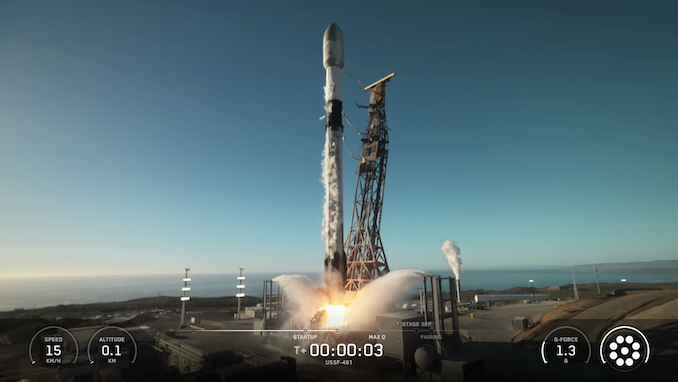
The Falcon 9 lifted off from Cape Canaveral Space Force Station in Florida at 2:53 a.m. Eastern after a one-day weather delay. Its destination was medium Earth orbit, about 12,550 miles above the planet, where the spacecraft will join the operational Global Positioning System constellation.
That would be notable on its own, but SV-10 carries added significance. It is the tenth and final satellite in the Lockheed Martin-built GPS 3 line, a series designed to improve accuracy, strengthen anti-jamming performance, and provide more robust signals than earlier generations. In practical terms, this is not just another launch. It is the final piece of a specific modernization block that supports both military operations and civilian infrastructure.
Why GPS 3 matters
The Global Positioning System is often described as a navigation network, but that understates its reach. GPS timing and positioning support military operations, commercial aviation, logistics, telecom synchronization, financial systems, and countless consumer devices. Any upgrade to the constellation therefore has consequences far beyond satellites and rockets.
GPS 3 was built to extend that utility while improving resilience. According to SpaceNews, the satellites offer stronger anti-jamming capability and more robust signals than previous generations. For military users, SV-10 broadcasts the encrypted M-code signal, intended to resist interference and spoofing. For civil and transportation uses, it also carries the L5 “safety-of-life” signal and the L1C civil signal designed to improve interoperability with other global navigation satellite systems.
Those signal upgrades matter in an era when electronic warfare and signal disruption are becoming more common concerns. Precision navigation is no longer merely a convenience layer. It is a contested and strategically important service.
An operational launch with experimental hardware on board
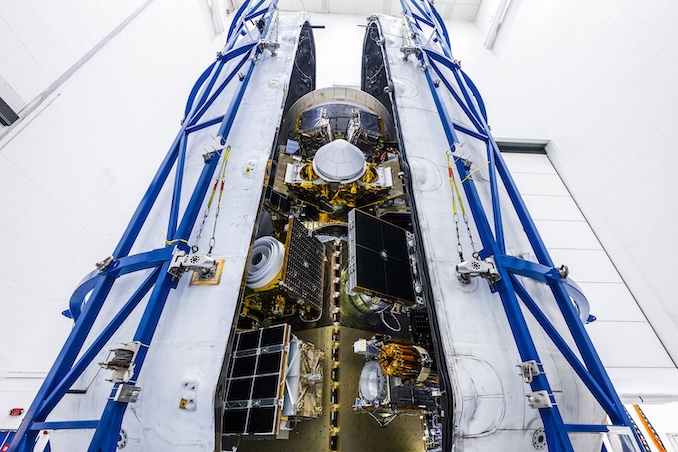
SV-10 also includes an experimental optical communications terminal for testing high-speed data links in space. In addition, the satellite carries a demonstration digital rubidium atomic frequency standard clock, an advanced timing component intended to support extremely precise timekeeping.
These onboard demonstrations suggest that even as the Space Force completes one generation of satellites, it is continuing to test technologies that could shape future architectures. Optical communications, in particular, attract interest because they can potentially move data faster and more securely than traditional radio-frequency methods under the right conditions.
The atomic clock demonstration is equally relevant. Timing precision is at the core of GPS. Improvements in onboard clocks can translate into stronger system performance, better synchronization, and more resilient service across the network.
SpaceX’s role keeps expanding
The mission also reflects a broader shift in the national security launch market. SV-10 is the fourth consecutive GPS mission that was originally assigned to United Launch Alliance and later transferred to SpaceX. That reassignment pattern has emerged as ULA’s Vulcan Centaur remains grounded following a solid rocket motor anomaly during flight on February 12.
For the Space Force, the immediate priority is maintaining schedule and getting spacecraft to orbit. For industry watchers, however, the reassignment trend is another sign that launch competition is being shaped not only by price and performance, but by vehicle availability and recovery speed after anomalies.
SpaceX has increasingly become the absorber of schedule risk in the U.S. launch ecosystem. When other launch providers face setbacks, Falcon 9’s mature cadence gives the government a fallback option. That dynamic can influence procurement decisions even when agencies still want a competitive field.

The transition to GPS 3F begins
With GPS 3 now complete, the Space Force is expected to move to the next generation, GPS 3F. According to the source text, those satellites are expected to add enhanced regional military protection and onboard search-and-rescue payloads.
That next step is important because satellite constellations are never truly finished. They are refreshed in blocks, upgraded in layers, and adapted to changing threat environments. Completing GPS 3 closes one chapter, but it also establishes the baseline from which GPS 3F will evolve.
For users on the ground, this progression is usually invisible. Smartphones, aircraft, and logistics systems simply keep working. But the underlying infrastructure is the product of sustained industrial planning, launch execution, and incremental technical upgrades.
SV-10’s launch therefore represents more than a milestone number. It marks the completion of a ten-satellite effort to modernize a system that underpins everyday life and military effectiveness alike. It also highlights how dependent that effort has become on a launch provider able to keep missions moving when the rest of the field is constrained.
In strategic space terms, that is the real takeaway: the GPS constellation continues to improve, the next generation is already in view, and SpaceX’s role in keeping national security payloads on schedule has become harder to ignore.
This article is based on reporting by SpaceNews. Read the original article.
Originally published on spacenews.com