The Pentagon has put a price tag on its expanding military ambitions in space
New budget documents released by the Pentagon on April 21 spell out the scale of the Trump administration’s proposed defense expansion, and one of the biggest beneficiaries is the U.S. Space Force. Under the fiscal 2027 request, the service would receive $71.2 billion, more than double the roughly $32 billion enacted for 2026.
The proposal sits inside a far larger defense plan. The administration is seeking about $1.45 trillion for defense in fiscal 2027, an increase of $440.9 billion, or 44 percent, from the prior enacted level, according to the source report. Space programs are therefore not a side item in the request. They are central to it.
For a service that only recently established its identity within the U.S. military, the budget marks a dramatic escalation in both scale and mission. The documents emphasize procurement and research rather than simple continuity, signaling an effort to expand capacity quickly as space is treated as a more contested operational domain.
Where the money would go
Nearly $50 billion of the proposed Space Force budget is concentrated in research, development, test and evaluation, plus procurement. That concentration matters because it points to acquisition and fielding of new systems, not merely paying for existing operations.
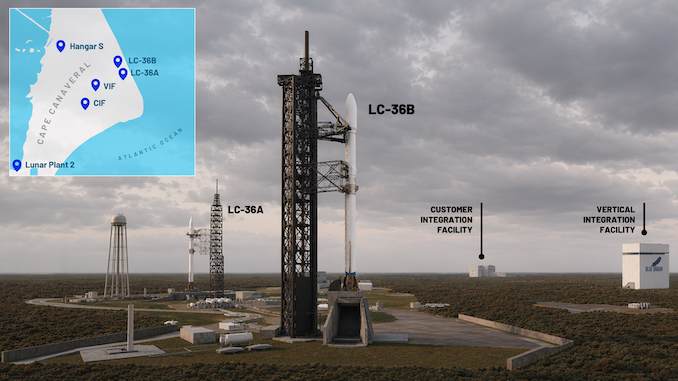
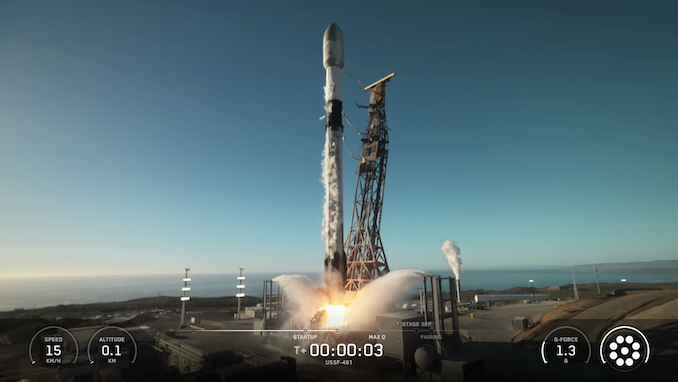
The spending plan would support 31 national security space launches and devote $2.2 billion to modernizing U.S. launch ranges. It would also add roughly 2,800 personnel. Taken together, those elements suggest a service preparing for a more intensive tempo: more launches, more infrastructure, more people, and faster delivery of systems.
The source text says the budget documents frame the urgency in direct strategic terms, warning that intensifying competition in space poses a significant national security threat and citing adversaries’ counter-space capabilities as an unacceptable risk to the joint force and the country.
That language fits a broader shift in U.S. military thinking. Space is no longer described chiefly as a support layer for communications, positioning, and intelligence. It is increasingly treated as a domain where systems themselves may be targeted and where resilience, rapid replacement, and launch capacity become operational necessities.
An unusual funding mechanism could become a major political test
The numbers are striking, but so is the way the administration wants to pay for part of them. Of the roughly $1.5 trillion total defense package, around $350 billion would be financed through the congressional budget reconciliation process rather than the standard appropriations path. More than $12 billion of the proposed Space Force budget would come through reconciliation.
That is unusual. Reconciliation allows certain fiscal measures to pass the Senate with a simple majority, bypassing the 60-vote threshold that typically constrains major defense legislation. Its use at this scale for military programs is rare, and the source report notes that it is limited by rules governing what can qualify as mandatory spending.
That means the Space Force proposal is not just a budget story. It is also a test of whether the administration can secure durable support for a rapid military expansion in orbit using a less conventional legislative route.
If Congress resists that approach, the topline could prove less stable than the headline number suggests. If it succeeds, however, the move could establish a precedent for pushing major defense increases through mechanisms usually associated with tax and entitlement fights rather than military buildouts.
Why this proposal matters beyond one service branch
The Space Force budget request reflects a deeper change in how the Pentagon is defining national security infrastructure. Satellites, ground systems, launch ranges, data networks, and procurement pipelines are increasingly being treated as core warfighting architecture.
That changes the stakes of acquisition. Delays in launches or system modernization are no longer just bureaucratic headaches. Under the Pentagon’s framing, they become readiness problems in a domain where the United States expects mounting competition.
The request also underscores how quickly the financial profile of the Space Force has changed. A service that began with modest institutional footing is now being positioned for a budget of more than $70 billion, making it one of the most heavily funded areas of future U.S. defense growth.
That expansion could ripple across the industrial base. More procurement and launch demand would likely mean more work for aerospace manufacturers, launch providers, ground-system contractors, and data-network suppliers. While the source text does not enumerate all of those downstream effects, the scale of the proposed increase strongly implies broader industrial and workforce consequences.

Speed, scale, and the problem of execution
Money alone does not guarantee a successful military transformation. The challenge for the Space Force would be executing a rapid scale-up without creating bottlenecks in acquisition, launch infrastructure, or personnel integration.
The request’s concentration in research, development, procurement, and infrastructure suggests Pentagon officials are aware of that risk. Modernizing launch ranges and increasing headcount are not glamorous line items, but they address practical constraints that can limit how fast systems reach orbit.
Still, a doubling of budget in a single cycle is a management challenge as much as a strategic statement. Programs can absorb too much money too quickly if the industrial base is not ready, requirements are still shifting, or congressional politics slow obligation and execution.
The source report presents the budget as evidence of urgency in a contested space environment. That may be politically persuasive, but the real test will be whether the Pentagon can translate unprecedented proposed growth into working systems on schedule.
A turning point for military space policy
Whatever Congress ultimately does, the fiscal 2027 request marks a turning point in how seriously the U.S. government is signaling its intent in military space. The combination of more than $71 billion for the Space Force, 31 national security launches, launch-range upgrades, added personnel, and heavy procurement spending amounts to a clear policy message: the Pentagon wants to build orbital capacity at a much faster pace.
That message will resonate well beyond Washington. Allies, rivals, commercial launch firms, satellite makers, and defense contractors will all read the documents as a sign of how the United States intends to compete in space over the next several years.
The proposal may still face legislative and practical obstacles. But in strategic terms, it already does one important thing. It makes explicit that military space is no longer being funded as a supporting capability on the margins of defense planning. It is being funded as a central front.
This article is based on reporting by SpaceNews. Read the original article.

Originally published on spacenews.com