NASA uses a famous image to tell a much larger story
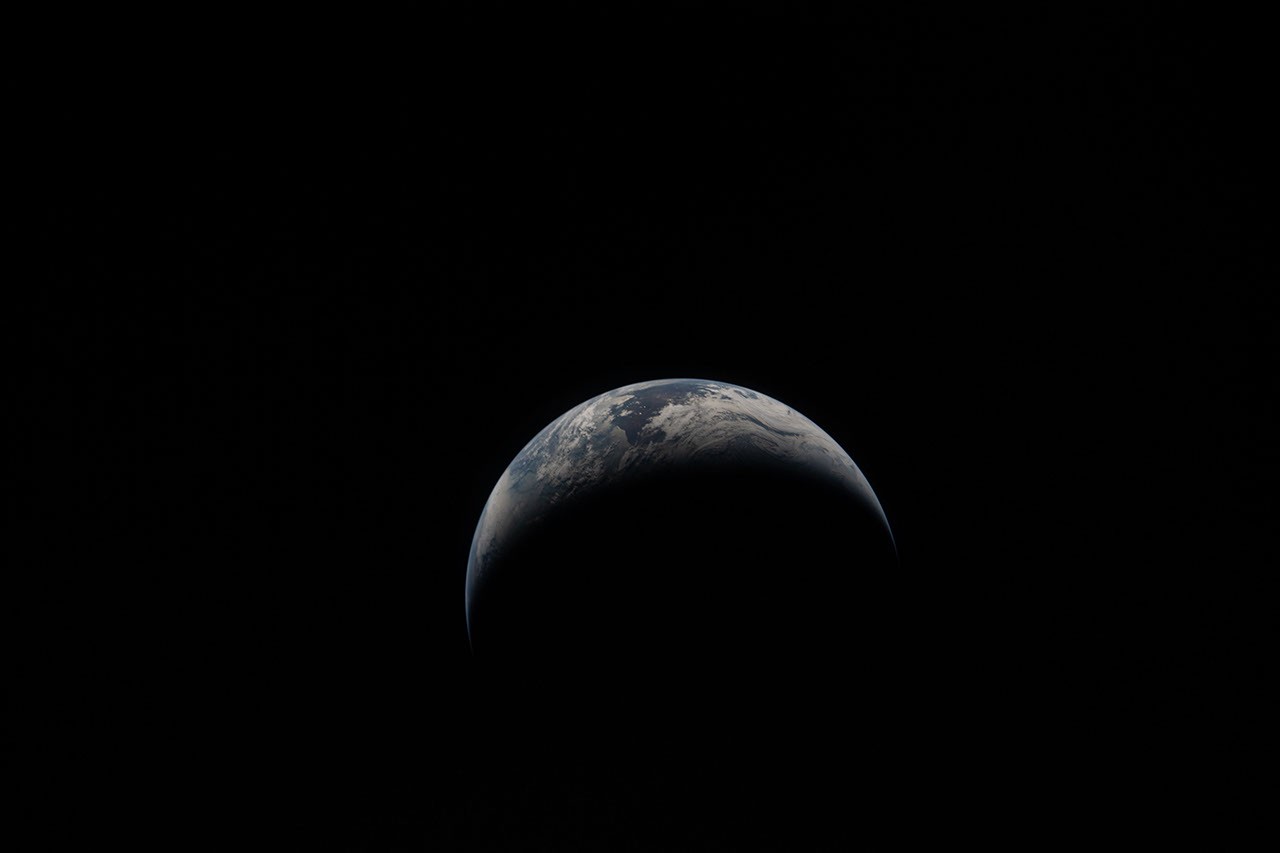
On Earth Day, NASA is drawing a line from one of the most famous photographs ever taken to the modern machinery of planetary observation. The agency has released a new Artemis II image of Earth captured on April 6 as the crew traveled farther from the planet than any humans before them, and it is using that moment to revisit the legacy of Apollo 8’s 1968 Earthrise photo.
The comparison is more than visual. In NASA’s telling, the arc from Earthrise to Artemis II reflects how far Earth observation has advanced since astronauts first pressed cameras to spacecraft windows. The agency says today’s tools range from those early images to highly sophisticated systems, including what it describes as the most powerful radar ever flown. The throughline is not nostalgia but capability: a growing ability to watch Earth in ways that support science, industry and disaster response.
Why Earthrise still matters
The original Earthrise photograph became iconic because it transformed perspective. Apollo 8 astronaut Bill Anders captured Earth peeking over the Moon’s horizon in 1968, and the image helped shape public understanding of the planet as a shared, fragile whole. NASA notes that the photo also helped inspire the first Earth Day two years later.
That historical association gives the agency a powerful narrative frame in 2026. Rather than celebrating Earth Day only with statistics about sensors and missions, NASA is linking present-day observation systems to a moment of public imagination. The message is that seeing Earth from afar can still sharpen the case for understanding it more precisely at home.
The new Artemis II image
NASA says the newly released Artemis II photograph shows a crescent Earth on April 6 as the crew flew around the far side of the Moon. The agency describes the astronauts as having traveled farther from Earth than any humans before them. That description gives the picture both emotional and programmatic weight. It is at once a symbolic update to the Apollo-era visual tradition and a demonstration that Artemis is producing its own public-facing milestones.
NASA officials quoted in the release explicitly connect those images to Earth science. Administrator Jared Isaacman said NASA’s Earth science missions deliver critical data that help strengthen communities, support sectors such as agriculture and improve preparation for wildfires, droughts, flooding and other natural hazards. Nicky Fox, associate administrator for the Science Mission Directorate, framed the Artemis II imagery as a reminder of how special Earth appears even from deep space.
Observation as infrastructure
What stands out in NASA’s framing is the practical emphasis. Earth observation is not presented merely as an exercise in planetary appreciation. It is described as infrastructure for decision-making. Data from Earth science missions, the agency argues, helps communities anticipate hazards and helps industries manage real-world challenges. That is a notable shift from the older public image of space photography as awe first and utility second.
In reality, the two have long coexisted. The emotional force of images such as Earthrise helps sustain public interest, while the technical systems behind them increasingly feed agriculture, climate analysis, ocean monitoring and disaster management. NASA’s Earth Day message is essentially that the romance of seeing Earth and the rigor of measuring it are part of the same institutional mission.
A long technological leap
The agency also emphasizes the jump in imaging technology since 1968. In the Apollo era, crews relied on film cameras and whatever perspectives human eyes could capture through spacecraft windows. Today’s Earth observation architecture includes dedicated satellites, radar systems and specialized sensors designed to collect data continuously and at far higher fidelity. NASA’s argument is not simply that the pictures have improved, but that the scientific usefulness of observation has expanded dramatically.
That evolution matters because Earth observation has become central to how governments and researchers understand change over time. Monitoring sea level, storms, snow and ice, ocean conditions and land use requires continuity, precision and coverage far beyond what one famous photograph can provide. Earthrise changed perception; modern Earth science aims to change preparedness.
The larger message
By pairing Apollo 8 and Artemis II, NASA is making a strategic point about continuity. The same institution that once helped redefine how humanity sees Earth now wants to emphasize its role in providing the data that help societies respond to what is happening on that planet. Earth Day becomes a useful setting for that message because it ties emotion, science and public purpose together.
The new Artemis II photo will inevitably attract attention for its symbolism. But NASA’s broader aim is to remind audiences that the agency’s relationship with Earth is not secondary to its lunar ambitions. Looking outward has always also been a way of looking back. In 2026, NASA wants the public to see that the image of home still matters, and that the technologies built around that view matter even more.
This article is based on reporting by science.nasa.gov. Read the original article.
Originally published on science.nasa.gov