A mixed milestone for New Glenn
Blue Origin’s third New Glenn launch delivered a split result that will be hard to ignore. The company successfully flew and recovered a previously used first stage for the first time, marking a significant milestone for the heavy-lift rocket’s reusability ambitions. But the mission’s payload, AST SpaceMobile’s Bluebird 7 satellite, did not reach its planned orbit, creating an immediate setback for both companies.
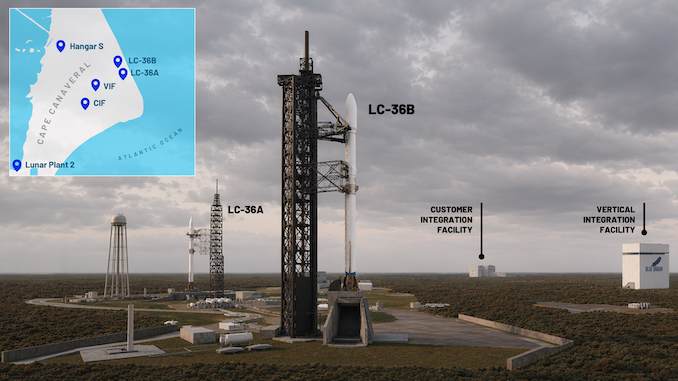
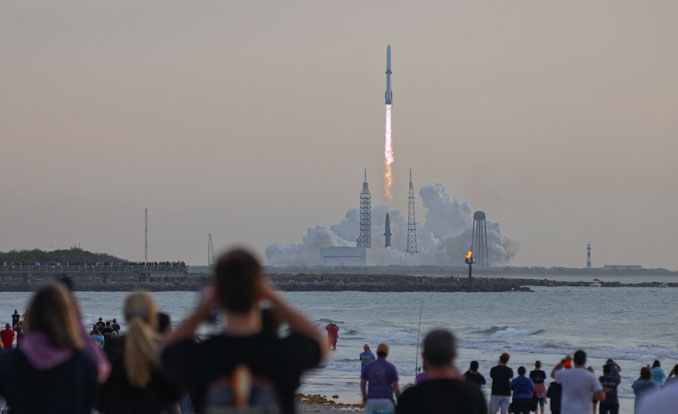
The launch took place on Sunday morning from Cape Canaveral Space Force Station in Florida. According to Spaceflight Now, liftoff came at 7:25 a.m. EDT after a 40-minute hold in the countdown. When the rocket finally launched, its seven methane-burning engines pushed the vehicle off the pad with 3.8 million pounds of thrust.
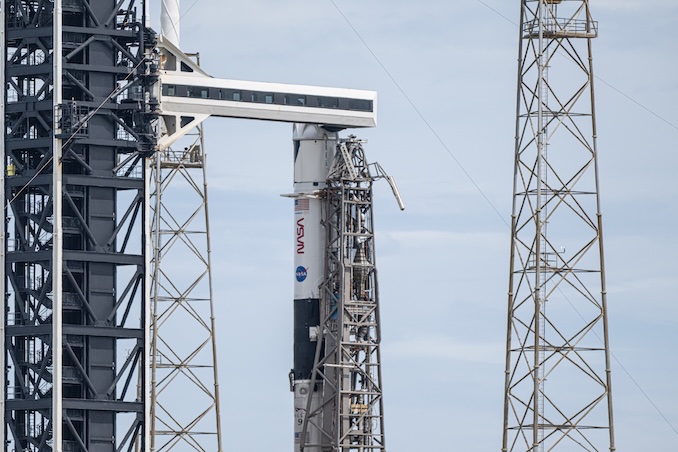
From Blue Origin’s perspective, the booster portion of the mission appears to have gone very well. The first stage separated as planned a little over three minutes after liftoff and was later recovered, a major step in proving that New Glenn can operate with reusable hardware. That achievement matters because reuse is central to lowering launch costs, increasing cadence and making the vehicle more commercially competitive.
The problem was the orbit, not the separation
The mission’s trouble came after stage separation. Blue Origin confirmed that payload separation occurred and said AST SpaceMobile had confirmed the satellite powered on. But the satellite was placed into what the company described as an “off-nominal orbit.”
That wording is important. The spacecraft was not apparently lost at separation, and it was able to power on, but it did not reach the intended trajectory. Blue Origin said it was assessing the situation and did not initially provide more detail about the nature of the orbital error or what recovery options might exist.
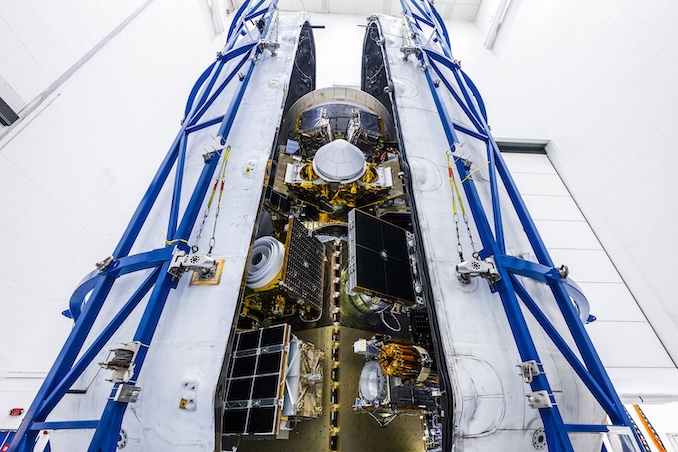
The payload was Bluebird 7, a direct-to-cellphone communications satellite built by AST SpaceMobile in Midland, Texas. According to the report, the spacecraft carries a 2,400-square-foot phased array antenna described as the largest civilian antenna of its type ever placed in low Earth orbit. It is the second in AST SpaceMobile’s new generation of data-relay stations intended to provide 4G and 5G cellular broadband service directly to ordinary users worldwide.

Why the setback matters for AST SpaceMobile
For AST SpaceMobile, the off-target orbit is more than a one-mission inconvenience. The company is working toward deployment of as many as 60 “block two” Bluebirds in an initial constellation, using a mix of launch providers that includes SpaceX Falcon 9, India’s LVM3 and Blue Origin’s New Glenn. Any uncertainty around the spacecraft’s usable orbit feeds directly into the timeline and confidence around that larger network buildout.
If Bluebird 7 cannot be maneuvered into the desired orbit, AST SpaceMobile could face delays in both service planning and constellation sequencing. Even if the satellite remains functional, operating from the wrong orbit can affect coverage patterns, mission lifetime and integration with future spacecraft. The report makes clear that the options were not yet known at the time of publication.
That uncertainty leaves AST SpaceMobile in a waiting posture. The satellite powering on is a positive sign, but the value of that fact depends entirely on how far the spacecraft can compensate for the insertion error using onboard resources.
Why the mission still matters for Blue Origin
Despite the payload shortfall, this mission still represented an important technical demonstration for Blue Origin. New Glenn had never before flown a reused first stage, and recovering it successfully is a milestone the company will view as foundational. Reusability is not an optional feature in the current launch market. It is increasingly part of the economic baseline for competing at scale.
That means Blue Origin can claim real progress on the launcher itself even while it investigates what happened to the upper-stage performance. The distinction matters because booster reuse and precise orbital delivery are related but separate dimensions of launch capability. One was validated. The other now requires explanation.
The mission also highlighted the spectacle and technical ambition of the rocket. The launch was visible from the Florida coast, and the vehicle’s seven-engine ascent underscored New Glenn’s role as Blue Origin’s major bid to become a serious player in heavy orbital launch. But launch markets are unforgiving. A strong reusable-booster result does not erase concern when a commercial payload misses its target orbit.

A reminder of how difficult launcher maturity is
Heavy-lift rockets do not become routine after a few flights. New Glenn’s third mission shows how progress often comes unevenly. A company can solve one major challenge, such as reusing a first stage, while still confronting reliability questions elsewhere in the mission profile. For customers, the crucial issue is not whether a rocket has isolated successes, but whether it can deliver satellites where they need to go on a consistent basis.
That is especially true for communications operators building constellations. Their business models depend on deployment cadence, orbital precision and confidence in launch scheduling. A single off-nominal insertion may be survivable, but repeated uncertainty would be far more damaging.
What comes next
The immediate next step is assessment. Blue Origin said it would provide updates when more detailed information became available. AST SpaceMobile, meanwhile, will need to determine whether Bluebird 7 can still contribute meaningfully to its direct-to-device network plans.
The result leaves both companies with something real but incomplete. Blue Origin proved a reused New Glenn booster can fly and be recovered. AST SpaceMobile got confirmation that its satellite separated and powered on. Yet the mission still fell short of its primary delivery objective. In space launch, that combination counts as progress and setback at the same time, and it will be judged by what each company can salvage from here.
This article is based on reporting by Spaceflight Now. Read the original article.
Originally published on spaceflightnow.com