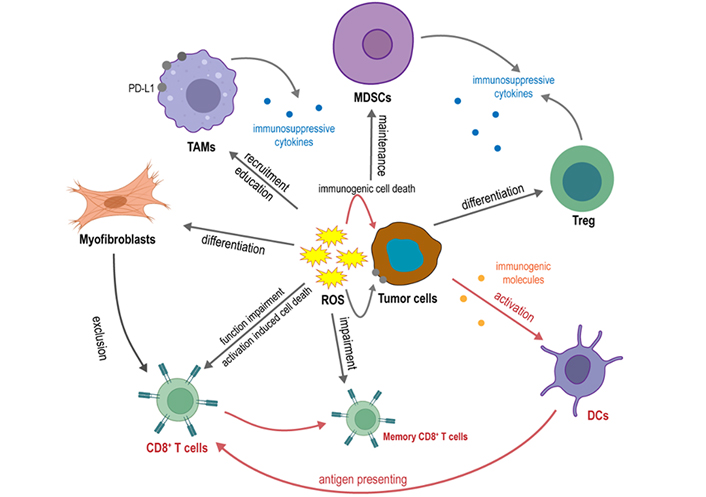
According to a study appearing in the September 2026 edition of Science, cancers may be exploiting a fundamental biochemical defense mechanism to escape immune destruction. The paper, titled “Tumor-derived antioxidants suppress immunity by depriving T cells of reactive oxygen species,” reveals that malignant cells release antioxidants that eliminate reactive oxygen species (ROS) from the surrounding tissue. This scavenging activity effectively disables T cells, the very immune cells tasked with attacking the tumor. The research upends a longstanding assumption that ROS are merely collateral damage from metabolism, showing instead that they are essential signaling molecules for immune activation.
Reactive Oxygen Species: More Than Cellular Waste
For decades, reactive oxygen species have been primarily viewed as harmful byproducts that cause oxidative stress and DNA damage. This has made antioxidants—substances that neutralize ROS—popular for their supposed health benefits. Yet within the immune system, ROS serve a far more constructive purpose. When a T-cell receptor engages an antigen, a burst of ROS is generated within the cell. This oxidative burst is not random; it acts as a second messenger, activating key signaling pathways that drive T-cell proliferation and cytokine production.
The study highlights a previously underappreciated vulnerability: because T cells depend so heavily on ROS for their activation, they become susceptible to extracellular factors that deplete these molecules. In the tumor microenvironment, cancer cells have been observed to secrete antioxidant compounds, including glutathione and thioredoxin, as a means of self-protection against oxidative stress. However, the new research demonstrates that these antioxidant secretions also have an immunosuppressive side effect: they rob T cells of the ROS signal they need to launch an effective attack.

How Tumor Antioxidants Disarm T Cells
The researchers found that tumor-derived antioxidants lower the concentration of hydrogen peroxide and other ROS in the fluid surrounding the tumor. Since T cells rely on this extracellular ROS to trigger intracellular signaling cascades, the depletion acts like a switch that turns off T-cell activation. Experiments with mouse melanoma models showed that tumors engineered to overproduce antioxidants grew faster and displayed fewer infiltrating T cells compared to control tumors.
Further analysis revealed the mechanism at the molecular level. In the absence of sufficient ROS, T cells failed to phosphorylate key kinases, such as ZAP-70 and LAT, that are upstream of NFAT and NF-κB transcription factors. Without these signals, the T cells remained inactive and unable to produce effector molecules like interferon-gamma and perforin. This effect was reversible; when antioxidant production was blocked pharmacologically or genetically, T-cell function was restored, and tumors began to shrink.
Key Findings and Significance
- Tumor cells secrete antioxidants that neutralize ROS in their local environment.
- Loss of ROS signaling prevents T-cell receptor-mediated activation.
- Blocking tumor-derived antioxidant export restores T-cell function and inhibits tumor growth.
- Human tumor samples with elevated antioxidant gene expression correlate with poor immune infiltration and worse survival.
The study also sheds light on the clinical phenomenon of primary resistance to cancer immunotherapy. Checkpoint inhibitors rely on reactivating exhausted T cells, but if those T cells cannot receive ROS signals, they remain inert regardless of checkpoint blockade. The authors argue that evaluating the antioxidant status of a tumor may help predict patient responses to PD-1/PD-L1 inhibitors and other immunotherapies.

Implications for Cancer Treatment
These findings open potential therapeutic avenues. Rather than promoting systemic antioxidants, which might actually aid tumors by further suppressing immunity, treatments that inhibit tumor antioxidant secretion could revive the immune system’s ability to fight cancer. Drugs that target the synthesis or transport of glutathione and thioredoxin are already in development for other indications and could be repurposed in combination with checkpoint inhibitors.
On a broader level, the study challenges the conventional wisdom that antioxidants are uniformly beneficial, especially in the context of cancer. Many cancer patients take over-the-counter antioxidant supplements to “protect their health,” but this work suggests such supplements could unintentionally dampen the effectiveness of immunotherapies. The authors caution that further clinical studies are needed before making dietary recommendations, but they stress the importance of understanding how antioxidants interact with the tumor–immune axis.
A New Frontier in Cancer Immunology
This research adds to a growing body of evidence that the metabolic composition of the tumor microenvironment is a critical determinant of anti-tumor immunity. By identifying reactive oxygen species as a non-negotiable fuel for T-cell activation, scientists now have a clearer picture of why some tumors are “cold” (lacking T-cell infiltration) and resistant to treatment. The discovery also highlights the evolutionary cunning of cancer cells: they co-opt a mechanism that would normally protect cells from oxidative stress to divide, while simultaneously using the same antioxidants to suppress the immune sentinels that should destroy them.
While the study is still at the preclinical stage, its implications are substantial. If the findings hold up in human trials, they could transform the design of next-generation combination immunotherapies. Future work may focus on developing imaging probes to measure tumor antioxidant levels, predicting which patients will benefit most from T-cell-based therapies, and creating novel agents that specifically block the antioxidant export channels on cancer cells.
As the field awakens to the dual nature of reactive oxygen species, this study serves as a reminder that context matters in biology. Reactive oxygen species are not universally good or bad; they are powerful signaling molecules that require careful spatial control. Tumor antioxidant production represents one more way that cancer manipulates its surroundings to survive, but each new mechanism revealed also supplies a fresh target for therapeutic intervention.
The paper appears in Science, Volume 393, Issue 6815, with page numbers 1036–1044. For now, these findings stand as a compelling piece of evidence that the immune system’s machinery is intimately tied to redox chemistry, and that disrupting this balance could offer a strategy to tip the scales in favor of the patient.
This article is based on reporting by Science (AAAS). Read the original article.

Originally published on science.org