Alarming Trend in the Arctic
A new study published in Science reveals a stark acceleration in methane emissions from Siberia, with levels doubling every decade over recent years. The research, appearing in the August 2026 issue (Volume 393, Issue 6811, pages 615-621), attributes this surge to two interconnected factors: warming-induced wildfires and enhanced microbial methanogenesis in thawing permafrost. These findings underscore a dangerous feedback loop that could significantly accelerate global climate change.
The Dual Drivers: Fires and Methanogenesis
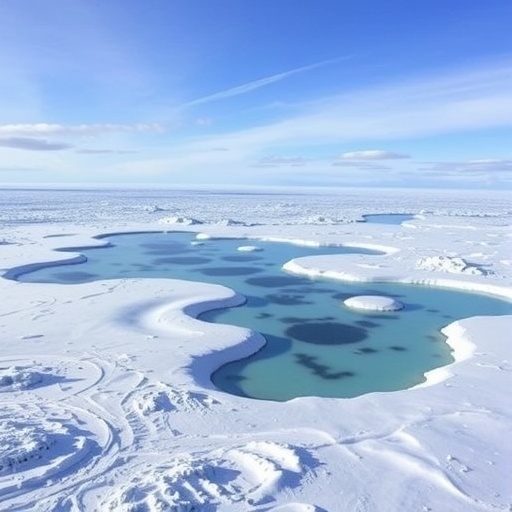
The study identifies two primary mechanisms behind the rising emissions. First, rising Arctic temperatures have led to more frequent and intense wildfires. These fires not only release carbon stored in vegetation and soils directly but also darken the landscape with soot, which absorbs more solar radiation and accelerates local warming. Second, the same warming is thawing permafrost, creating waterlogged conditions that are ideal for methanogenic microbes. These microbes produce methane as a byproduct of decomposing organic matter that has been frozen for millennia.
The combination of these processes creates a synergistic effect: fires remove insulating vegetation and organic soil layers, hastening permafrost thaw, which in turn provides fresh organic material for methanogens. The result is a self-reinforcing cycle that is difficult to break.

Quantifying the Surge
While the paper does not provide specific tonnage figures in its abstract, the headline finding is the decadal doubling. This rate of increase is far steeper than most climate models have predicted, suggesting that current projections of Arctic methane emissions may be underestimated. The researchers used a combination of satellite observations, ground-based measurements, and climate modeling to arrive at their conclusions, though the full methodology is detailed in the paper.
The implications are profound. Methane is a potent greenhouse gas, with a global warming potential roughly 28-34 times that of carbon dioxide over a 100-year period. Even small increases in methane emissions can have outsized effects on global temperatures.
Feedback Loops and Climate Tipping Points
This study highlights the potential for a major climate tipping point. As Siberia warms, more methane is released, which accelerates warming, which in turn releases more methane. This positive feedback loop could push the climate system past a critical threshold, leading to runaway warming that is beyond human control.
The authors emphasize that the observed decadal doubling is a clear signal that the Arctic is changing faster than anticipated. They call for urgent action to reduce greenhouse gas emissions and to enhance monitoring of these vulnerable regions.

Implications for Global Climate Policy
The findings have significant implications for international climate policy. Current Nationally Determined Contributions (NDCs) under the Paris Agreement may not fully account for the rapid acceleration of natural methane emissions from Arctic regions. Policymakers will need to consider these feedbacks when setting emissions reduction targets.
Moreover, the study underscores the importance of reducing human-caused methane emissions from sources like fossil fuel extraction, agriculture, and landfills. Even if anthropogenic emissions are curbed, natural feedbacks could undermine progress, making aggressive mitigation even more critical.
Scientific and Public Response
The scientific community has reacted with concern. Experts not involved in the study have called for increased investment in Arctic research and monitoring infrastructure. The study also highlights the need for better integration of these findings into global climate models to improve projections.
For the public, the news is a stark reminder of the urgency of climate action. The Arctic is often described as the 'canary in the coal mine' for climate change, and this study shows that the canary is singing loudly.

Looking Ahead
The authors suggest that future research should focus on identifying the precise locations and conditions that lead to the highest emission rates, as well as the potential for mitigation strategies such as wetland restoration or fire management. However, they caution that the scale of the problem is vast and that prevention of further warming is the only long-term solution.
As the world grapples with the escalating climate crisis, this study serves as a critical reminder that the Earth's natural systems are responding to human-induced warming in ways that could amplify the problem. The doubling of Siberian methane emissions is not just a regional issue; it is a global one that demands immediate attention.
This article is based on reporting by Science (AAAS). Read the original article.
Originally published on science.org