An antimatter-linked quantum milestone could open a new experimental path
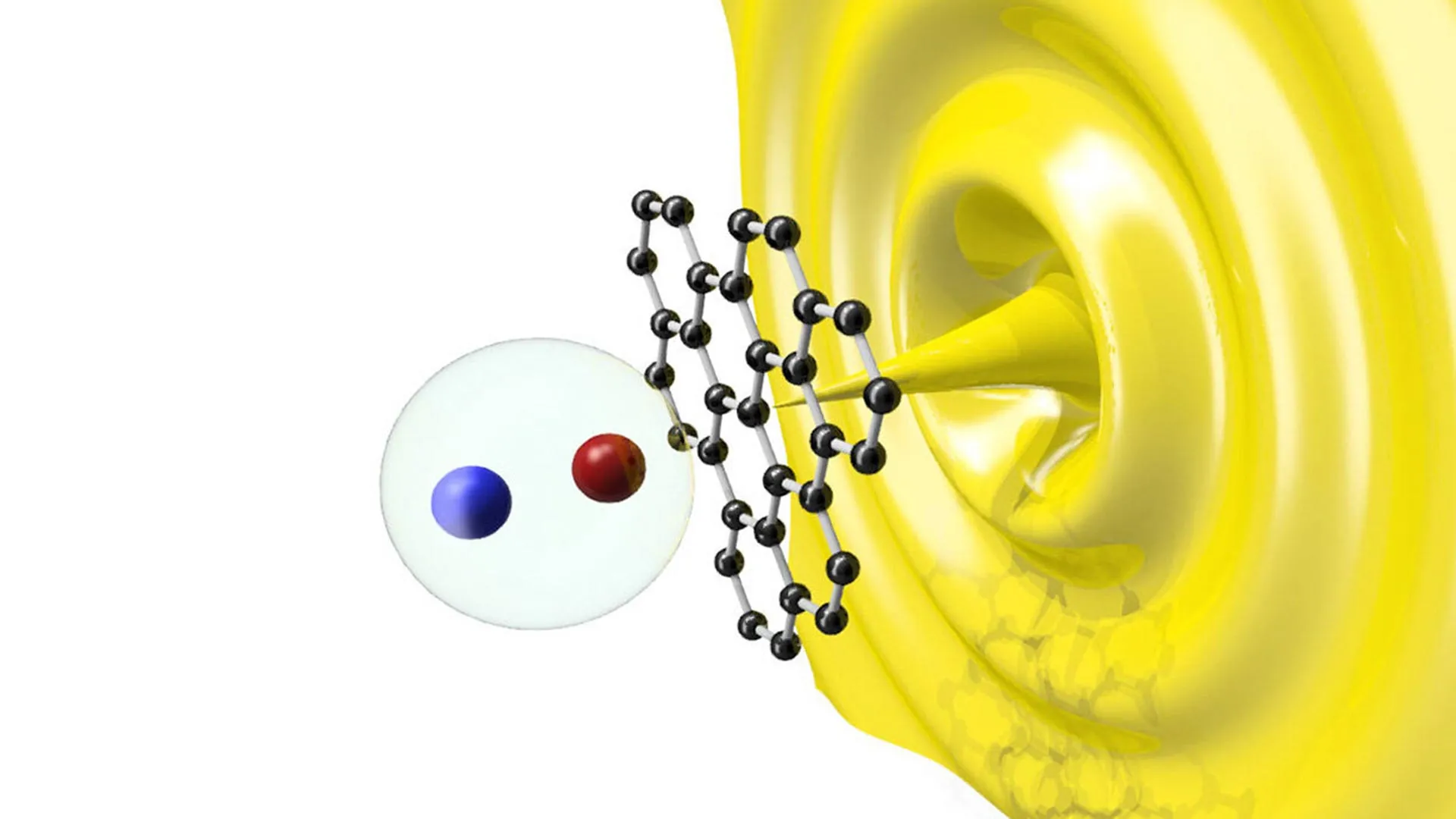
Researchers have directly observed wave-like interference in positronium for the first time, according to a summary released by Tokyo University of Science. The result marks the first demonstration of matter-wave diffraction in a beam of positronium, a short-lived system made of an electron and its antimatter counterpart, a positron, bound together around a shared center of mass.
The experiment matters because wave-particle duality is one of the core ideas of quantum physics, yet not every particle system has been equally accessible to direct demonstration. Scientists have long shown wave-like behavior in electrons, neutrons, helium atoms, and even larger molecules. Positronium, despite its unusual appeal as a matter-antimatter two-body system, had remained outside that list.
Why positronium is special
Positronium is not just another exotic particle state. It is a rare structure in which the two components have equal mass, making it especially interesting for researchers trying to understand how such a paired system behaves as a beam and how it diffracts. Because it is also short-lived, it poses obvious experimental challenges. That combination of symmetry and fragility is part of what has made positronium such a compelling but difficult target.
The research team from Tokyo University of Science, led by Professor Yasuyuki Nagashima and including Associate Professor Yugo Nagata and Dr. Riki Mikami, reported that they were able to produce a beam with the energy range and coherence needed to generate clear interference effects. In quantum terms, that is the key threshold. Without a sufficiently coherent beam, the wave nature of the system cannot be cleanly resolved.
A new confirmation of quantum behavior
The observation extends one of the most famous lessons of modern physics. In the classic double-slit picture, particles can produce alternating bands on a detector because their wave functions interfere with themselves. Demonstrating comparable behavior in positronium reinforces that this strange quantum logic applies even to a fleeting system made from matter and antimatter together.
That alone would make the experiment important. But the result also creates a practical opening. Once researchers can generate and characterize positronium beams capable of diffraction, they gain a more credible route toward additional precision studies involving antimatter-linked systems.
The gravity question moves closer
The source summary points to one implication in particular: future experiments on how gravity affects antimatter. That question has long carried outsized scientific interest because it touches both fundamental symmetries and the limits of current experimental reach. The new positronium result does not answer that question directly. What it does is establish a new platform that could help make such tests more feasible.
That is why the breakthrough matters beyond a single elegant demonstration. It is not only a confirmation that positronium behaves quantum mechanically in the expected way. It is a technical step toward experiments that had previously remained more aspirational than practical.
A small-scale result with broad significance
Quantum research often advances through milestones that seem narrow on the surface but later become enabling methods. Observing diffraction in a positronium beam fits that pattern. The experiment concerns a highly specialized system, yet the payoff may spread into broader questions about antimatter, precision measurement, and the interface between quantum mechanics and gravity.
The result also highlights the continuing value of foundational physics at a time when much scientific attention is drawn toward directly commercial technologies. Discoveries like this do not immediately produce a product roadmap. They expand the experimental toolkit. And in fundamental physics, that kind of expansion is often what makes the next major question testable.
For now, the claim is already substantial enough: a matter-antimatter atom-like system has been seen acting as a wave in a direct interference experiment. That closes a longstanding gap in the experimental record and gives physicists a new handle on one of the field's most unusual quantum objects.
This article is based on reporting by Science Daily. Read the original article.
Originally published on sciencedaily.com