Ancient coatings offer a new record of seafaring technology
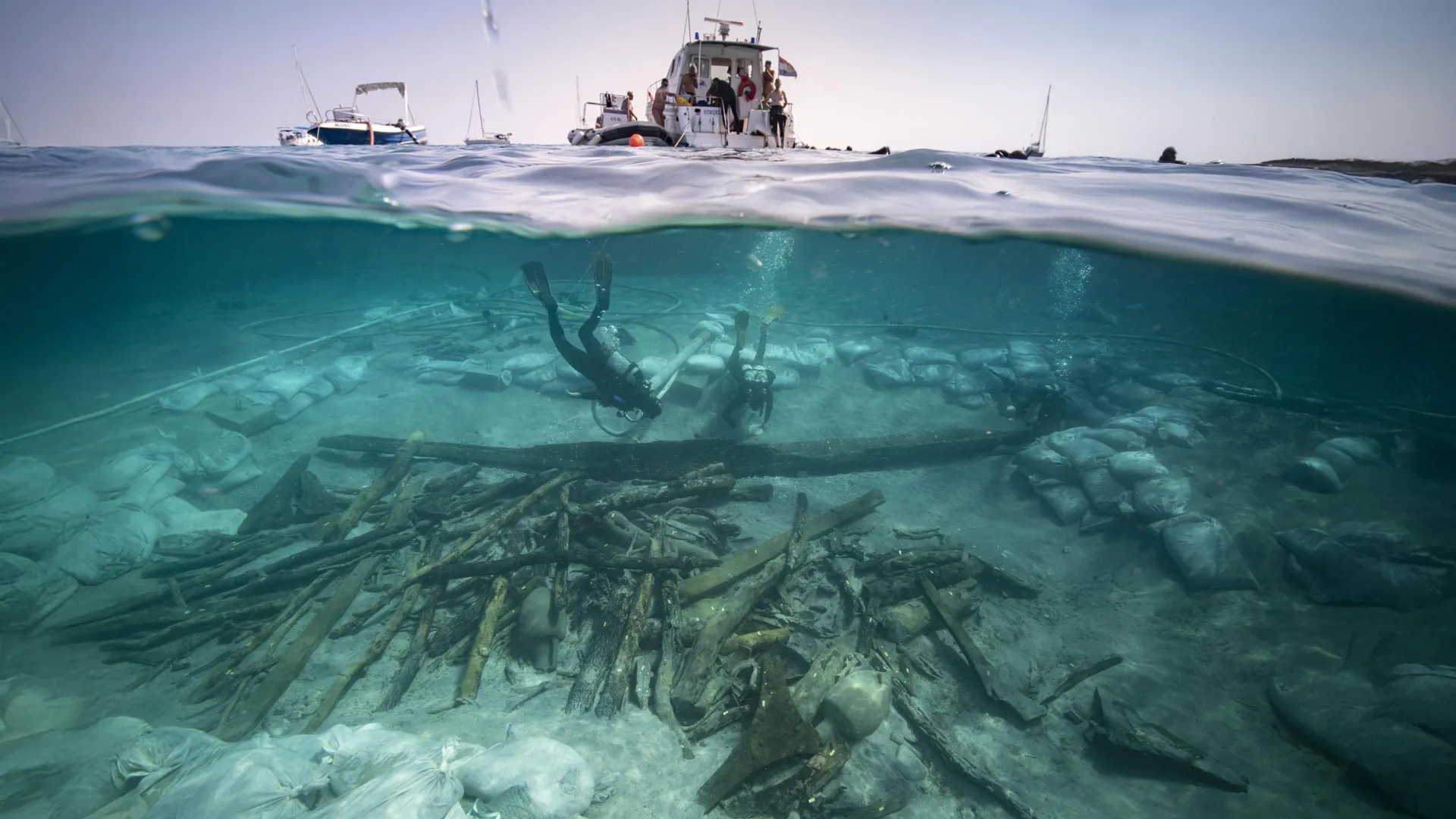
A 2,200-year-old shipwreck off the coast of Croatia is giving archaeologists a closer look at how Roman-era vessels were protected from water and biological damage. Researchers studying the Ilovik-Paržine 1 wreck identified two different waterproofing coatings: one made from pine tar, also known as pitch, and another that combined pine tar with beeswax.
The work, reported in a study published in Frontiers in Materials, focuses on materials that are essential to a ship’s survival at sea but have often received less attention than its wooden structure. The vessel dates to the Roman Republic and sank near what is now Croatia. Its preserved coatings provide evidence not only of a practical construction technique, but also of the environments associated with the ship’s construction or later repair.
Microscopic pollen grains were trapped in the sticky protective layers. By examining that pollen, researchers were able to identify plant taxa present in the immediate surroundings when the vessel was built or worked on. That makes the coating a potential environmental and logistical record attached directly to the ship.
Two recipes for keeping a wooden ship seaworthy
Wooden hulls face persistent threats in saltwater. Water intrusion can compromise a vessel, while microorganisms and marine organisms can degrade exposed material. Shipworms, despite the name, are marine mollusks that burrow into wood and can cause extensive structural damage. Waterproofing layers helped crews and builders manage those risks.
The Ilovik-Paržine 1 findings point to two distinct approaches on the same vessel. One coating was pine tar. The other was a mixture of pine tar and beeswax. The study does not establish every reason the recipes differed, but the presence of more than one coating shows that protective treatment was not necessarily a single, uniform process over a ship’s life.
That variation is important because ships were maintained, repaired and modified over time. A protective material can preserve traces of those interventions that are not obvious from timber alone. In this case, pollen embedded in the coating may help researchers distinguish aspects of the local vegetation present during construction or repair activity.

Why archaeologists are studying the organic layers
Archaeological analysis of ancient vessels historically concentrated heavily on wooden components. The protective substances that made navigation possible received comparatively less attention, according to the researchers. Yet waterproofing materials were central to moving goods and people across seas and rivers.
First author Dr. Armelle Charrié, an archaeometrist at the Laboratory of Mass Spectrometry of Interactions and Systems in Strasbourg, described such organic materials as essential to navigation and as evidence of past naval technologies. The new analysis illustrates why: a thin coating can contain chemical information about its ingredients as well as biological material from the environment in which it was applied.
For ship archaeology, that expands the set of evidence available. Hull design can reveal how a vessel was assembled, while cargo and amphoras can illuminate trade. Coatings can add another layer, documenting maintenance practices and material choices. Together, those records can provide a fuller account of how a ship functioned through its working life.
Pollen turns waterproofing into a geographic clue
Pollen is especially useful because it can persist in suitable conditions and because different plants occur in different environments. In the Ilovik-Paržine 1 coatings, the grains offer clues about plant taxa near the vessel during construction or repair. The evidence is not a complete travel log, but it can help researchers investigate where relevant work may have taken place.
That is a notable use of a material made for a straightforward engineering purpose. Pine tar and beeswax were applied to protect the ship, but the same sticky surface captured particles from the surrounding world. More than two millennia later, those particles can still contribute to the reconstruction of the vessel’s history.
The approach also underscores the value of preserving and examining materials that may once have been treated as secondary residues. Organic coatings can be difficult to study, and they may not be as visually prominent as a hull or cargo. Their scientific value, however, can extend beyond identifying ingredients to connecting a vessel with maintenance events and environmental contexts.

A broader picture of Roman maritime practice
The Ilovik-Paržine 1 wreck does not merely show that ancient sailors used waterproofing. It documents specific material combinations and demonstrates that researchers can extract new information from them. Pine tar, beeswax and embedded pollen together offer a window into technical choices made by people who had to keep a wooden vessel operating in a demanding marine environment.
The findings also point toward a broader research opportunity. If comparable coatings on other wrecks are analyzed with similar care, archaeologists may be able to compare recipes, repair practices and local environmental signals across vessels and regions. Such work could make organic protective materials a more routine part of maritime archaeology.
For this shipwreck, the result is a more detailed picture of Roman-era seafaring: a vessel whose protective layers were carefully applied, potentially renewed during its life, and preserved long enough to reveal both ancient engineering and traces of the landscapes around it.
This article is based on reporting by Science Daily. Read the original article.
Originally published on sciencedaily.com