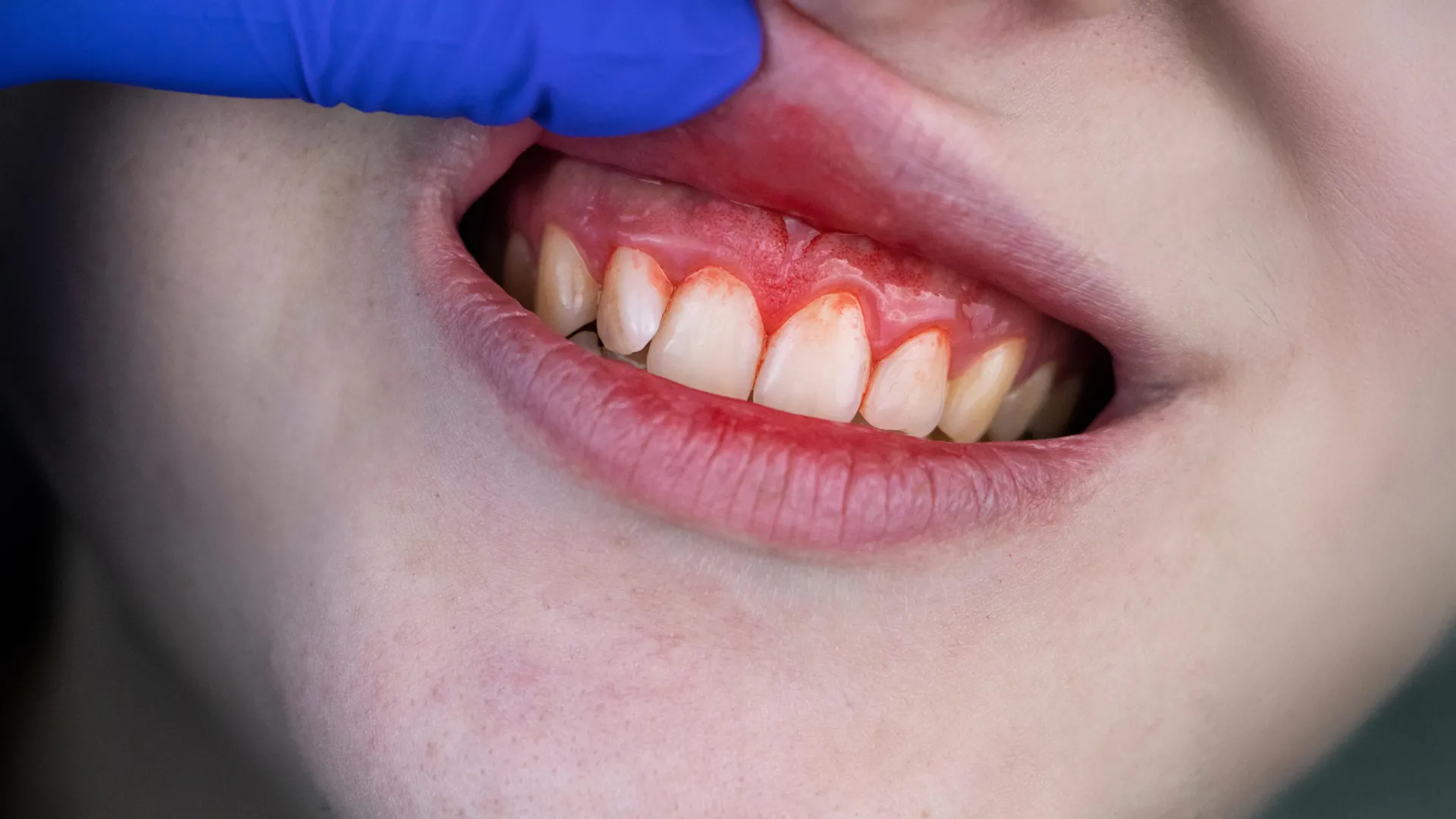
A more selective approach to periodontitis
Researchers at Nagoya University have reported an experimental treatment designed to attack a bacterium associated with severe gum disease while preserving beneficial microbes and healthy gum cells. The approach combines antibodies derived from egg yolk with near-infrared light, and has so far been tested in human cell cultures and mice.
The work focuses on periodontitis, a serious inflammatory disease that damages gums and the bone supporting teeth. It is a major cause of tooth loss. Current treatment can include attempts to reduce the bacterial burden, but broad antimicrobial approaches may also affect microbes that contribute to a healthy oral environment.
The researchers’ aim is therefore not simply to remove bacteria indiscriminately. Their strategy is to direct treatment at a specific pathogen while leaving more of the mouth’s natural microbial community intact.
Why the target matters
The bacterium at the center of the study is Porphyromonas gingivalis, often shortened to P. gingivalis. It is described as a keystone pathogen: even when it is not especially abundant, it can exert an outsized influence on the surrounding microbial community.
By promoting inflammation and disrupting the balance of oral microbes, P. gingivalis can contribute to damage in the tissues and bone that keep teeth in place. That makes selective targeting particularly appealing. If a therapy can reduce this pathogen without broadly disturbing the rest of the microbiome, it could potentially avoid one of the drawbacks of less discriminating antimicrobial treatment.
Conventional antibiotics and antimicrobial photodynamic therapy can eliminate both pathogenic and beneficial oral bacteria, according to Kazuhide Sato, a corresponding author and lecturer at Nagoya University. The new method is intended to narrow that effect.

Antibodies plus near-infrared light
The experimental system uses antibodies obtained from egg yolks and pairs them with near-infrared light. The antibodies are designed to identify the harmful bacteria; light is then used as part of the bacteria-killing process. The reported result is selective action against the target organism while protecting healthy gum cells and beneficial microbes.
That distinction is important because the mouth is home to a complex ecosystem of microorganisms. Many are not disease-causing and can play useful roles in oral health. A treatment that indiscriminately suppresses that ecosystem may solve one problem while creating another imbalance.
In the early experiments described by the researchers, the therapy showed activity in cultured human cells and in a mouse model. In mice, it significantly reduced bone loss associated with periodontitis. Bone loss is one of the most consequential outcomes of advanced gum disease, since it weakens the structures that support teeth.
Promising evidence, but still early
The findings are a preclinical result, not evidence that the method is ready for routine dental care. Cell-culture and mouse experiments can show whether a biological idea is worth pursuing, but they do not establish safety, effectiveness, durability, or practical delivery in people.
Important questions remain before the approach could become a clinical treatment. Researchers would need to establish how consistently it reaches disease sites in the human mouth, how it performs across different stages of periodontitis, and whether repeated treatment has unintended effects. Human studies would also be needed to assess safety and to compare the method with existing periodontal therapies.
Still, the study points toward a broader direction in infection treatment: preserving useful microbial communities where possible instead of relying solely on broad-spectrum interventions. In oral health, where microbial balance is closely tied to inflammation and tissue damage, that precision could be especially valuable.

What comes next
The Nagoya University work was published in the Journal of Translational Medicine. Its central contribution is a proof of concept for combining a targeted biological recognition tool with light-based treatment to reduce a harmful oral bacterium.
For patients, the immediate implication is not a new product or replacement for established periodontal care. The work instead provides an early indication that a more selective treatment could one day be possible. For researchers, it offers a model for addressing infection while attempting to protect the beneficial organisms that share the same environment.
If later studies support the result in people, the technique could add a precision-oriented option to efforts to prevent the tissue and bone damage that make periodontitis so destructive. For now, the evidence is encouraging but preliminary: a targeted therapy that worked in laboratory and animal tests, with the essential clinical questions still ahead.
This article is based on reporting by Science Daily. Read the original article.
Originally published on sciencedaily.com


