A famous object looks different when a telescope survives long enough
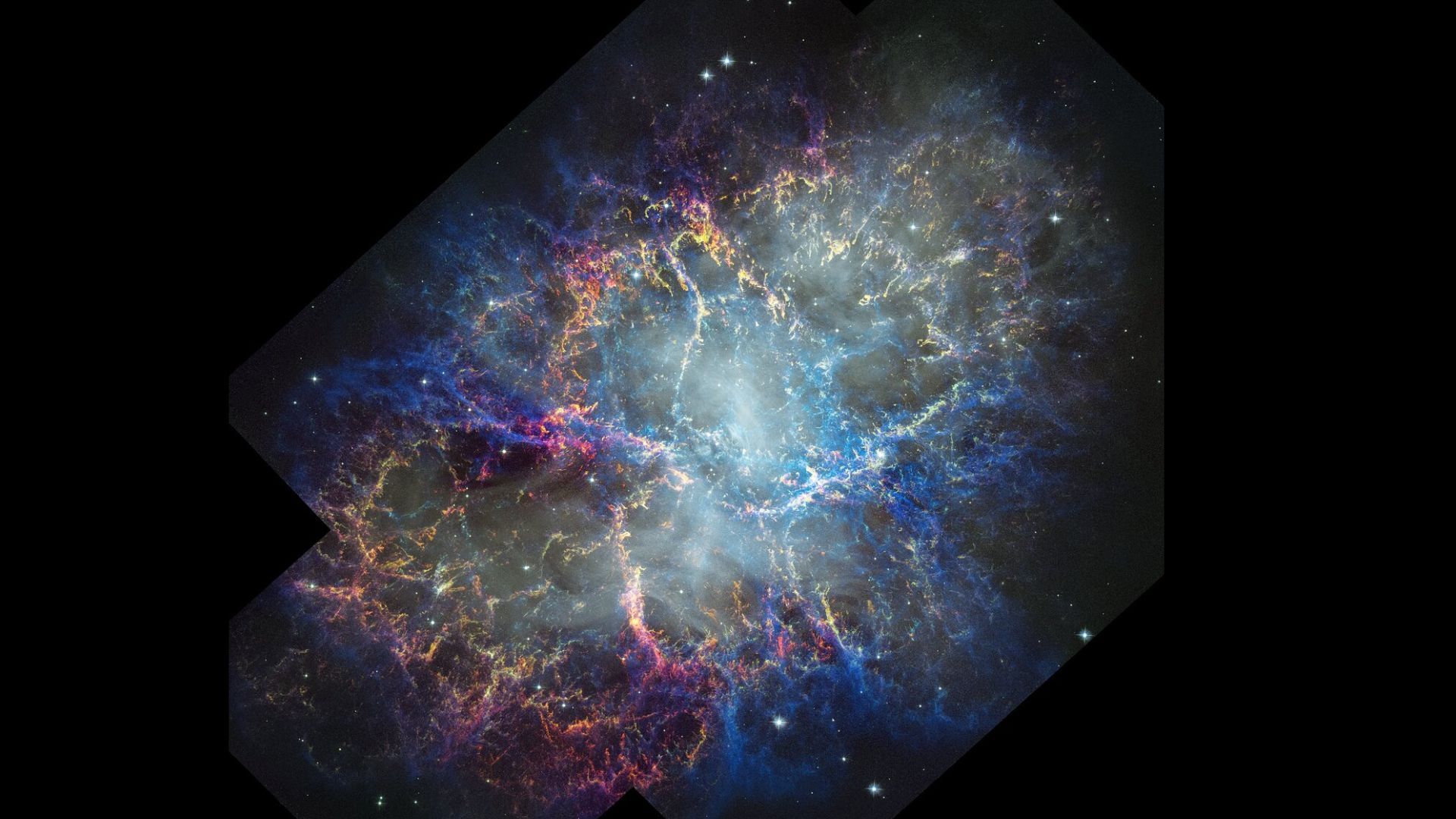
The Crab Nebula is one of the most familiar objects in astronomy, but new Hubble comparisons show that familiarity can hide motion. According to Live Science, images of the nebula taken 25 years apart reveal major visible changes, giving astronomers a rare chance to track how a supernova remnant evolves over a long observational baseline.
The object, also known as M1, lies about 6,500 light-years away in the constellation Taurus. It is the remnant of a stellar explosion and remains one of the most studied structures in the sky. What makes the new comparison especially valuable is not just the detail in a single image, but the fact that Hubble has remained operational long enough to provide a meaningful before-and-after record across a quarter century.
Why a 25-year comparison matters
Many cosmic processes unfold on timescales too long for human observers to notice directly. A star can live for billions of years. Galaxies evolve over incomprehensible spans. Supernova remnants, however, occupy a middle ground where motion and structural change can become visible within decades, provided instruments are precise enough and persist long enough.
That is the story here. Live Science says the newer and older Hubble images show significant changes in the Crab Nebula’s structure and pulsar-driven growth over 25 years. The phrase “pulsar-driven” is important. At the heart of the Crab Nebula sits a pulsar, the dense rotating remnant of the exploded star, and its energy continues to shape the surrounding material.
Instead of a static cloud left behind by an ancient event, the Crab appears as an active system still being reorganized from within. The new comparison turns that from an abstract scientific idea into something visible.

Hubble’s longevity becomes part of the science
The finding is also a reminder that observatories create unique value through duration as well as instrumentation. Hubble’s longevity is not merely a story of survival. It is what made this comparison possible. Without consistent space-based imaging separated by decades, astronomers would have a much harder time isolating real structural changes from differences in equipment, atmosphere or observation style.
Live Science frames this as an example of how Hubble’s extended life is still producing fresh insight. That matters because aging missions are sometimes judged mainly on what newer observatories can do better. In this case, Hubble’s advantage is historical continuity. It can compare the present to a high-quality past that it recorded itself.
The Crab Nebula remains a laboratory, not a relic
The Crab Nebula has long served as a natural laboratory for studying extreme astrophysics. The supplied source text emphasizes that the new images reveal more about its evolution, structure and pulsar-driven growth. Even with limited detail in the feed, that alone is enough to underscore the object’s scientific importance.
Supernova remnants are not just debris fields. They are places where shock waves, magnetic fields and high-energy particles reshape matter over time. The Crab is particularly compelling because its central pulsar continues to inject energy into the nebula, sustaining an environment that changes on observable timescales.
That makes the system useful for understanding how stellar death leaves behind structures that are still dynamic long after the original explosion. A comparison separated by 25 years does not just offer a prettier image. It shows the remnant as a process.

A different kind of astronomical time-lapse
Modern science imagery often depends on simulations, composites and artist’s impressions to help audiences grasp slow-motion cosmic change. The Hubble comparison is different because it is effectively a real astronomical time-lapse built from direct observation. That gives it unusual communicative power.
People can understand that the nebula has changed because the evidence is visible. The remnant is not merely described as evolving. It is shown to have evolved. For public understanding of astronomy, that distinction matters. It closes the gap between technical explanation and intuitive seeing.
The broader lesson from the Crab
The Crab Nebula’s new portrait is a reminder that the universe is not frozen at human scale. Even objects we file away as familiar icons are still moving, expanding and being reshaped. Long-running observatories can reveal that reality in ways no single snapshot can.
Live Science presents the comparison as yielding new insight into the Crab’s structure and development over 25 years. That may sound modest beside discoveries of new worlds or exotic particles, but it captures something fundamental about astronomy: understanding often comes not from one spectacular observation, but from watching carefully enough, and long enough, to see change itself.
In that sense, the Crab Nebula’s latest appearance says as much about Hubble as it does about the remnant. The telescope has lasted long enough for the sky to visibly answer back.
This article is based on reporting by Live Science. Read the original article.

Originally published on livescience.com