Chemical evidence from an Early Cretaceous dinosaur
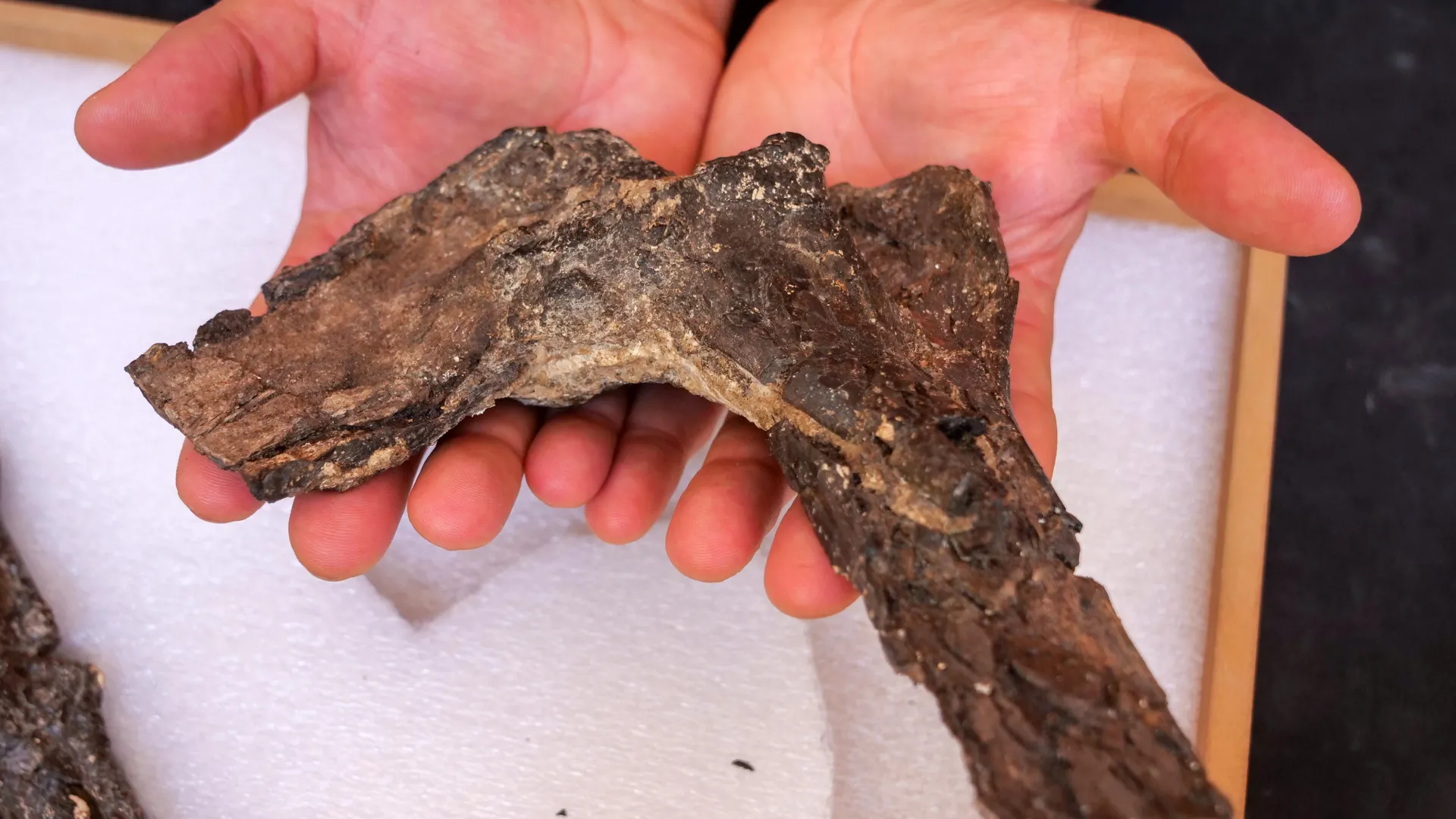
Researchers have reported chemically confirmed traces of blood-derived molecules within fossilized dinosaur bones estimated to be 115 million years old. The material came from the remains of Aratasaurus museunacionali, a meat-eating theropod discovered in northeastern Brazil.
According to the research summary from Curtin University, the international team identified mineralized structures resembling red blood cells in vascular canals in the dinosaur’s limb bones. Chemical analyses also detected heme-derived molecules, components associated with hemoglobin, the oxygen-carrying protein in red blood cells.
The finding matters because fossil research has long faced a basic preservation question: whether fragile biological compounds can leave identifiable chemical signatures after tens of millions of years. Previous studies had described cell-like structures in old fossils, but the new work is presented as the first definitive chemical confirmation of hemoglobin-derived molecular remains within fossilized dinosaur red blood cells.
What the team found
Vascular canals are small passages in bone that once contained blood vessels. Within these spaces, the researchers found numerous mineralized red blood cells. Their chemical analysis detected preserved heme molecules, which are central components of hemoglobin.
The study also reported amino acids associated with collagen, a structural protein found in bone and connective tissue. The combination of cell-like structures and chemical evidence is important: a visual resemblance alone can be difficult to interpret, while molecular analysis can help distinguish possible biological remnants from mineral features formed during fossilization.
The result does not mean that fresh blood or intact dinosaur tissue has survived. Rather, it indicates that molecular traces derived from ancient biological material can remain detectable when fossils experience exceptional preservation conditions. That distinction is central to interpreting the discovery responsibly.
Why preservation is scientifically significant
Biomolecules generally degrade over time through heat, water, microbes and chemical reactions. For that reason, claims of ancient soft tissues or organic compounds require especially careful testing. The reported detection of heme-derived molecules in a 115-million-year-old fossil extends the time span over which researchers may be able to investigate molecular evidence in dinosaur remains.
If the findings are supported by further analyses of other fossils, researchers could gain another route to studying aspects of prehistoric animal biology. Blood-related molecular remnants and collagen-associated compounds may help scientists ask more detailed questions about fossil preservation, the tissues originally present in bones and the chemistry of extinct animals.
The work also highlights why the geological history of individual fossils matters. Molecular survival is unlikely to be uniform across all specimens of similar age. Burial environment, mineralization and later chemical alteration can all affect what evidence remains available for study. A result from one unusually well-preserved dinosaur therefore should not be treated as proof that comparable materials will be found in every fossil.
Implications beyond dinosaur research
The Curtin-led team says the discovery could inform the search for ancient life beyond Earth. That implication is not that dinosaur blood is relevant to another planet, but that it demonstrates how chemical signatures of biology may persist in mineralized material under favorable conditions.
Scientists investigating ancient environments must often work with incomplete, altered evidence. Better knowledge of how biological molecules interact with minerals and persist through deep time could help refine the kinds of traces researchers look for in old terrestrial rocks and in samples gathered from other worlds.
For palaeontology, the study adds molecular chemistry to the physical clues traditionally extracted from fossils. Bones still provide their most immediate evidence through shape, size and anatomy. But chemical work can potentially add another layer, provided findings are replicated, contamination is excluded and the limitations of preservation are clearly stated.

A result that invites scrutiny and follow-up
The researchers describe the evidence as a challenge to assumptions about the longevity of delicate biological molecules. That makes independent verification and additional fossil studies especially valuable. Ancient-biomolecule research produces its strongest conclusions when multiple methods converge on the same interpretation.
For now, the central result is narrow but notable: a team examining an Early Cretaceous theropod fossil found mineralized red blood cells and chemical evidence of heme-derived molecules, alongside amino acids associated with collagen. The study offers a new data point in the effort to determine what biological information can endure inside the fossil record.
It also reinforces a broader lesson from palaeontology: fossils are not simply stone copies of vanished organisms. Under rare conditions, they can retain chemical evidence that links researchers more directly to the biology of animals that lived more than 100 million years ago.
This article is based on reporting by Science Daily. Read the original article.
Originally published on sciencedaily.com