
A succession of results in quantum physics has made one of Albert Einstein's most intuitive assumptions about reality increasingly difficult to retain: that physical objects possess definite properties independently of measurement. The latest work discussed in Quanta Magazine follows a long chain of arguments and experiments that has narrowed the room for that view.
The conclusion is not that tables, planets or people disappear when nobody looks at them. It is more precise, and more unsettling. At the quantum scale, the mathematical state used to describe a system cannot straightforwardly be treated as a mere record of hidden, observer-independent facts that already exist in the ordinary classical sense.
The debate reaches back to 1935, when Einstein and his collaborators challenged the implications of quantum mechanics. Their concern was rooted in a commonsense picture of the world: a physical thing should have properties that are true whether or not anyone is checking. A red billiard ball, in that picture, remains red in the dark and when unobserved. Its colour belongs to the ball, rather than to an observer or measuring device.
Quantum mechanics offers probabilities
Quantum mechanics has been repeatedly validated as a theory of microscopic phenomena, but its interpretation has long resisted consensus. Its mathematics commonly provides probabilities for the outcomes of measurements. Before a measurement, the theory does not assign a familiar definite property in the same way a classical description might.
Some founders of quantum mechanics took that feature to suggest that a single objective reality of the kind Einstein preferred was not the full story. Einstein opposed that reading. His 1935 thought experiment was intended to show that quantum mechanics, if taken as a complete account of reality, produced unacceptable consequences.
The dispute was never only philosophical. It asked whether quantum theory describes an incomplete world in which deeper hidden facts determine outcomes, or whether the theory's probabilistic structure reflects a more fundamental limit on what can be said to exist independently of observation.


Bell changed the test
In 1964, physicist John Stewart Bell transformed the discussion. Bell developed a thought experiment that showed reality would have to be stranger than Einstein had assumed. Rather than merely debating interpretations, Bell's reasoning opened a path to experimental tests.
Subsequent experiments tested Bell's ideas and supported the quantum predictions. These results did not simply declare that measurement creates the world. They showed that attempts to preserve a familiar combination of assumptions about pre-existing properties and separated systems face severe constraints.
That was a pivotal shift. Einstein's objections had sought to retain a classical-style account beneath quantum statistics. Bell showed that such a rescue could not keep all of the intuitive principles at once. Nature's behavior, if quantum mechanics is correct, cannot be fully captured by the ordinary picture in which every measurement result was already fixed by local facts.
The question that remained
Bell's theorem left further questions about the quantum state itself. A quantum state can be viewed in more than one way. It might be a description of something physically real, or it might instead represent incomplete knowledge about an underlying reality. The latter family of ideas is sometimes described as treating the quantum state as epistemic: a state of knowledge rather than a direct feature of the world.
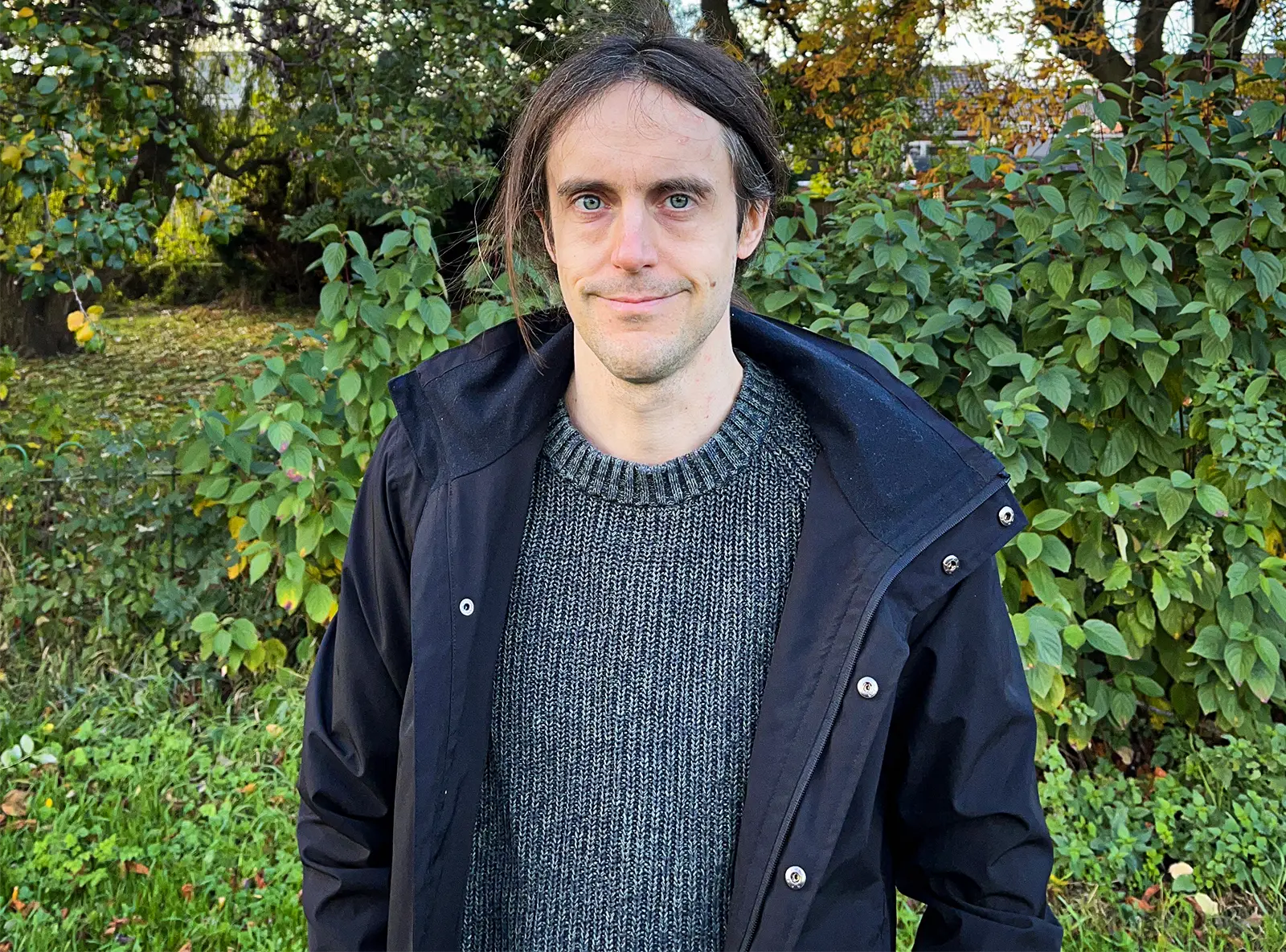
Matthew Pusey, then a graduate student at Imperial College London, examined this remaining route in his doctoral work. According to the account, he did not set out to deliver a final blow to Einstein's preferred notion of reality. Yet the theorem associated with that line of research sharply restricts the possibility that quantum states are only reflections of ignorance about an underlying, classical-like physical state.
The force of the result lies in its assumptions and logic. If distinct quantum states could merely encode different information about the same underlying physical reality, certain preparations and measurements should be compatible in a particular way. The theorem shows that quantum predictions rule out that simple arrangement under the relevant assumptions.

What the result does and does not say
Descriptions such as “reality is dead” are attention-grabbing, but they can obscure what has actually been learned. The theorem does not establish that nothing is real, that human minds manufacture the universe, or that every everyday object lacks properties when unobserved. Quantum theory remains extremely successful at predicting experimental outcomes.
What the work challenges is a particular classical intuition: that the quantum state can always be reduced to a catalogue of observer-independent properties already possessed by a system. The experimental and theoretical record has made that position harder to sustain without giving up other assumptions or adopting a substantially different account of what physical reality is.
There is still no universal agreement on the interpretation of quantum mechanics. Different interpretations seek to make sense of the same successful mathematics in different ways. Some emphasize measurement, some focus on branching outcomes, and others reconsider what a quantum state represents. The persistence of multiple interpretations is itself evidence that the conceptual question remains open even when the empirical predictions are not in doubt.
Why Einstein's challenge still matters
Einstein's resistance was valuable precisely because it made the foundations of quantum theory harder to ignore. By articulating a clear idea of what a complete physical theory ought to provide, he helped set the stage for later work that could test those expectations rather than merely assert them.
The path from the 1935 thought experiment to Bell's 1964 result and later theorems shows how foundational questions can become productive science. A debate over what reality means became a source of mathematical constraints and experimental programs. The outcome has not supplied a single universally accepted picture of the quantum world, but it has established that the most comfortable classical picture is inadequate.
That is the enduring lesson. Quantum mechanics does not merely add uncertainty to an otherwise ordinary universe. It asks for a revision of the categories used to describe what a physical system is, what it can possess before measurement and how much of reality can be imagined as settled in advance.
This article is based on reporting by Quanta Magazine. Read the original article.

Originally published on quantamagazine.org


