A classic black hole still has new physics to offer
More than 60 years after Cygnus X-1 was first identified, astronomers have now accurately measured the behavior of its energy jets, revealing that the outflows move at about half the speed of light. The result adds a fresh layer of detail to the best-known black hole system in astronomy and shows that even iconic objects can continue to yield new insights.
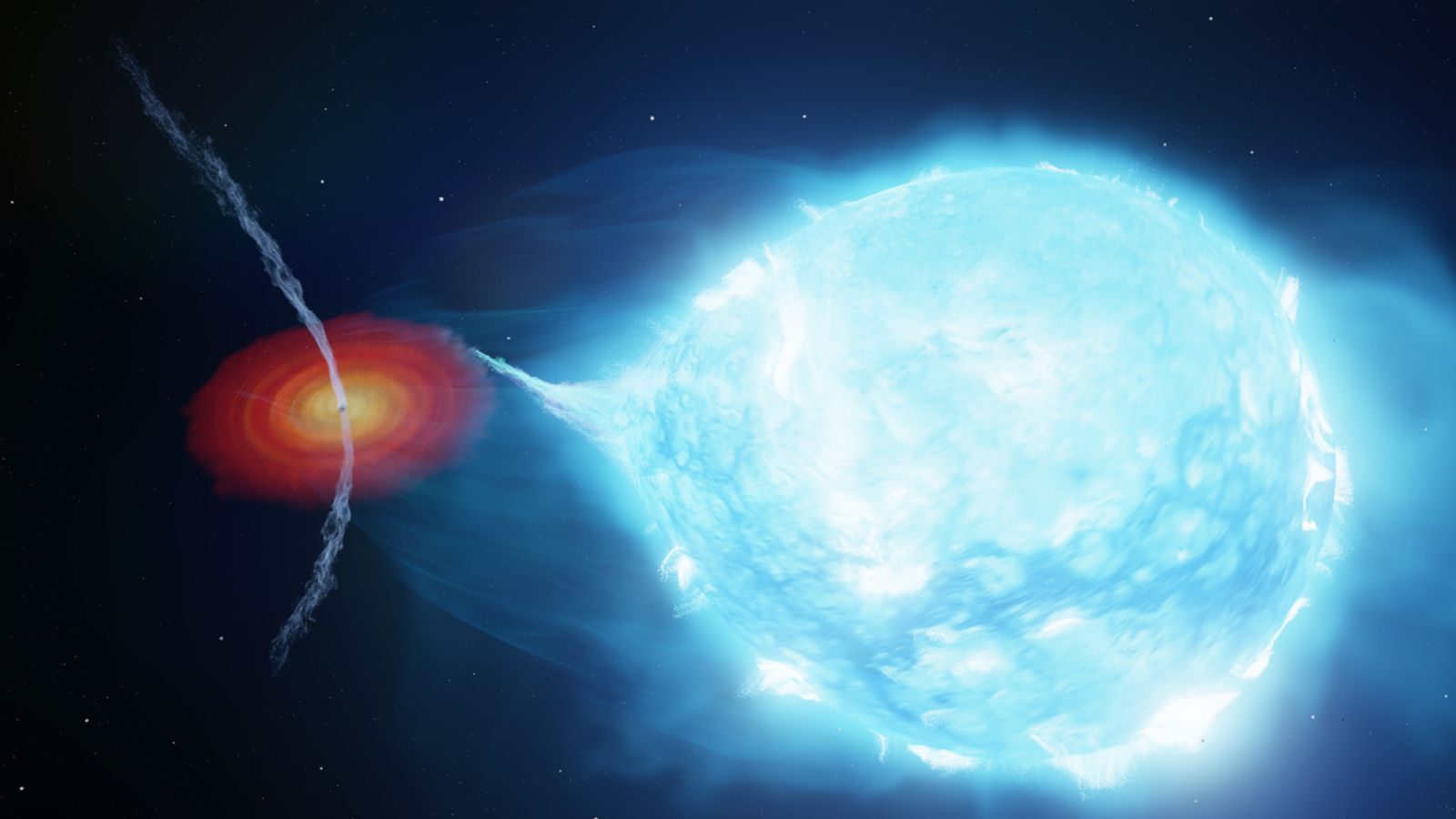
The measurement centers on the jets’ wobble, described in the report as a kind of dance. Researchers mapped how the jets move as stellar winds from Cygnus X-1’s companion star, HDE 226868, influence them. That allowed the team to characterize the jets with a level of precision that had remained elusive for decades.
Why Cygnus X-1 still matters
Cygnus X-1 holds a special place in astrophysics because it was the first confirmed black hole. For that reason alone, every substantial new result attracts attention. But this is not simply a legacy story. Jets from black holes are among the most important and least intuitive phenomena in high-energy astronomy. They carry enormous amounts of energy away from extreme environments and can shape the behavior of matter far beyond the immediate vicinity of the black hole itself.
Getting a more accurate measurement of jet speed and motion helps astronomers constrain how those outflows form and interact with surrounding conditions. In this case, the interaction with a partner star appears to be central. The wobble is not random. It reflects the physical influence of stellar winds on the jet structure.
A system defined by interaction
The source text highlights the relationship between the black hole and its companion star. Cygnus X-1 is not an isolated object. It sits in a binary system, and the presence of HDE 226868 changes what astronomers can observe. The star’s winds appear to buffet or modulate the jets, producing the motion researchers used to infer their properties.
That makes the measurement especially interesting. Instead of treating the wobble as observational noise, astronomers used it as signal. The “dance” became the clue that made the jets measurable. In other words, the complexity of the system created the opportunity for a more precise physical picture.
Half the speed of light is still extraordinary
A jet moving at roughly half the speed of light remains a startling figure, even in black hole research where extreme numbers are common. It underscores the enormous energies involved in the environment around Cygnus X-1. The system may be familiar, but the physics remains far outside ordinary human experience.
The result also illustrates how observational astronomy often progresses. Famous objects are revisited with better instruments, improved models, and more patient analysis. The payoff is not always a new object or a dramatic first detection. Sometimes it is a sharper answer to a very old question.
What this result adds
The new measurement gives researchers a firmer handle on how Cygnus X-1 behaves and offers a concrete benchmark for comparing jet systems around other compact objects. The supplied source text does not claim a complete solution to jet formation, and it does not need to. Establishing accurate speed and motion in such a historically important system is itself a meaningful advance.
Cygnus X-1 was one of the objects that helped turn black holes from theory into astrophysical reality. Decades later, it is still doing useful work. This time, it is helping astronomers understand not just what black holes are, but how they move energy through space in ways that can finally be measured with confidence.
This article is based on reporting by Live Science. Read the original article.
Originally published on livescience.com