Biology Meets Silicon
An Australian startup called Cortical Labs is building the first data centers designed to run computing hardware powered by living human brain cells. The company plans to construct two facilities that will house its proprietary neuron-filled chips, marking a radical departure from conventional data center architecture and pushing the boundaries of what computing infrastructure can look like.
The technology, known as biological computing or organoid intelligence, involves growing networks of human neurons on semiconductor chips. These biological neural networks can process information in ways that differ fundamentally from traditional silicon processors, potentially offering advantages in energy efficiency, adaptability, and certain types of pattern recognition.
How Biological Computing Works
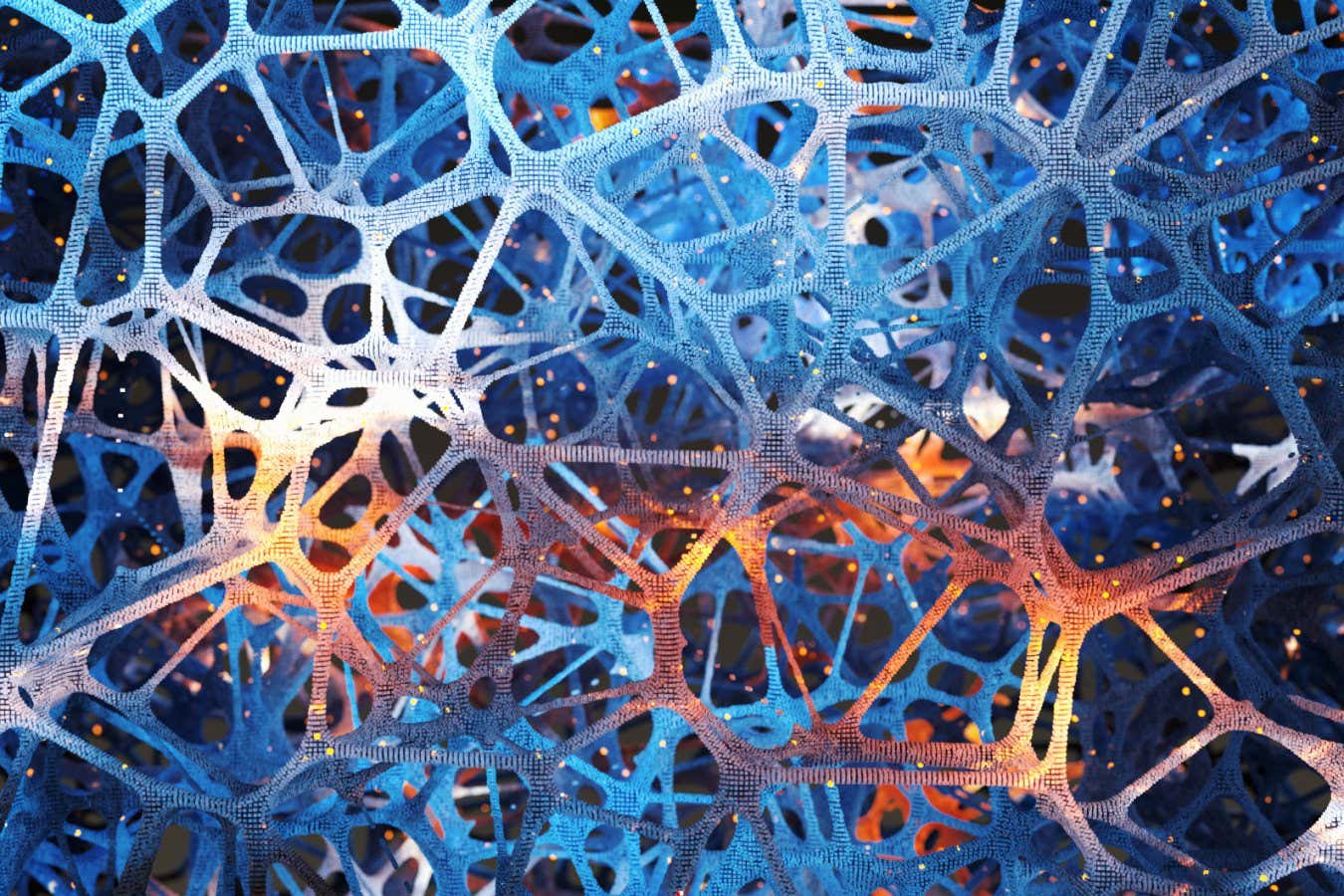
Cortical Labs' approach begins with human stem cells that are differentiated into neurons and cultured on multi-electrode arrays. These arrays provide both the interface for delivering inputs to the neurons and the means of reading their outputs. As the neurons grow and form connections, they create a biological neural network that can be trained to perform computational tasks.
The company first attracted widespread attention in 2022 when it demonstrated that its neuron chips could learn to play the video game Pong. While this was a relatively simple task, it proved that biological neural networks could receive information, process it, and produce meaningful outputs, the basic requirements for any computing system.
Since then, Cortical Labs has been working to scale the technology and improve its reliability. Building data centers represents a major step in this direction, moving from laboratory demonstrations to infrastructure that could eventually support commercial applications.
Potential Advantages
Proponents of biological computing point to several potential advantages over conventional silicon chips:
- Energy efficiency: biological neurons operate on extremely low power compared to transistors performing equivalent computations
- Adaptability: neural networks can reorganize and rewire themselves in response to new inputs, a form of hardware-level learning
- Fault tolerance: biological systems can continue functioning even when individual components fail
- Novel computation: neurons may be capable of processing information in ways that are difficult to replicate in silicon
The energy advantage is particularly compelling in an era when data centers are consuming an ever-larger share of global electricity. AI training and inference workloads have driven an explosion in data center construction, and any technology that could significantly reduce the energy cost of computation would have enormous commercial value.
Significant Challenges Remain
The technology is still in very early stages of development, and significant challenges must be overcome before biological computing can compete with conventional approaches. Living neurons require carefully controlled environments, including specific temperatures, nutrient supplies, and waste removal systems. Maintaining these conditions at data center scale introduces engineering complexities that do not exist with silicon chips.
Reliability is another concern. Biological systems are inherently variable, and ensuring consistent computational performance across thousands of neuron chips will require advances in both biology and engineering. The lifespan of neuron cultures is also limited compared to the years of continuous operation expected from conventional data center hardware.
There are also ethical considerations. Using human neurons in computing systems raises questions that the technology industry has not previously had to grapple with. While the neurons used by Cortical Labs are derived from stem cells and do not constitute anything resembling a brain or consciousness, the ethical frameworks for biological computing are still being developed.
Industry Context
Cortical Labs is not the only company exploring biological computing, but it appears to be the furthest along in terms of building infrastructure for commercial deployment. Academic research groups in the United States, Europe, and Asia are also investigating organoid computing, and several other startups have entered the space in recent years.
The broader computing industry is watching these developments with interest. As Moore's Law slows and the energy demands of AI continue to grow, alternative computing paradigms are receiving more attention and investment than at any previous time. Quantum computing, neuromorphic chips, and now biological computing all represent potential paths forward for an industry that is running up against the physical limits of conventional silicon technology.
The Road to Commercialization
Cortical Labs' data center plans represent a bet that biological computing can move from laboratory curiosity to practical technology within a relatively short timeframe. The company has not disclosed specific timelines for when the facilities will be operational or what applications they will initially support. However, the decision to build dedicated data centers suggests confidence that the technology is approaching a level of maturity where it can deliver real commercial value, even if it remains far from replacing conventional computing for most applications.
This article is based on reporting by New Scientist. Read the original article.