Introduction
A groundbreaking study published in Science (Volume 393, Issue 6806, July 2026) has reshaped our understanding of how the East Antarctic Ice Sheet (EAIS) formed. For decades, scientists believed that declining atmospheric carbon dioxide levels alone drove the planet into a deep freeze 34 million years ago, causing ice to accumulate on Antarctica. However, new evidence suggests that a major tectonic event—the breakup of the supercontinent Gondwana—triggered uplift in East Antarctica, creating highlands that allowed ice to nucleate and persist. This finding has profound implications for predicting future ice sheet behavior in a warming world.
Tectonic Uplift as a Key Driver
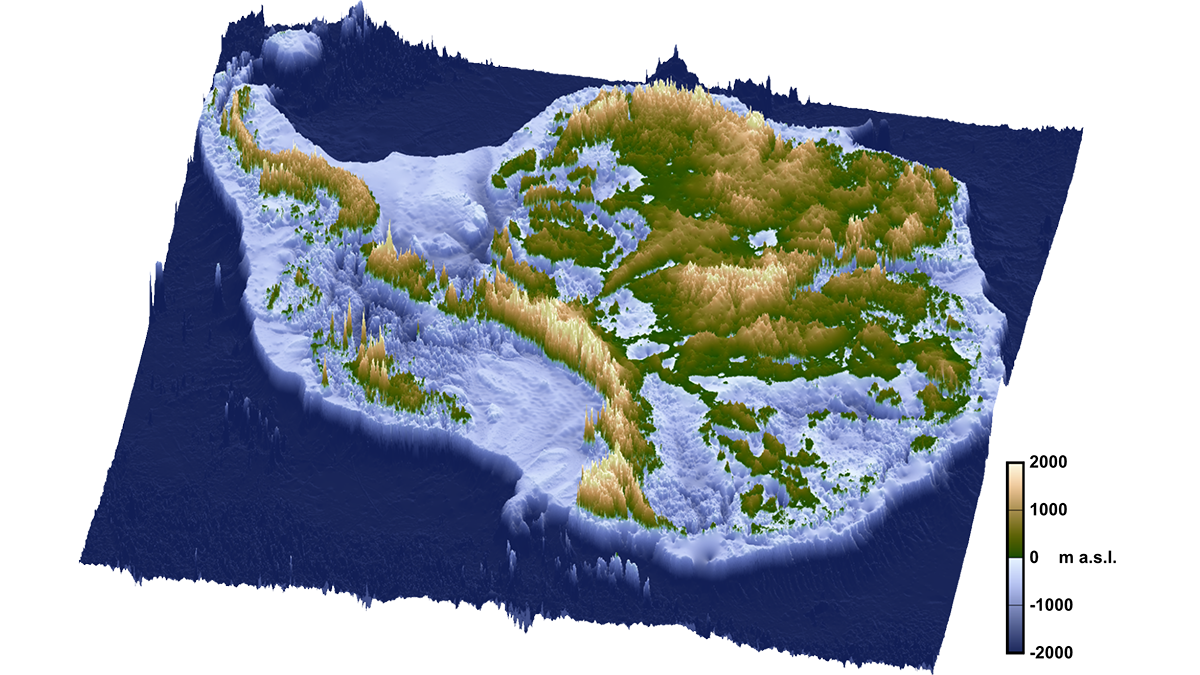
The study demonstrates that continental breakup and the associated dynamic uplift of the Antarctic continent played a critical role in the initiation of the EAIS. As Gondwana fragmented, the East Antarctic landmass experienced significant vertical motion due to mantle processes. This uplift raised vast regions above the snow line, enabling snow accumulation to persist year-round and eventually compact into glacial ice. Without this tectonic uplift, the continent may have remained largely ice-free even at low CO2 levels.

Reevaluating the Role of CO2
While CO2 decline remains an important factor, the research indicates that it was not the sole trigger. The uplift created high-elevation plateaus that acted as nucleation sites for ice sheets. Once established, the ice sheet itself altered regional climate through albedo feedback, further promoting cooling and ice expansion. This dual mechanism—tectonic uplift plus CO2 decline—better explains the rapid onset of glaciation observed in the geological record.
Implications for Future Climate Projections
Understanding the origins of the EAIS is crucial for predicting its response to current anthropogenic warming. The ice sheet contains enough water to raise global sea levels by over 50 meters. If the tectonic conditions that enabled its formation are no longer present, the ice sheet may be more vulnerable to collapse than previously thought. The study suggests that the EAIS is not a permanent fixture but rather a product of specific geological and climatic conditions that could be reversed.

Methodology and Evidence
The research team combined geological field data from East Antarctica with numerical models of mantle convection and ice sheet dynamics. They analyzed sedimentary records from offshore drilling cores that captured the transition from warm, ice-free conditions to full glaciation. By dating volcanic ash layers and measuring isotopic signatures, they reconstructed the timing and magnitude of uplift. The models showed that only when uplift was included could they reproduce the observed ice sheet growth.
Broader Significance
This study highlights the interconnectedness of deep Earth processes and surface climate. It also underscores the importance of considering tectonic history when interpreting past climate events. The findings may apply to other ice sheet formations in Earth's history, such as the Greenland Ice Sheet and the Late Paleozoic Ice Age. Moreover, they provide a new framework for understanding how continental configuration influences long-term climate stability.

Conclusion
The formation of the East Antarctic Ice Sheet was not a simple response to falling CO2 but a complex interplay between tectonic uplift and climate. This research, published in Science, challenges long-held assumptions and opens new avenues for studying ice sheet dynamics. As we face a rapidly warming planet, understanding the ancient triggers of glaciation becomes ever more urgent.
This article is based on reporting by Science (AAAS). Read the original article.
Originally published on science.org


