A Planet Out of Rhythm
Earth's rotation has never been perfectly constant — tidal friction, geological activity, and shifts in the planet's interior have always nudged the length of our day up or down by fractions of a millisecond. But a new study published in Nature Geoscience has identified a disturbingly novel driver of rotational change: us. According to researchers, human-driven climate change is now slowing Earth's spin at a rate not recorded in at least 3.6 million years, a finding that reaches far beyond atmospheric science into the mechanics of the planet itself.
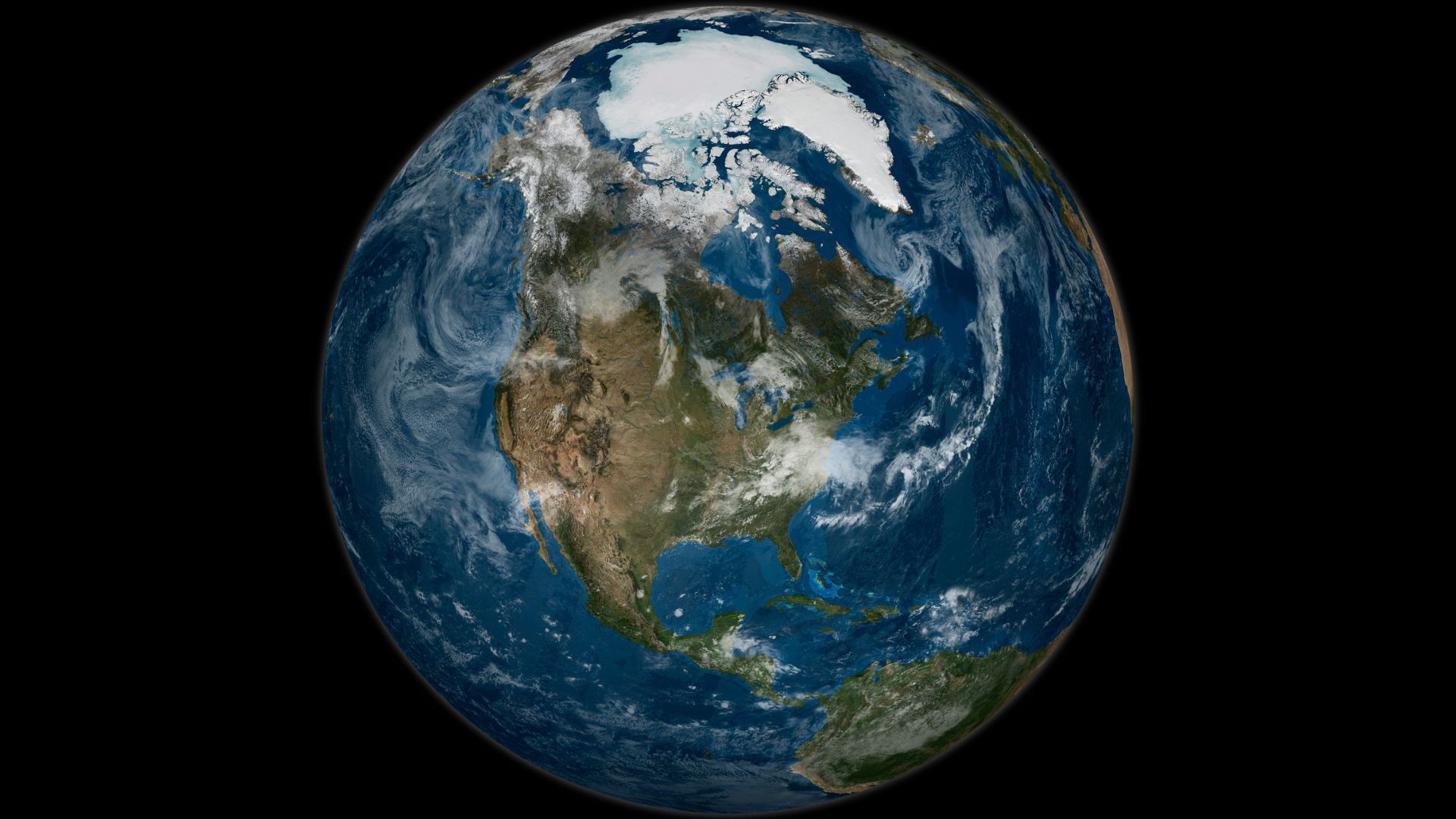
The study, led by geophysicists tracking changes in Earth's rotation through high-precision astronomical measurements, found that the accelerating melt of polar ice sheets is the primary culprit. As ice from Greenland and Antarctica melts and flows into the world's oceans, an enormous quantity of mass is migrating from the poles — where it sits relatively close to the planet's rotational axis — to lower latitudes, where it exerts a greater moment of inertia. The effect is analogous to a spinning figure skater extending their arms: the redistribution of mass outward causes the rotation to slow.
How the Numbers Stack Up
The rotational slowdown being measured is not something you would feel. Scientists quantify Earth's rotation in terms of the length of a solar day, currently averaging about 86,400 seconds. The changes being observed occur at the level of milliseconds per century — small in everyday terms, but enormous by geophysical standards. The researchers estimate that polar ice melt driven by current emissions trajectories could add approximately 2.2 milliseconds to the length of a day by the year 2100.
International timekeepers at the International Earth Rotation and Reference Systems Service regularly insert or remove leap seconds to keep Coordinated Universal Time aligned with astronomical time. The accelerating slowdown adds new complexity to that process, with ripple effects for GPS satellites, financial trading systems, telecommunications networks, and any infrastructure that depends on precise time synchronization.
The 3.6 million year benchmark comes from paleoclimate proxy records — analyses of ancient sediments, coral growth rings, and other geological archives that allow scientists to reconstruct past changes in Earth's rotation rate. The last time the planet's spin decelerated at a comparable pace, the global climate was in a dramatically different state. The fact that modern industrial activity has pushed the system to such an extreme is a stark reminder of the physical scale of humanity's footprint.

Ice Sheets as Rotational Engines
Greenland alone has lost more than 4,700 gigatons of ice since 1992, according to satellite gravity measurements from the GRACE and GRACE-FO missions. Antarctica has shed a comparable amount. When that water reaches the ocean, it does not spread uniformly — oceanic circulation patterns, gravitational self-attraction, and the elastic rebound of previously ice-covered land all influence exactly where the water ends up. But on average, the mass migrates toward the equatorial bulge, and Earth's rotation slows.
This phenomenon, known as glacial isostatic adjustment combined with ice-mass redistribution, has been modeled theoretically for decades. What makes the new study significant is its precision: the researchers were able to isolate the climate-driven signal from background geological noise with enough confidence to make the 3.6-million-year comparison credible.
Downstream Effects on Technology
The practical consequences extend into surprisingly mundane corners of modern life. GPS systems work by measuring the precise time it takes signals to travel from satellites to receivers. Those satellites are synchronized to atomic clocks, which in turn are calibrated to UTC. Any drift between astronomical time and atomic time must be corrected periodically — and the corrections are getting more complicated as Earth's rotation becomes less predictable.
The finance sector is another area of concern. High-frequency trading platforms execute transactions in microseconds, and their logs must maintain legally required time-stamping accuracy. Leap second insertions have historically caused software bugs and outages at major exchanges. A more erratic rotation means more frequent and potentially larger adjustments. Technology companies including Google, Amazon, and Meta have pushed for the elimination of the leap second entirely, proposing instead to allow time to drift and then apply a single large correction decades from now. The International Telecommunication Union is currently debating the proposal, and the new findings add urgency to the decision.

A Window Into Planetary Sensitivity
Beyond the immediate practical concerns, the finding opens a broader scientific conversation about the sensitivity of Earth's physical systems to atmospheric forcing. Researchers have previously documented climate change's effects on ocean currents, ice albedo feedbacks, and the jet stream. The rotational slowdown adds another dimension: the planet's fundamental spin is not immune to the chemistry of its atmosphere.
Some scientists have noted that the same ice-mass loss driving the rotational change is also causing the geographic location of Earth's poles to drift — a phenomenon called polar wander. The North Pole has been shifting eastward at an accelerating pace since the 1990s, a trend also linked to ice melt. Together, these changes paint a picture of a planet whose physical geometry is being slowly reshaped by the warming of its surface. The study authors are careful to note that the rotational changes do not pose any direct threat to life, but the downstream effects on technological infrastructure are real and the speed of the current changes is without precedent in the human record.
This article is based on reporting by Live Science. Read the original article.
Originally published on livescience.com