A transport milestone for one of physics’ most difficult materials
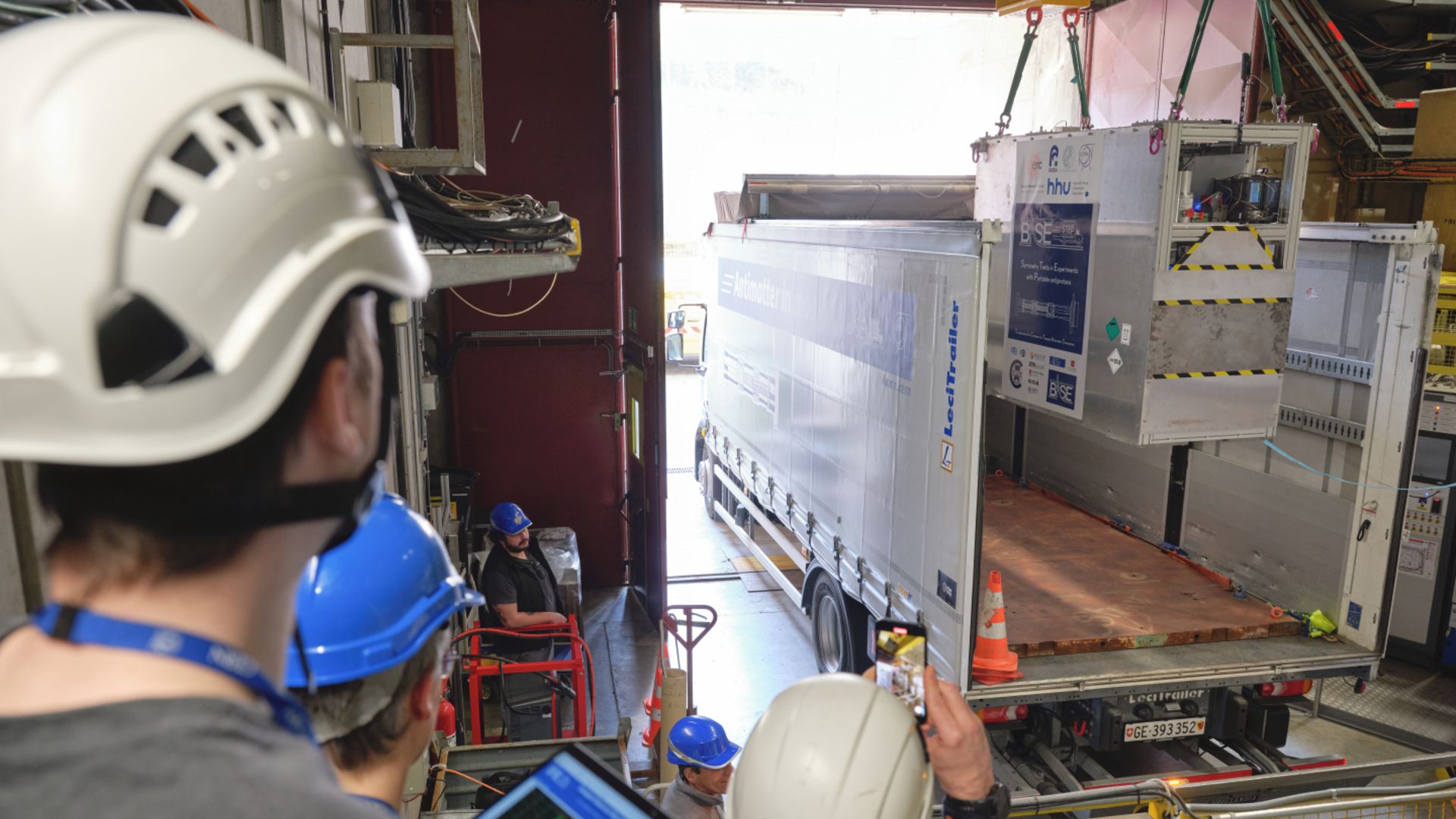
Scientists at CERN have transported antimatter by truck for the first time, marking a practical breakthrough for experiments that depend on handling one of the most delicate substances in modern physics. The achievement is significant not because a truck ride is glamorous, but because moving antimatter outside a fixed experimental setup opens new options for how and where the material can be studied.
According to the source report, the transport involved an antimatter trap loaded onto a truck. That alone signals how specialized the operation had to be. Antimatter cannot simply be boxed up and shipped like a standard lab sample. It must be confined with extreme care because contact with ordinary matter leads to annihilation.
Why antimatter is so hard to work with
Antimatter is often described as ordinary matter’s mirror counterpart. Its particles carry opposite charge, and when matter and antimatter meet, they annihilate one another. That makes the material scientifically powerful and logistically difficult. Researchers cannot treat it as a stable, everyday substance. They must generate it, trap it, preserve it, and measure it under tightly controlled conditions.
The source article emphasizes that this transport milestone could enable ultraprecise studies. That is an important point. In fundamental physics, measurement precision often determines whether a theory survives, needs revision, or gives way to something deeper. A better ability to move antimatter means a better ability to place it in specialized setups designed for highly sensitive tests.

The deeper question: why does matter dominate?
The broader scientific motivation behind this work is one of the oldest unanswered questions in physics: why does the observable universe appear to be dominated by matter rather than antimatter? If matter and antimatter were perfectly balanced in the early universe, their mutual annihilation should have left very little behind. Yet stars, planets, gas clouds, and human beings exist in a matter-filled cosmos.
The report ties the transport experiment to this mystery directly, noting that new studies could help reveal why matter dominates the universe. That does not mean the trucking milestone solves the puzzle on its own. It means it expands the experimental toolkit available to researchers trying to test the symmetry, behavior, and measurable properties of antimatter with greater control.
Mobility changes the experimental landscape
Large scientific facilities are often built around fixed instruments. When the material of interest can only be produced and studied in one place, experimental design is constrained by geography and infrastructure. Transport changes that equation. If antimatter can be moved safely and reliably, researchers can connect production environments with measurement environments that may be better suited to specific precision experiments.
That is what makes the CERN result more than a technical curiosity. It suggests a future in which antimatter studies are less limited by the physical location of the trapping apparatus. Even modest transport capability can create new pathways for collaboration and new possibilities for instrument design.
The source does not detail the full route, duration, or engineering setup used in the trip, so those specifics should not be overstated. But it does make clear that the transport was successful and that the scientific community sees it as enabling new research. That alone is enough to mark it as a meaningful operational advance.

Precision, not spectacle, is the real story
Public discussions of antimatter often drift toward science-fiction imagery, but the real value here is precision metrology. Fundamental physics advances when researchers can isolate variables, repeat measurements, and push uncertainty lower. Anything that improves the controlled handling of antimatter can contribute to that process.
The source frames the event as paving the way for groundbreaking new research. In practical terms, that means experiments that might previously have been impossible, impractical, or less accurate could now become more feasible. The breakthrough is therefore infrastructural as much as scientific: transport is becoming part of the experimental system.
A quiet but important step for fundamental science
There is a pattern in frontier research where some of the most important advances come from better tools rather than immediate headline discoveries. Moving antimatter by truck belongs in that category. It is a method milestone, and method milestones often precede result milestones.
CERN’s success does not answer the universe’s matter-antimatter imbalance. But it strengthens the conditions under which that answer might eventually be found. For a field that depends on exquisite control over exceptionally rare and volatile material, simply being able to move the sample safely is a serious achievement. The truck journey may look mundane from the outside. In the context of antimatter physics, it could prove transformative.
This article is based on reporting by Live Science. Read the original article.

Originally published on livescience.com


