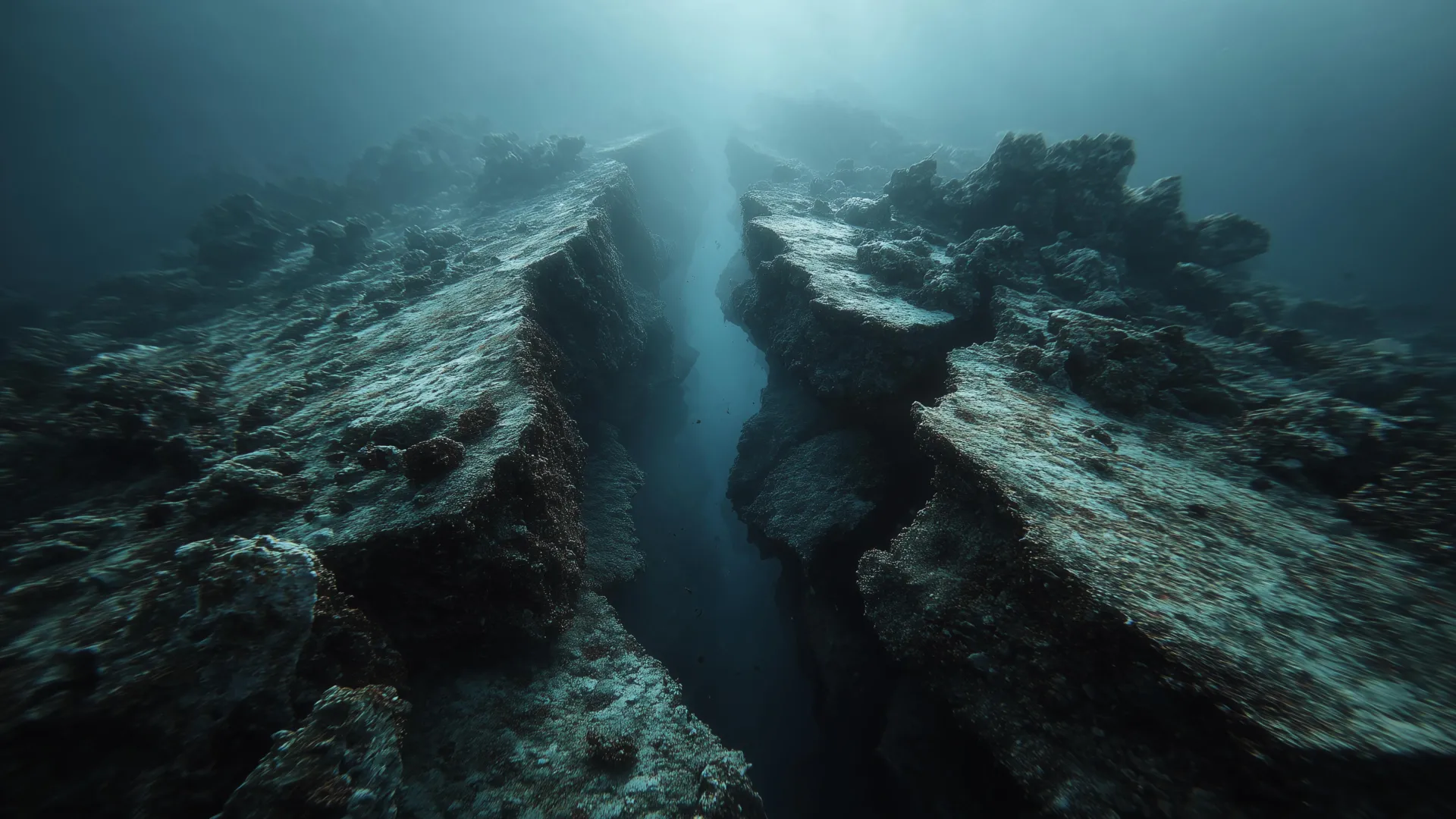
A Rare Look at a Subduction Zone in Decline
Scientists say they have directly observed a subduction zone beginning to break apart beneath the Pacific Northwest, offering an unusually clear view of how one of Earth’s most powerful tectonic systems can start to fail. The finding, reported April 29 by the Columbia Climate School and summarized by ScienceDaily on April 30, focuses on the Juan de Fuca and Explorer plates off the coast of Vancouver Island.
Subduction zones form where one tectonic plate sinks beneath another. They are responsible for major earthquakes, volcanic activity, and the recycling of crust into Earth’s mantle. But geologists have long known these systems are not permanent. The harder question has been what actually brings them to an end.
The new study, published in Science Advances, argues that the answer in Cascadia may be visible in real time. Rather than collapsing all at once, the Juan de Fuca plate appears to be tearing piece by piece as it descends below the North American plate.
Imaging a Plate Mid-Failure
According to the source text, the researchers combined seismic reflection imaging with earthquake records to examine the subsurface structure. The imaging method is described as functioning like an ultrasound of Earth’s interior, allowing scientists to infer the geometry and integrity of the sinking plate. What they found was not a single coherent slab, but a system showing signs of fragmentation.
That observation is scientifically important because it offers direct evidence for a process that has mostly been reconstructed from geological remnants. Ancient plate fragments preserved in the mantle and crust have hinted that subduction zones can break apart. What has been harder to document is the moment when a working subduction system begins that transition. The Cascadia result appears to capture that stage.
The researchers likened the process to a train derailing in slow motion. The metaphor is useful because it conveys both the scale and the gradual nature of the failure. A subduction zone does not switch off overnight. Instead, immense forces keep it moving until structural changes begin to disrupt the plate itself.
Why It Matters Beyond Geology Textbooks
The Pacific Northwest is not just any tectonic setting. Cascadia is closely watched because the region’s subduction system is associated with major earthquake risk. The source text says the findings raise new questions about earthquake hazards there, though it does not claim an immediate forecast change or a specific new threat level.
That distinction matters. Observing plate fragmentation is not the same as predicting when or how a major earthquake will occur. But it does affect the conceptual model scientists use to understand stress, deformation, and long-term system evolution. If the descending plate is breaking into fragments, that may alter how forces are distributed within the subduction zone and how the region’s tectonic behavior is interpreted.
The work also speaks to a broader geological puzzle. Continents, oceans, and mountain belts have changed repeatedly over deep time. If subduction zones simply ran forever once started, much of that history would look different. Scientists therefore need mechanisms not only for how subduction begins, but for how it stops. Cascadia now appears to provide an observable case study.
A Window Into Planetary Recycling
Subduction is one of the engines of plate tectonics. It moves crust into the mantle, reshapes ocean basins, and helps drive volcanism. Because it operates over immense timescales and below the seafloor, direct observations are rare. That makes advances in seismic imaging especially valuable. They turn inaccessible structure into something closer to a measurable process.
The new findings suggest that failure may be structurally messy rather than neatly bounded. A plate can fragment progressively instead of disappearing as a single unit. If that pattern is confirmed elsewhere, geologists may need to rethink some of the standard assumptions used to classify active and ancient subduction systems.
It may also help explain why the rock record preserves disconnected or anomalous fragments that are difficult to fit into simple tectonic histories. A subducting plate that tears apart while sinking would leave behind a more complicated geological legacy than a slab that stayed intact.
What Comes Next
The immediate value of the study is observational. It offers a clearer picture of a subduction zone in transition and expands the evidence for how these systems deteriorate. The longer-term value will depend on whether similar signatures can be identified in other regions and whether the fragmentation seen beneath Cascadia can be linked to specific patterns in seismicity or crustal deformation.
For now, the result stands out because it captures a usually hidden process at a scale that matters both scientifically and societally. The Pacific Northwest has provided researchers with a natural laboratory for earthquake and subduction studies for decades. This latest work suggests it is also a place where geologists may be watching one chapter of plate tectonics draw toward its end, one fragment at a time.
This article is based on reporting by Science Daily. Read the original article.
Originally published on sciencedaily.com