A new screening idea targets liver damage before tumors appear
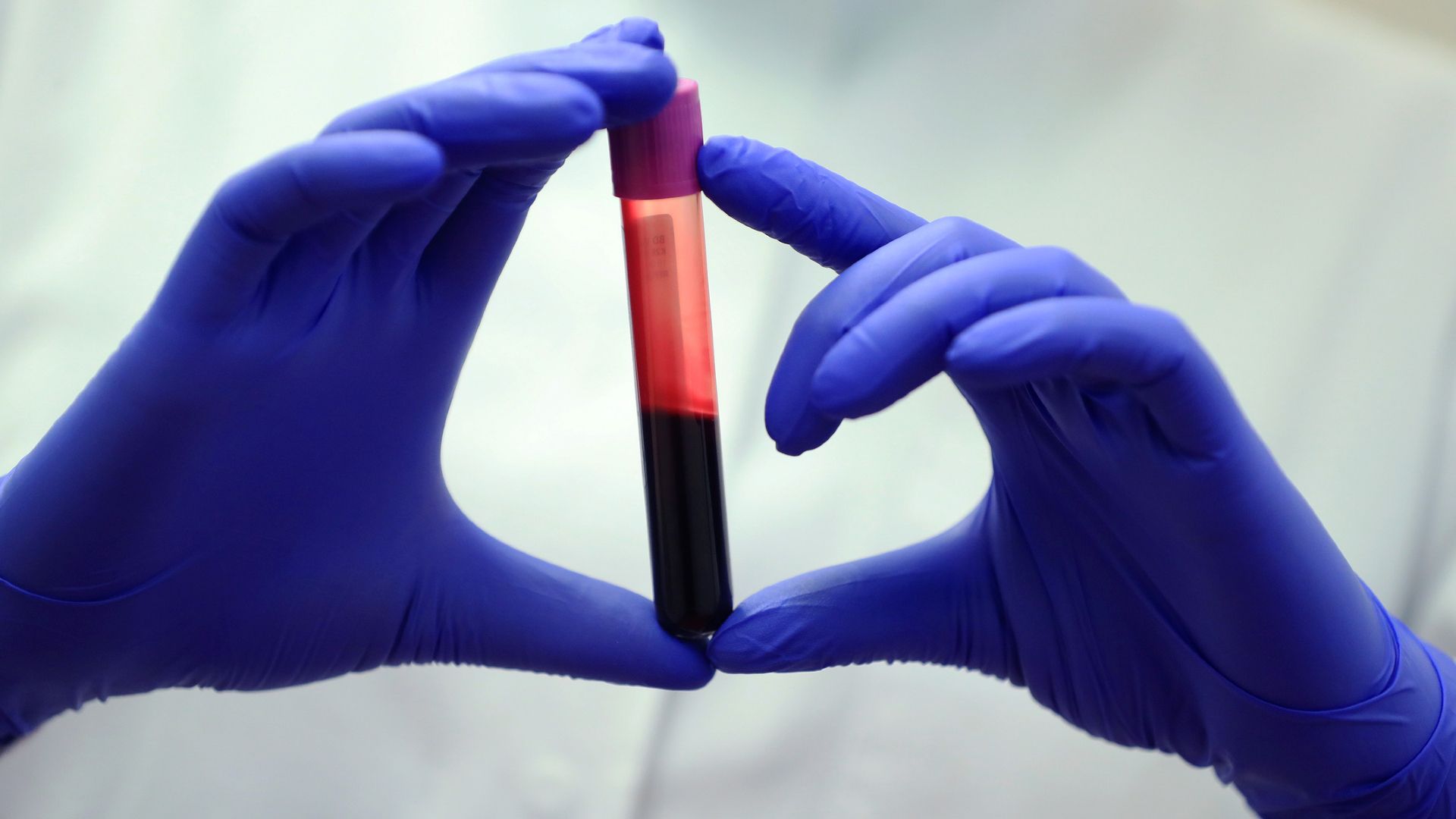
Liver cancer is often diagnosed too late, after years of hidden damage have already accumulated in the organ. That is why an experimental blood test described by Live Science stands out: instead of waiting for cancer itself to become visible, the test is designed to detect liver scarring, a precursor state that can create conditions for cancer to develop later.
The approach uses machine learning to analyze fragments of free-floating genetic material circulating in the blood. Those DNA fragments are linked to liver scarring, and the hope is that they can serve as an earlier warning signal for patients at risk.
That shift in timing matters. In liver disease, fibrosis and scarring can advance silently for years. By the time symptoms become obvious or imaging reveals more serious pathology, the biological window for easier intervention may already be narrowing. A blood-based method that identifies scarring earlier could move care further upstream.
Why liver scarring is a key target
Liver scarring does not itself equal cancer, but it can be a major step on the pathway toward it. As repeated injury and inflammation remodel liver tissue, the organ becomes less able to function normally and more vulnerable to malignant change. That is why clinicians try to catch fibrosis early, when lifestyle changes, monitoring, and treatment of underlying causes may still meaningfully alter outcomes.
The challenge is that current detection pathways are not always simple or evenly accessible. Imaging, biopsies, and panels of clinical markers all play roles, but none is perfect as a broad, routine early-warning system. A blood test that can be run more easily would fit the larger trend toward less invasive diagnostics.
The article frames the new assay as a way to detect a precursor to liver disease that can in turn signal future cancer risk. That means its importance lies not only in diagnosis, but in stratification: identifying which patients deserve closer surveillance before liver cancer appears.

How the test works
According to the source text, the test analyzes cell-free genetic material circulating in the bloodstream. These fragments, often referred to as free-floating DNA, can carry biological signatures of tissue stress or damage. Instead of relying on one single marker, the research uses a machine learning model to interpret patterns in that DNA.
This is increasingly common in next-generation diagnostics. Human disease signals are often too subtle or too variable to read with a simple threshold. Machine learning models can be trained to detect combinations of features that correlate with a condition more accurately than a conventional single-variable approach.
For liver disease, that could be particularly valuable. Scarring is a process, not a switch. It progresses across stages, can arise from multiple causes, and may not present uniformly from patient to patient. A model-based blood test has the potential to capture that complexity more effectively than a one-dimensional lab value.
At the same time, such systems need careful validation. Machine learning in medicine can fail if the training data are too narrow, if the model does not generalize across populations, or if clinicians cannot reliably interpret what a positive result means for management. The story, as presented, reflects a promising development rather than a finished clinical product.
What earlier detection could change
The practical appeal of the test is straightforward. If clinicians can detect liver scarring earlier, they may be able to intervene before patients progress toward cirrhosis or liver cancer. That could mean more aggressive treatment of hepatitis, metabolic disease, alcohol-related injury, or other underlying causes, depending on the patient’s condition.
It could also help allocate surveillance resources more precisely. Patients flagged by such a test might receive more frequent imaging or specialist follow-up, while lower-risk patients could avoid unnecessary procedures. In systems under pressure, that kind of triage value is nearly as important as the diagnostic signal itself.
From a public health standpoint, liver disease is exactly the kind of condition where earlier visibility matters. Many patients live for long periods without dramatic symptoms, which allows damaging processes to advance unnoticed. A blood test integrated into routine care could help close that gap.

The limits of promise
The source article describes the test as being in development, and that distinction should be taken seriously. Diagnostic science often generates exciting early findings that later face harder questions in larger studies: How sensitive is the test? How specific is it? Does it work equally well in different ethnic groups, ages, and disease causes? Can it distinguish mild scarring from more advanced states in a way that changes care?
There is also the implementation challenge. Even highly accurate tests need clear clinical pathways. Doctors must know when to order them, how to interpret them, and what next steps should follow a result. Otherwise, an elegant assay becomes an ambiguous signal.
Still, the broader direction is important. Medicine is increasingly moving toward molecular traces in blood as a window into hidden disease. Cancer screening, transplant monitoring, prenatal testing, and infectious disease tracking have all been reshaped by that logic. Applying it to liver scarring fits naturally into that trajectory.
The most compelling aspect of this work is that it treats cancer prevention as a matter of detecting biological precursors, not simply finding tumors sooner. If liver scarring can be identified before more severe disease takes hold, the intervention point moves earlier, when outcomes may be easier to change.
That is why the test deserves attention even in its developmental phase. It is not just another screening tool. It represents an effort to convert subtle molecular evidence into an earlier chance to interrupt one of the pathways that leads to liver cancer.
This article is based on reporting by Live Science. Read the original article.
Originally published on livescience.com