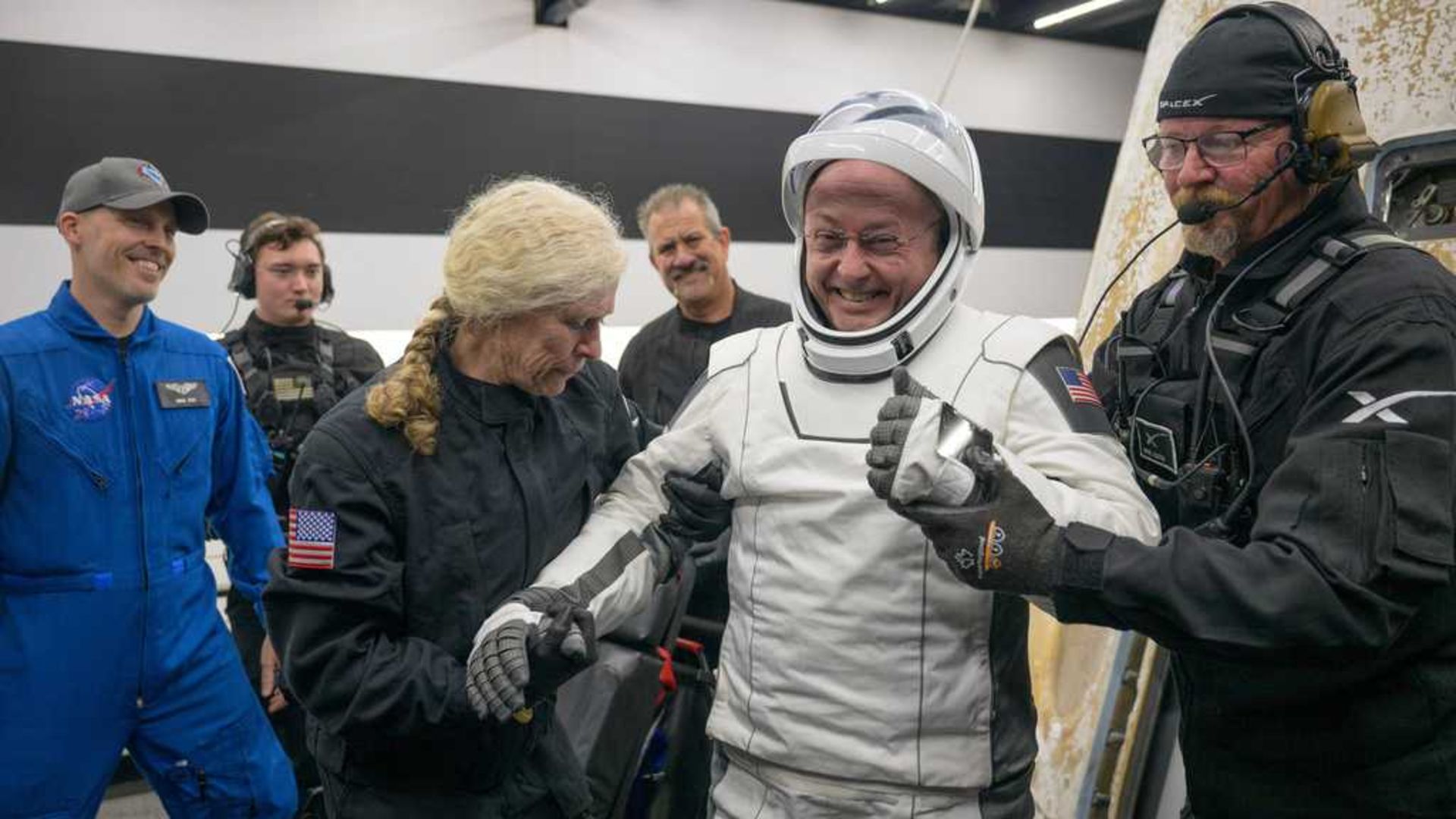
A Medical Emergency With Bigger Implications
As NASA prepares to send four astronauts around the moon on the 10-day Artemis II mission, a medical episode involving veteran astronaut Michael Fincke has brought a persistent concern back into view: human health remains one of spaceflight’s hardest problems.
The incident, described as a mystery medical episode, reportedly left Fincke unable to speak while aboard the International Space Station. The report frames the event as a stark reminder that even after decades of continuous human spaceflight, astronaut health in orbit still contains major unknowns.
That timing matters. Artemis II is not just another trip to low Earth orbit. It is part of NASA’s return to deep-space operations, where distance, communication delay, and mission constraints raise the stakes for any medical issue that develops in flight.
The Risk Is Not Abstract
Space agencies routinely plan for mechanical failures, environmental hazards, and launch risks. Medical uncertainty is different because it is bound up with the human body’s response to conditions that are difficult to fully reproduce on Earth. The Fincke episode underscores that point with unusual force.
An astronaut suddenly losing the ability to speak is not merely a concerning symptom. In operational terms, it is the kind of event that challenges diagnosis, crew response, and mission resilience all at once. In low Earth orbit, astronauts still benefit from comparatively shorter return options and a mature support infrastructure. Lunar missions will not offer the same level of flexibility.
That is why the report casts the incident as relevant to the next phase of exploration rather than a historical curiosity. As NASA ramps toward moon missions, astronaut health is again becoming a frontline design issue.

Why Artemis Changes the Equation
The Artemis II mission is planned as a 10-day lunar flyby, a step beyond the relative proximity of the ISS. With greater distance comes reduced margin for medical improvisation. A problem that might be monitored or managed differently in low Earth orbit can become far more serious when a crew is days from recovery rather than hours.
That does not mean Artemis II is unusually reckless. It means the mission architecture naturally magnifies one of the oldest truths of crewed spaceflight: the farther humans go, the harder it is to rely on immediate terrestrial backup.
The report therefore treats Fincke’s episode as a warning signal. NASA may be advancing toward sustained lunar operations, but some of the biological variables that matter most remain only partly understood.
The Unknowns Still Matter
The most notable element of the case is that the episode was unexplained. Known medical risks can be mitigated with protocol, training, and equipment. Unknown risks are harder because they threaten the assumptions behind mission planning itself.
Space medicine has made major progress, but unexplained in-flight events still carry outsized significance. They force agencies to ask whether current screening, onboard monitoring, and treatment capabilities are sufficient for the missions now being planned. The answer may be yes in many cases, but the question persists because the environment is unforgiving.
That is especially relevant for future lunar campaigns, where crews will need more autonomy and more confidence in their own ability to stabilize problems before outside help can matter.

What the Episode Signals
The Fincke incident does not invalidate NASA’s plans, and the report does not present it that way. What it does suggest is that astronaut health remains one of the least glamorous but most consequential constraints on deep-space exploration. Hardware captures attention. Physiology decides feasibility.
That is the practical lesson as Artemis II approaches. Space agencies can build powerful rockets and ambitious mission timelines, but they still send human bodies into environments those bodies were never built to inhabit. Every unexplained medical event is a reminder of that mismatch.
With lunar missions ramping up, the question is no longer whether astronaut health is a major risk. It is whether agencies can reduce that risk quickly enough to match the pace of their exploration goals.
This article is based on reporting by Live Science. Read the original article.
Originally published on livescience.com