A deeper view into a stellar nursery
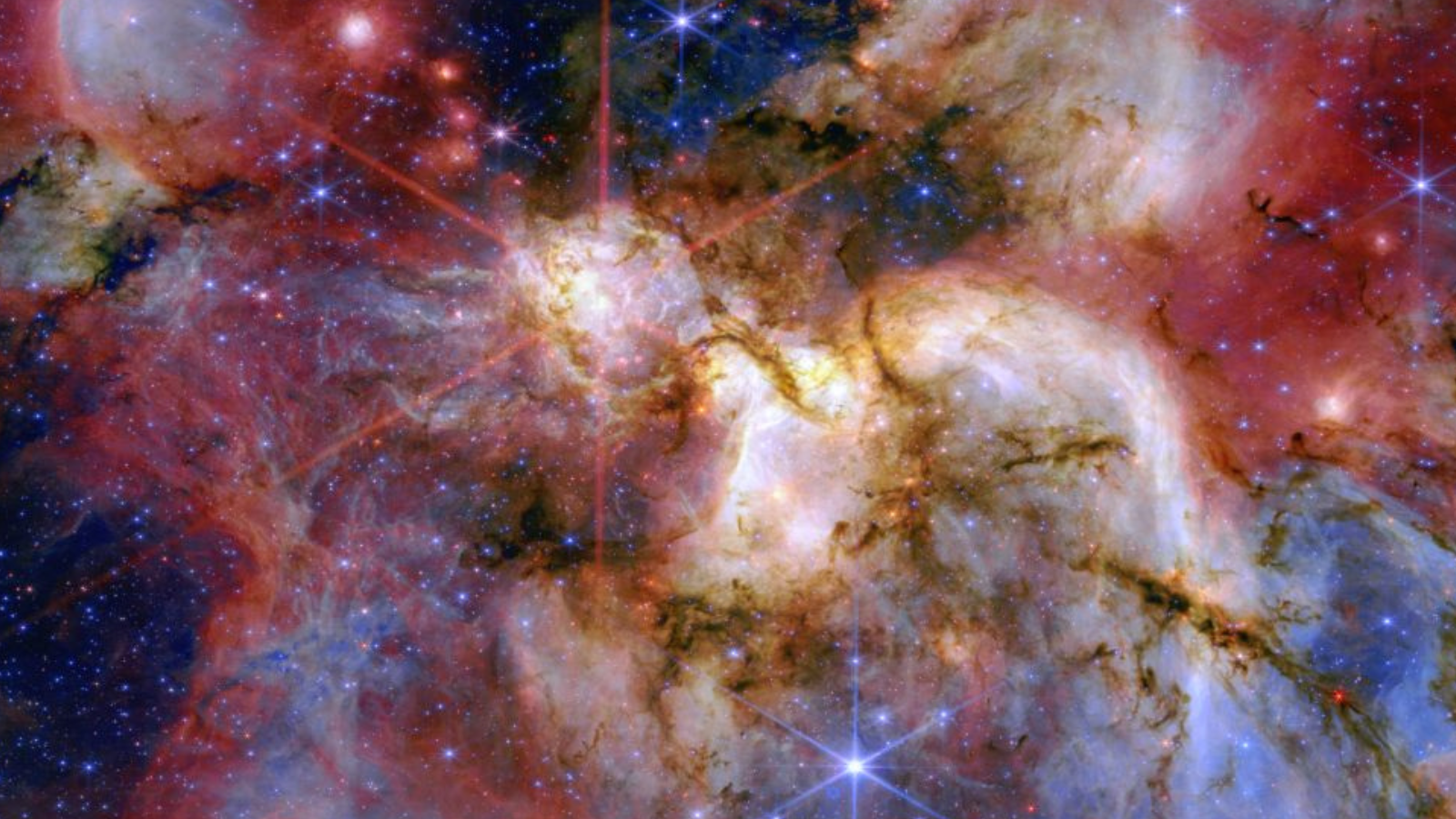
The James Webb Space Telescope has turned its infrared instruments toward W51, one of the Milky Way’s major star-forming regions, and the result is a new look at stars that had remained hidden from other observatories. According to the supplied report, astronomers used Webb to study the region and produced images that reveal gas and dust lanes illuminated by newborn stars in unprecedented detail.
The finding highlights one of Webb’s core strengths. Dense star-forming environments are often visually obscured because dust blocks ordinary visible-light observations. Infrared instruments can cut through much of that veil, allowing researchers to see into the environments where stars are actively forming. In W51, that capability appears to have exposed a richer and more dynamic picture of stellar birth than previous imaging had offered.
What the team says Webb found
The supplied article says the researchers were able to identify stars in W51 that were effectively hidden from other telescopes. It also says the team determined that the stars in the region began forming within the last million years. In astronomical terms, that places them among very young stellar populations.
That age estimate matters because it helps frame W51 as an active laboratory for studying early stellar evolution rather than a mature, settled region. The article underscores the scale of that comparison by noting that the sun is about 4.6 billion years old. Against that benchmark, stars that began forming within the last million years are effectively infants.
The team also described the images themselves as a source of ongoing scientific surprise. One researcher is quoted in the supplied text saying that every time the images are examined, the team learns something new and unexpected. That is the kind of reaction astronomers often have when a more capable instrument begins resolving structure that earlier datasets blurred together.
Why W51 is scientifically useful
Star-forming regions matter because they allow astronomers to test ideas about how gas clouds collapse, how young stars affect their surroundings, and how complex stellar environments evolve over time. W51 is especially interesting because it contains large quantities of gas and dust, the raw material from which stars form.
When newly formed stars begin shining, they do not simply sit quietly inside those clouds. Their radiation and winds can carve cavities, illuminate surrounding material, and trigger or suppress further star formation nearby. The report’s description of glowing lanes of gas and dust suggests Webb is helping astronomers map those interactions with new precision.
Because the telescope can resolve fine structure in dusty environments, observations like these can improve understanding of how individual stars emerge from crowded birthplaces. They can also show how clusters of young stars collectively reshape the nebulae around them.
The value of hidden stars
One reason hidden stars are so important is that they can distort our picture of how efficiently a cloud forms stars and what kinds of stars it produces. If a substantial number remain obscured, astronomers may underestimate either the number of young stars present or the complexity of the environment in which they formed.
Webb’s view of W51 appears to reduce that uncertainty. By showing sources that were invisible to other telescopes, the observatory is not merely creating visually striking images. It is expanding the census of what is physically there.
That has implications for questions such as:
- How quickly stars are forming inside dense molecular clouds.
- How young stars heat and shape nearby dust and gas.
- How star formation proceeds in crowded, dusty regions rather than in isolation.
- What observational biases were built into earlier surveys that could not penetrate as deeply.

A continuing theme for Webb
The W51 observations fit a broader pattern in Webb science. Again and again, the telescope has been most transformative where dust, distance, or faint structure limited prior observations. In those settings, Webb often does two things at once: it makes for compelling imagery, and it changes the underlying science by revealing sources and structures that were previously inaccessible.
That dual role is evident here. The supplied report emphasizes both the beauty of the images and the scientific insight they enable. W51 is not just photogenic. It is a test bed for understanding how stars take shape in one of the galaxy’s most obscured environments.
As researchers continue to analyze the data, W51 may yield more than a set of dramatic images. It may also help refine how astronomers think about the earliest phases of stellar life, when young stars are still wrapped in the material that made them and only the most capable telescopes can see them clearly.
This article is based on reporting by Space.com. Read the original article.
Originally published on space.com