Artemis II closed one chapter and opened the harder one
NASA’s Artemis II mission has returned safely, marking the first crewed trip around the Moon since the Apollo era. That alone would have made it historic. But the real significance of the mission may be what comes next. As Space.com reports, the agency is already looking beyond the successful splashdown toward a crewed lunar landing in 2028 and a step-by-step push toward a permanent base through 2032.
The transition matters because Artemis II was fundamentally a proving mission. It demonstrated that NASA could again send humans into deep space around the Moon and bring them home safely using the Space Launch System and Orion architecture. Success on that front does not end the Moon program. It changes the standard by which the next phases will be judged.
From flyby to foothold
The logic of the Artemis sequence is straightforward. Artemis II showed that a crewed lunar mission profile is operationally possible. The next major benchmark is no longer orbital return alone, but getting astronauts to the lunar surface. That is a far more demanding objective. A lunar landing requires not just transit and reentry capability, but coordinated surface systems, landing hardware, mission timing, and an architecture that can scale beyond a symbolic visit.
That is why Space.com’s emphasis on a “step-by-step approach” through 2032 is important. NASA is not presenting Artemis as a one-off replay of Apollo. It is presenting it as an incremental buildout. The agency’s stated ambition is larger: repeatable missions, infrastructure, and eventually a sustained human presence that can support deeper space goals.

The Moon as an operational environment
Artemis planning treats the Moon less as a destination for prestige and more as an environment in which systems need to work repeatedly. That changes the framing of success. A single landing would be meaningful, but the long-term claim of the program depends on whether NASA can convert episodic missions into an operating cadence. That includes logistics, crew safety, habitat strategy, and the ability to learn from each mission rather than resetting after every achievement.
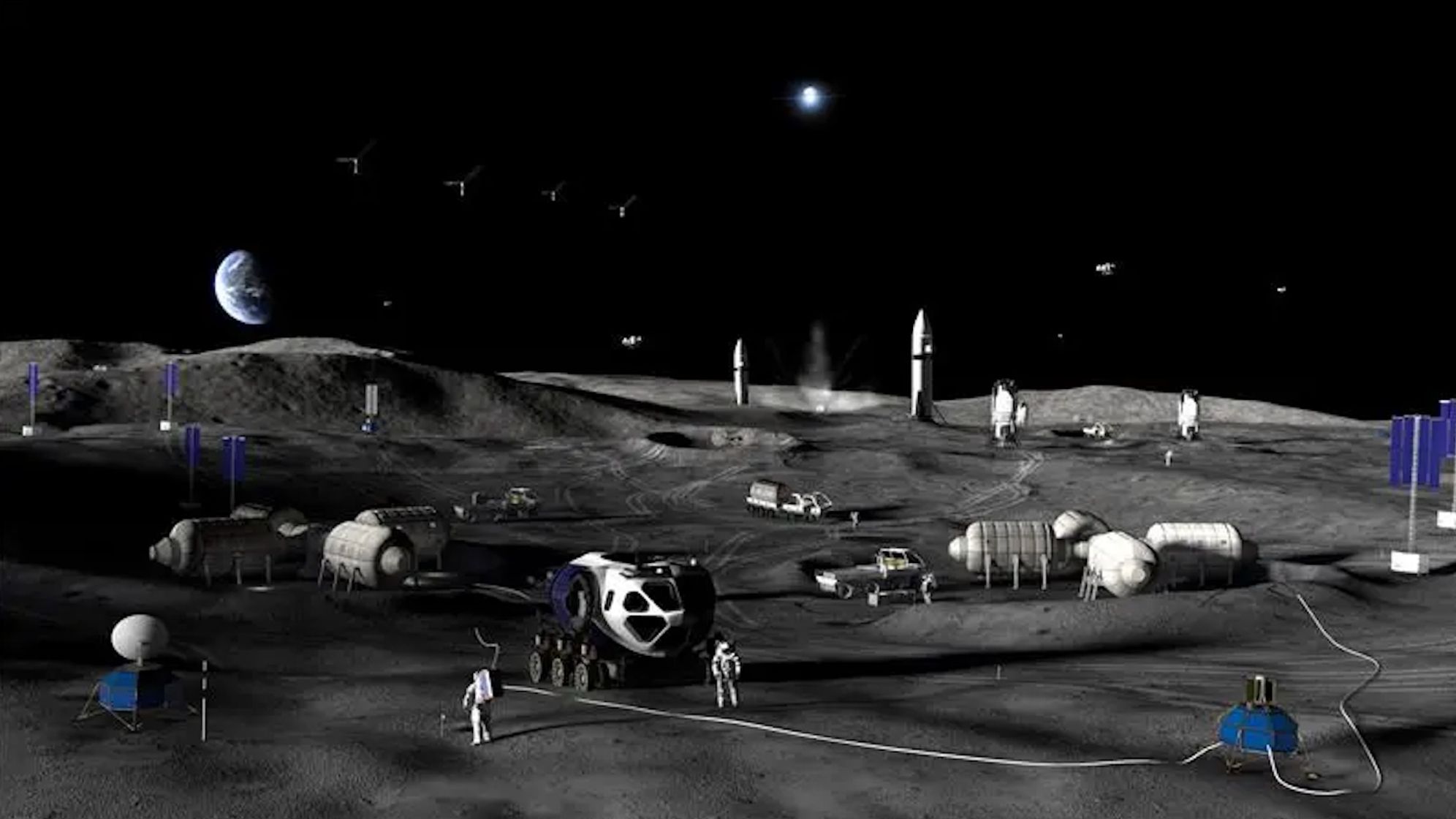
The reference to a permanent base by 2032 illustrates that broader ambition. A base is not just a structure or a marker of presence. It implies supply chains, power, routines, maintenance, and confidence that astronauts can live and work there with enough continuity to justify the effort. Even as a distant objective, it signals that Artemis is meant to create capability, not only spectacle.
Why timing matters
Space.com says NASA is targeting a crewed landing in 2028, only a few years after Artemis II. That schedule underscores both urgency and risk. A long delay after a successful crewed lunar flight would raise doubts about momentum and program durability. Moving too quickly, however, would invite concern about whether the supporting systems are mature enough. The narrowness of that window is part of why Artemis II matters so much. A successful demonstration mission buys credibility, but it also raises expectations.
The return of astronauts to lunar flight after more than 50 years gives NASA a rare public narrative advantage. The agency can now argue that Artemis is real, not merely aspirational. Yet that narrative will hold only if the next mission phases show measurable progress toward landing and surface operations. The gap between symbolic return and practical permanence is where large space programs often become politically vulnerable.

What Artemis II proved
The completed mission validated more than crew endurance and spacecraft performance. It also restored a sense that lunar exploration has reentered the realm of executed missions rather than planning documents. Space.com notes that the four astronauts launched on April 1 and splashed down safely on April 10, after a 10-day trip around the Moon. Those dates matter because they anchor Artemis in real operations, not abstract timelines.
The success also sharpens strategic questions. If Artemis II established that NASA can fly humans around the Moon again, then the next tests become about landing, staying, and building. Those are different kinds of challenges, and they are less forgiving. A flyby mission can restore confidence. A base-building program has to sustain it.
For now, NASA has achieved something substantial: it has ended a half-century gap in crewed lunar travel and given the Artemis roadmap a concrete milestone. The agency’s problem from here is not relevance. It is execution. The next era of Artemis will be defined less by whether the United States can reach the Moon than by whether it can turn return into presence.
This article is based on reporting by Space.com. Read the original article.
Originally published on space.com