A Surprising Weapons Integration
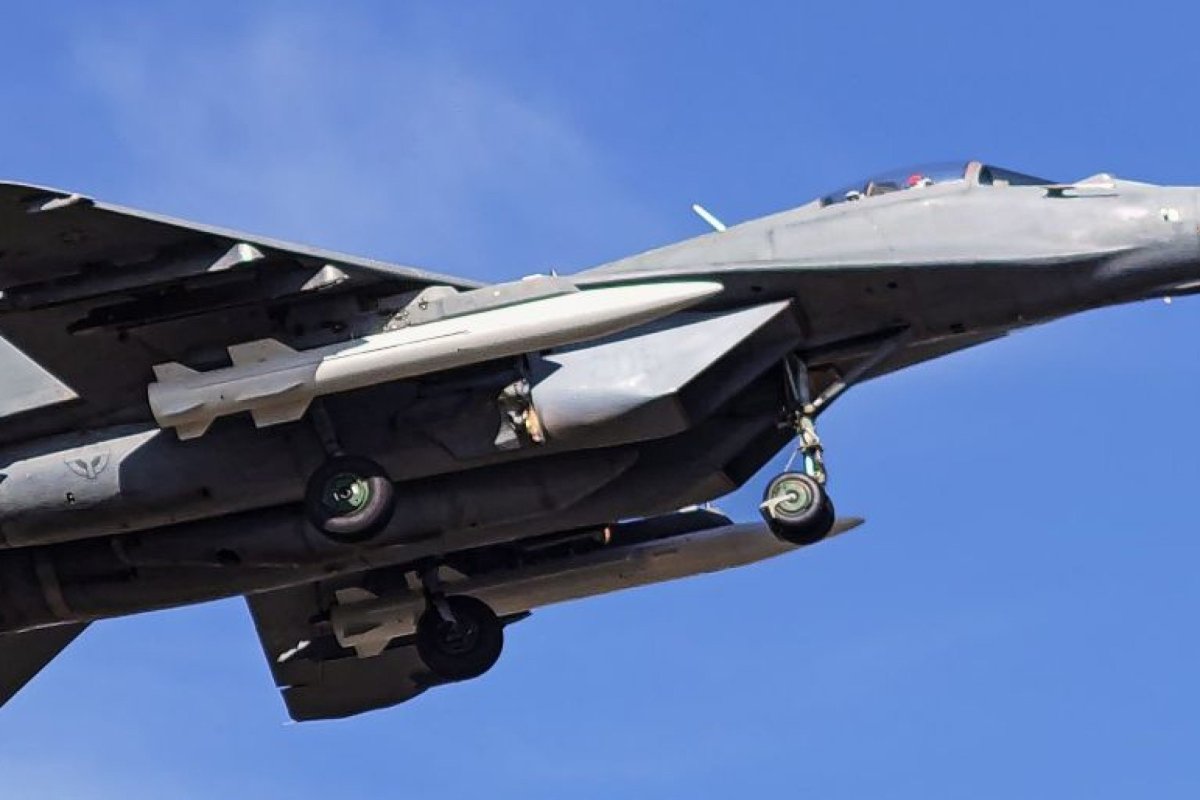
In a development that has caught Western defense analysts off guard, Serbia has been identified as an operator of the Chinese-made CM-400 air-launched supersonic standoff missile. The weapon has been spotted integrated onto Serbia's fleet of upgraded Soviet-era MiG-29 Fulcrum fighter jets, marking only the second known deployment of the missile system after Pakistan and raising significant questions about the expanding reach of Chinese weapons exports into Europe.
The CM-400, also designated as the CM-400AKG in its air-launched configuration, is a ramjet-powered supersonic missile capable of speeds exceeding Mach 4. Designed primarily for anti-ship and land-attack missions, the weapon gives Serbia a standoff strike capability that it previously lacked, significantly enhancing the combat potential of its aging but upgraded fighter fleet.
The Weapon System
The CM-400 was developed by China's Aerospace Science and Industry Corporation as an export-oriented weapon system. It is based on technology derived from China's domestic missile programs and was previously known to be in service only with Pakistan, where it was integrated into the JF-17 Thunder fighter aircraft.
Key specifications of the missile include:
- Maximum speed exceeding Mach 4, making it extremely difficult to intercept
- Range estimated at approximately 150 to 250 kilometers depending on launch altitude and profile
- Capable of carrying various warhead types for anti-ship and land-attack missions
- Terminal guidance using a combination of inertial navigation and active radar homing
- Supersonic sea-skimming capability in the terminal phase for anti-ship operations
The supersonic speed of the CM-400 is its most significant tactical characteristic. At Mach 4, the missile gives defenders minimal reaction time, making it challenging to intercept with current air defense systems. This capability is particularly valuable for anti-ship operations, where the target's own defenses must detect, track, and engage the incoming missile in a matter of seconds.
Serbia's MiG-29 Upgrades
Serbia operates a fleet of MiG-29 fighters that have undergone various modernization programs over the years. The aircraft were originally acquired from the Soviet Union and have been upgraded with new avionics, radar systems, and weapons capabilities. The integration of the CM-400 represents the most significant weapons upgrade yet and demonstrates a level of technical collaboration between Serbia and China that was not previously publicly known.
Integrating a Chinese missile onto a Russian-designed aircraft is a nontrivial engineering challenge. It requires modifications to the aircraft's fire control system, weapons pylons, electrical systems, and mission computer. The successful integration suggests either significant Chinese technical assistance or a more capable Serbian defense industry than many analysts had assumed.
Geopolitical Implications
The appearance of Chinese supersonic missiles on European aircraft has significant geopolitical implications. Serbia is not a NATO member but is surrounded by NATO countries and has historically maintained relationships with both Russia and China while pursuing European Union membership. The acquisition of advanced Chinese weaponry complicates Serbia's diplomatic positioning and is likely to draw scrutiny from both NATO and the EU.
For China, the Serbian sale represents an expansion of its weapons export footprint into Europe, a market traditionally dominated by Western and Russian manufacturers. While China has been a major arms exporter to countries in Asia, Africa, and the Middle East, significant sales of advanced weapons to a European country mark a new phase in China's defense export strategy.
The timing is also notable given current global tensions. NATO is focused on the implications of the ongoing conflict for European security, and the appearance of advanced Chinese missiles on aircraft in the Balkans adds another dimension to the complex security landscape in the region.
NATO and Western Response
Western defense officials and analysts have expressed concern about the deployment, both for its immediate military implications and for what it signals about Chinese strategic ambitions. A European country operating Chinese supersonic anti-ship missiles represents a capability that NATO planners now need to account for in their assessments of regional military balances.
The development also raises questions about potential technology transfer and the intelligence value of understanding how the CM-400 performs in the hands of a European operator. NATO countries will be keenly interested in gathering information about the missile's capabilities, which are less well understood than those of Western or Russian weapons systems.
A Shifting Defense Landscape
Serbia's acquisition of the CM-400 reflects broader trends in the global arms market. Countries are increasingly willing to source weapons from multiple suppliers, mixing Western, Russian, and Chinese systems to meet their specific defense needs. This trend complicates traditional alliance structures and creates new challenges for interoperability and arms control.
For Serbia specifically, the CM-400 gives the country a precision strike capability that enhances its defensive posture without requiring the purchase of entirely new aircraft. By upgrading existing MiG-29s with advanced Chinese weaponry, Serbia has found a cost-effective way to significantly increase its military capability, a model that other countries with aging Soviet-era fleets may seek to emulate.
This article is based on reporting by twz.com. Read the original article.
Originally published on twz.com