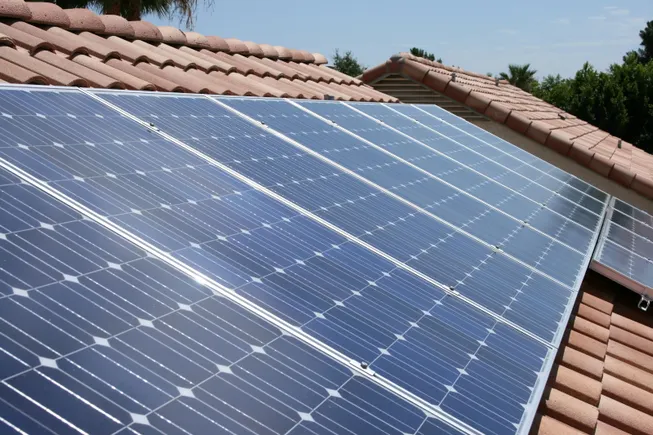
New Mexico is now the benchmark state for distributed-energy hookups
New Mexico has earned the highest score in the latest “Freeing the Grid” interconnection report, becoming the only U.S. state to receive an A grade for policies governing how distributed energy resources connect to the grid. The ranking, published by Vote Solar and the Interstate Renewable Energy Council, puts New Mexico ahead of every other state at a time when regulators are under pressure to add capacity, control electric costs, and improve grid resilience.
Interconnection policy rarely attracts public attention, but it is one of the key gates determining whether rooftop solar, batteries, and other distributed resources can actually be deployed at scale. Slow reviews, opaque queues, and inconsistent technical standards can delay projects even when economics and customer demand are strong.
Why New Mexico scored highest
According to the report summary, New Mexico received top marks for three main areas: a strong framework for energy storage interconnection, frequent public reporting on its interconnection queue, and incorporation of IEEE technical standards for distributed energy resource interconnections. Together, those measures point to a system that is not just permissive on paper, but more transparent and predictable in practice.
That predictability matters. Developers and customers are more likely to move forward when timelines, technical requirements, and likely upgrade obligations are visible before a project gets stuck in review. Storage is especially important because it expands the value of distributed resources from simple generation to grid support and resilience.

A wider policy shift is underway
The “Freeing the Grid” update lands in a more difficult national setting than earlier editions. Federal clean-energy policy has shifted, some incentives have been rolled back, and parts of the distributed solar and storage market face more hostile conditions than they did a few years ago. At the same time, demand growth from new loads, including data centers, has increased pressure on regulators to bring more electricity online quickly.
That tension is one reason interconnection rules matter so much. Energy nonprofits such as Vote Solar and IREC argue that distributed clean energy can often be deployed faster and more cheaply than new gas-fired generation. Whether or not every regulator agrees with that conclusion, the speed question is real. A project that clears interconnection efficiently is a project that can begin serving customers sooner.
What the scorecard is trying to do
IREC and Vote Solar created “Freeing the Grid” nearly 20 years ago as a state-by-state roadmap for policymakers and utility regulators. The report does not simply rank states for prestige. It identifies best practices around review timelines, fees, transparency, and technical standards, then measures how closely states align with them.
In this update, New Mexico was the only state to reach the top grade. Eight others earned B grades, meaning they have adopted many best practices but still have clear gaps. That spread suggests the policy field remains uneven, with strong performers showing what is possible while many states still impose friction that slows deployment.
Why this matters beyond one state
Interconnection is one of those back-office policy areas that can determine whether a grid modernization strategy is real or rhetorical. Legislatures and governors may endorse distributed energy, but if interconnection remains slow, expensive, or nontransparent, that support does not translate into installed systems.
New Mexico’s performance therefore matters beyond state lines. It gives regulators elsewhere a concrete example of how storage rules, queue reporting, and technical standard adoption can be combined into a more effective framework. In a period defined by rising power demand and rate pressure, that kind of administrative competence may matter as much as any new generation announcement.
- New Mexico was the only state to earn an A in the latest “Freeing the Grid” report.
- The state scored well on storage interconnection, queue transparency, and IEEE standard adoption.
- The ranking comes as regulators look for faster ways to add reliable capacity to the grid.
This article is based on reporting by Utility Dive. Read the original article.
Originally published on utilitydive.com