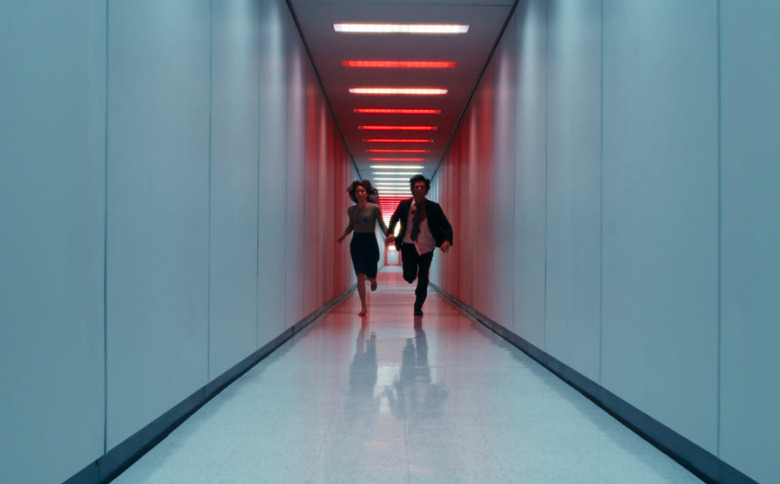
A Streaming Giant Locks Down Its Crown Jewel
Apple has acquired the intellectual property and all associated rights to Severance, the critically acclaimed workplace thriller that became Apple TV+'s most-watched series during its second season. The deal, first reported by Deadline, was completed in December 2025 and valued at approximately $70 million. Under the new arrangement, Apple Studios will take over full production responsibilities from Fifth Season, the studio that originally developed the show, though Fifth Season will retain an executive producer credit.
The acquisition follows a pattern that Apple has been quietly establishing over the past two years. After purchasing the rights to the dystopian science fiction series Silo following its debut season, the company has signaled that it is willing to spend aggressively to own, not just license, the intellectual property behind its most successful original programming. For Severance, that means Apple now controls the show's future in its entirety, from storyline decisions to merchandise and potential franchise expansion.
Why Fifth Season Let Go
The financial pressures behind the deal tell an instructive story about the economics of prestige television production. According to reporting from Deadline, Severance's production costs had been escalating beyond what Fifth Season could sustain independently. The studio had previously requested financial advances from Apple to cover budget shortfalls and had explored relocating production from New York City to Canada in order to take advantage of more generous tax incentive programs. Apple had also been assisting Fifth Season with securing advertising partners, effectively subsidizing the show's economics well before the formal acquisition.
For Fifth Season, relinquishing ownership was a pragmatic decision. The $70 million deal provides a substantial lump-sum return on a property whose production costs were becoming increasingly difficult to manage. For Apple, the calculus is straightforward: Severance is one of the few shows in the Apple TV+ catalog that generates genuine cultural conversation and critical buzz, and allowing budget constraints to compromise its quality or continuity was simply not an option.

Four Seasons and Beyond
With Apple now at the helm, Severance is expected to run for a total of four seasons, providing a clear narrative runway for showrunner Dan Erickson and director Ben Stiller to complete their vision. Perhaps more significantly, Apple's ownership opens the door to spinoff projects that were previously logistically and financially impractical under the split-ownership model with Fifth Season. Both Erickson and Stiller have expressed openness to expanding the show's universe, and Apple's deep pockets make those ambitions considerably more realistic.
One immediate benefit of the acquisition is the guarantee that production will remain based in New York City, where the show's distinctive visual identity and atmosphere were established. Budget pressures had previously made a relocation to Canada seem likely, which could have altered the production's character. Apple's willingness to absorb higher New York production costs underscores how central Severance has become to the platform's identity.
Apple's Evolving Content Strategy
The deal reflects a broader strategic evolution at Apple TV+. The streamer launched in 2019 with a model built almost entirely on licensing content from established studios, but it has progressively shifted toward owning its flagship properties outright. Severance now joins Silo in Apple's growing roster of fully owned marquee titles, alongside shows like Owen Wilson's Stick and Kristen Wiig's Palm Royale. This ownership-first approach mirrors the playbook that Netflix and Disney+ have employed, ensuring that the most valuable content on the platform cannot be pulled away by a studio seeking better terms elsewhere. For Apple, a company with a market capitalization exceeding $3 trillion, $70 million is a rounding error. For the future of Severance, it may be the move that ensures the show reaches its full potential.
This article is based on reporting by Engadget. Read the original article.

Originally published on engadget.com