End of a Radiation Belt Pioneer
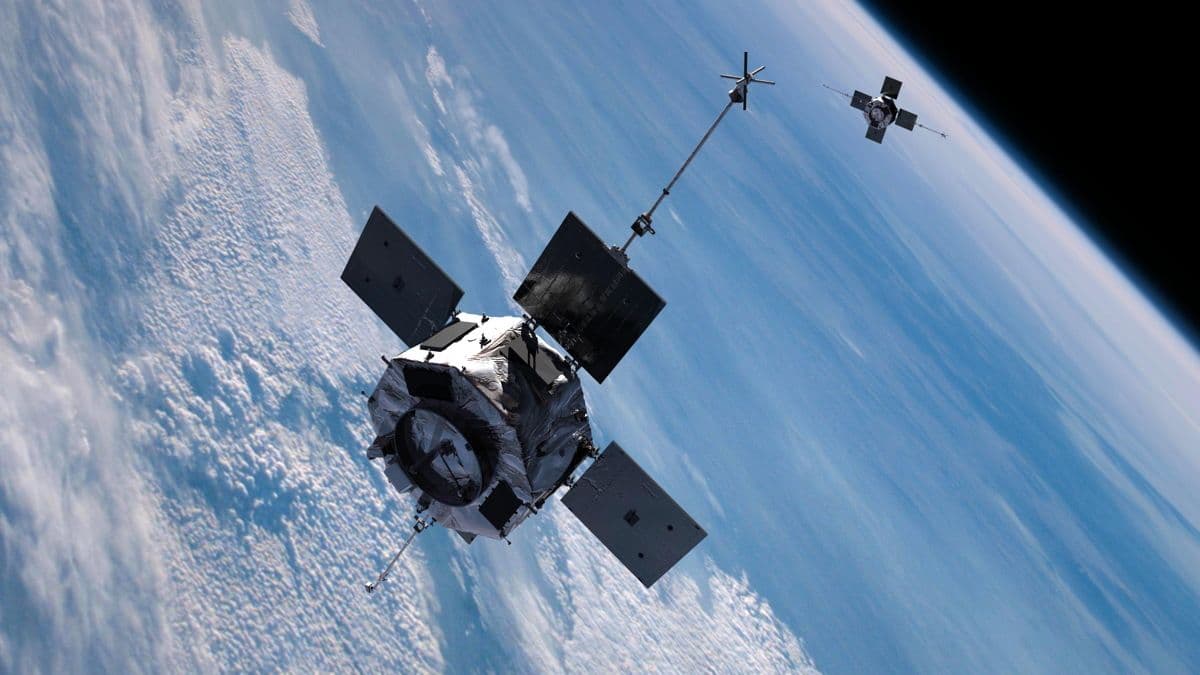
NASA's Van Allen Probe A, a 1,300-pound satellite that spent nearly 14 years mapping the dangerous radiation belts surrounding Earth, is expected to crash back to the planet on Tuesday, March 10. The U.S. Space Force's current best estimate places the reentry window during the early hours, though the exact time and location of debris impact cannot be precisely predicted.
The satellite has been gradually losing altitude since its instruments were deactivated in 2019, and its orbit has decayed to the point where atmospheric drag will pull it to a fiery end. While most of the spacecraft is expected to burn up during reentry, some components made of heat-resistant materials like titanium and stainless steel may survive to reach the surface.
NASA has assessed the risk to people on the ground as extremely low, noting that the vast majority of Earth's surface is ocean, uninhabited land, or sparsely populated areas. The agency calculates a less than 1 in 10,000 chance that any surviving debris will strike a populated area, and no evacuation or shelter-in-place orders have been issued.
What the Van Allen Probes Discovered
The Van Allen Probes mission, originally called the Radiation Belt Storm Probes, launched in August 2012 as a pair of spacecraft designed to study the Van Allen radiation belts — zones of charged particles trapped by Earth's magnetic field. The mission was designed to last two years but far exceeded expectations, with the instruments operating until 2019.
The probes made several significant discoveries during their operational lifetime. They identified a previously unknown third radiation belt that appeared and disappeared over the course of weeks, challenging the longstanding assumption that Earth had only two stable belts. They also provided detailed measurements of how solar storms inject energy into the belts, causing them to swell and contract in ways that can damage satellites and endanger astronauts.
The data from the Van Allen Probes has been instrumental in developing better models for predicting radiation belt behavior, which has practical applications for protecting spacecraft electronics, planning astronaut activities during solar storms, and designing more resilient satellites. The mission's findings continue to be analyzed and published in scientific journals years after the instruments were turned off.
The Space Debris Question
The uncontrolled reentry of the Van Allen Probe A highlights the broader issue of space debris management. The satellite was launched before current international guidelines that recommend spacecraft be designed for controlled deorbiting were widely adopted. A controlled deorbit would have used onboard propulsion to guide the satellite into a specific uninhabited area, eliminating the uncertainty about where debris might land.
Modern NASA missions are typically designed with end-of-life disposal in mind, either using remaining fuel for a controlled deorbit over the ocean or boosting into a higher "graveyard" orbit where the spacecraft will not interfere with active missions. The Van Allen Probes were not equipped with sufficient propulsion for a controlled deorbit from their highly elliptical orbits, which reached as high as 19,000 miles above Earth.
The growing population of objects in orbit has made debris management an increasingly pressing concern. More than 30,000 pieces of trackable space debris orbit the Earth, along with millions of smaller fragments that are too small to track but large enough to damage operational spacecraft. Each uncontrolled reentry adds uncertainty about whether debris will reach the surface and where it will land.
Tracking the Reentry
The U.S. Space Force's 18th Space Defense Squadron is tracking the satellite and providing updated reentry predictions as the orbit continues to decay. The predictions become more accurate in the final hours before reentry, as the satellite enters the denser portions of the atmosphere where drag forces become dominant.
Amateur satellite trackers and space enthusiasts have been following the satellite's descent, and some may be able to observe the reentry as a bright streak across the sky if it occurs over populated areas during nighttime hours. Satellite reentries of this size often produce spectacular visual displays as the spacecraft breaks apart and individual components burn at different rates, creating multiple trails of light.
Legacy and Context
The Van Allen Probes represent one of NASA's most successful heliophysics missions in terms of scientific return relative to cost. The mission provided unprecedented insight into one of the most hazardous environments in near-Earth space and generated data that will continue to inform spacecraft design and space weather forecasting for years to come.
The reentry of Probe A follows Probe B, which reentered in November 2024 without incident. Together, the two spacecraft traveled billions of miles through Earth's radiation belts, enduring conditions that would quickly destroy unprotected electronics, and returned a scientific dataset that fundamentally changed our understanding of the space environment surrounding our planet.
Anyone who observes debris from the reentry is advised not to touch it and to report the location to local authorities. While unlikely to be hazardous, spacecraft debris can contain materials that are not safe for handling, and NASA requests that any recovered pieces be preserved for analysis.
This article is based on reporting by Space.com. Read the original article.