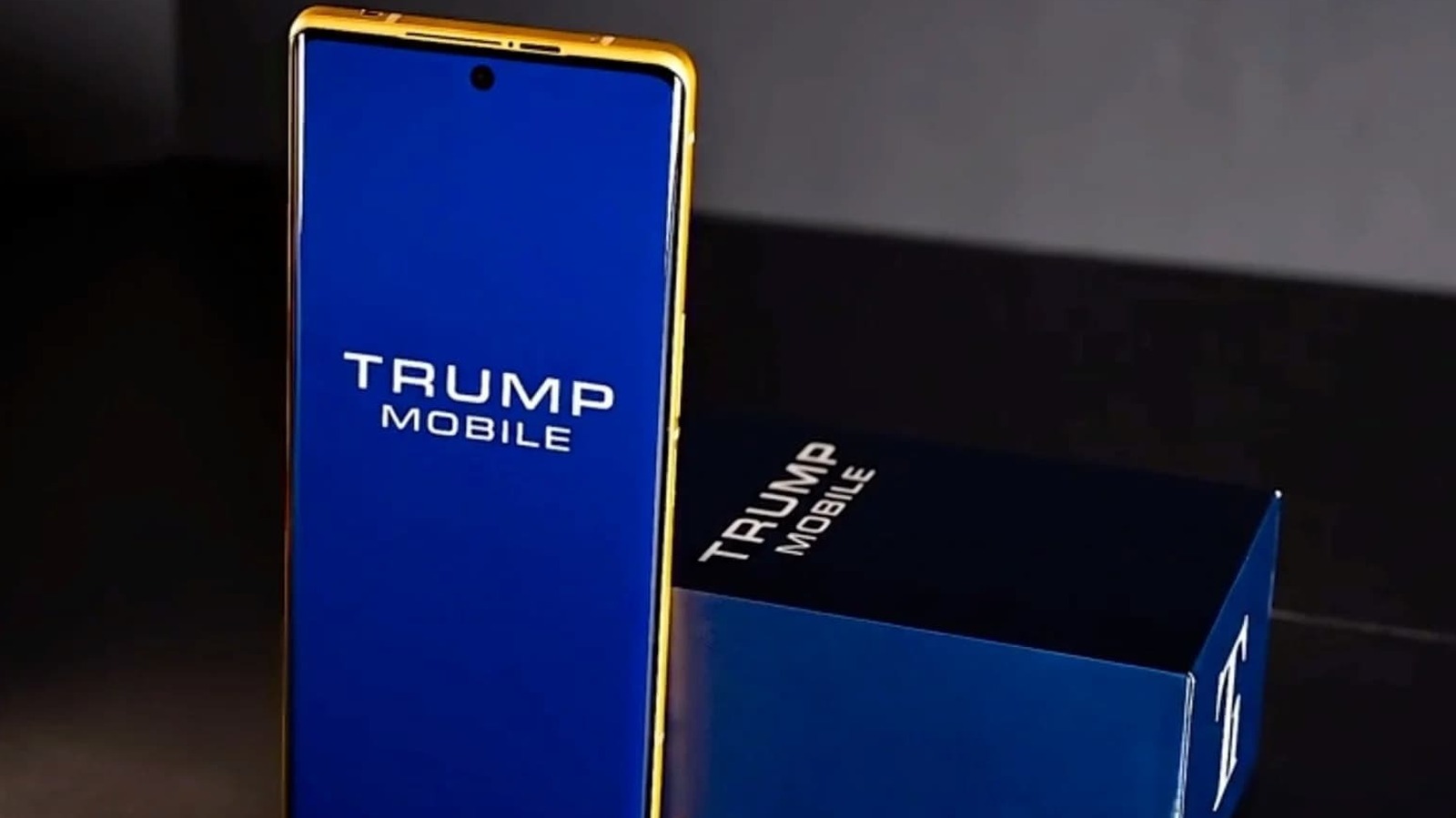
Teardown narrows the mystery around the Trump phone
A teardown of the Trump Mobile T1 suggests the handset is, in practical terms, a close match to HTC’s U24 Pro rather than a distinctly American-made smartphone. Engadget, citing iFixit’s examination of a unit first obtained by NBC News, reported that the devices are “practically identical,” with the main functional difference being the battery.
The finding matters because the Trump phone had been marketed with language implying a strong domestic manufacturing identity. The teardown instead points to a device built on an existing international production base, with only limited hardware variation from an already available model.
What iFixit found
According to the supplied source text, the T1 and the HTC U24 Pro share the same Snapdragon 7 Gen 3 chipset, 12GB of LPDDR5 RAM, and 512GB of storage. iFixit found that the most meaningful hardware difference was the battery: the Trump phone uses a slightly larger battery and supports 30W charging rather than 60W charging.
The report also describes minor cosmetic changes, including altered camera positioning and a different speaker-hole pattern, as well as a gold exterior finish. But on the underlying electronics, the overlap appears extensive enough that iFixit concluded the Trump phone is effectively the same device lineage rather than an independently developed product.

The manufacturing claim is the real story
The teardown’s broader significance lies in what it says about sourcing and assembly. Engadget reports that Trump Mobile had initially claimed the T1 was “made in the USA,” but now says it is “proudly assembled in the US” and “American-proud design.” Those are not equivalent statements.
The source text states that the battery is made in the Philippines and that most components are from China. iFixit’s conclusion, as quoted by Engadget, is that the T1 is “a phone designed in China, made in China, with the vast majority of parts sourced from China.” While the company now uses assembly-focused language, the teardown sharply limits how far any domestic-manufacturing narrative can credibly go.
Why this is a familiar consumer-electronics pattern
The Trump phone is not unique in depending on a globalized hardware pipeline. In smartphones, even brands with strong national marketing identities typically rely on international supply chains, shared component ecosystems, and contract manufacturing. The difference here is that the public branding appears to have pushed much harder on patriotic manufacturing cues than the hardware evidence supports.
That creates a credibility problem. Consumers may reasonably assume that “made in the USA” indicates not just final assembly but substantial domestic production or a distinctly domestic hardware program. The teardown points in another direction: a rebadged or minimally modified handset that fits within preexisting overseas production lines.

Why the HTC comparison matters
The direct comparison to the HTC U24 Pro is useful because it turns a political branding claim into a concrete technical question. If the internal architecture, core specifications, and much of the physical design match an existing model, then the relevant issue is not whether the T1 functions as a smartphone, but how much of it is genuinely new.
On the supplied evidence, the answer appears to be: not much. The battery differs. Some cosmetics differ. The board housing comes from a different supplier in at least one area, with Micron in the Trump phone and SK Hynix in the HTC variant. But those distinctions do not add up to a fundamentally separate platform.
A branding lesson for hardware politics
This matters beyond one device because consumer electronics is becoming a stage for political and industrial symbolism. Companies increasingly frame gadgets around national identity, values, and manufacturing claims. Teardowns cut through that by showing where parts come from, how designs map onto known products, and what has actually changed under the shell.
In this case, the most defensible conclusion from the supplied source is straightforward: the Trump Mobile T1 appears to be heavily derived from HTC’s U24 Pro, and the available evidence does not support a broad claim of U.S. manufacturing. For a phone sold as a political statement as much as a product, that is the story.
This article is based on reporting by Engadget. Read the original article.

Originally published on engadget.com


