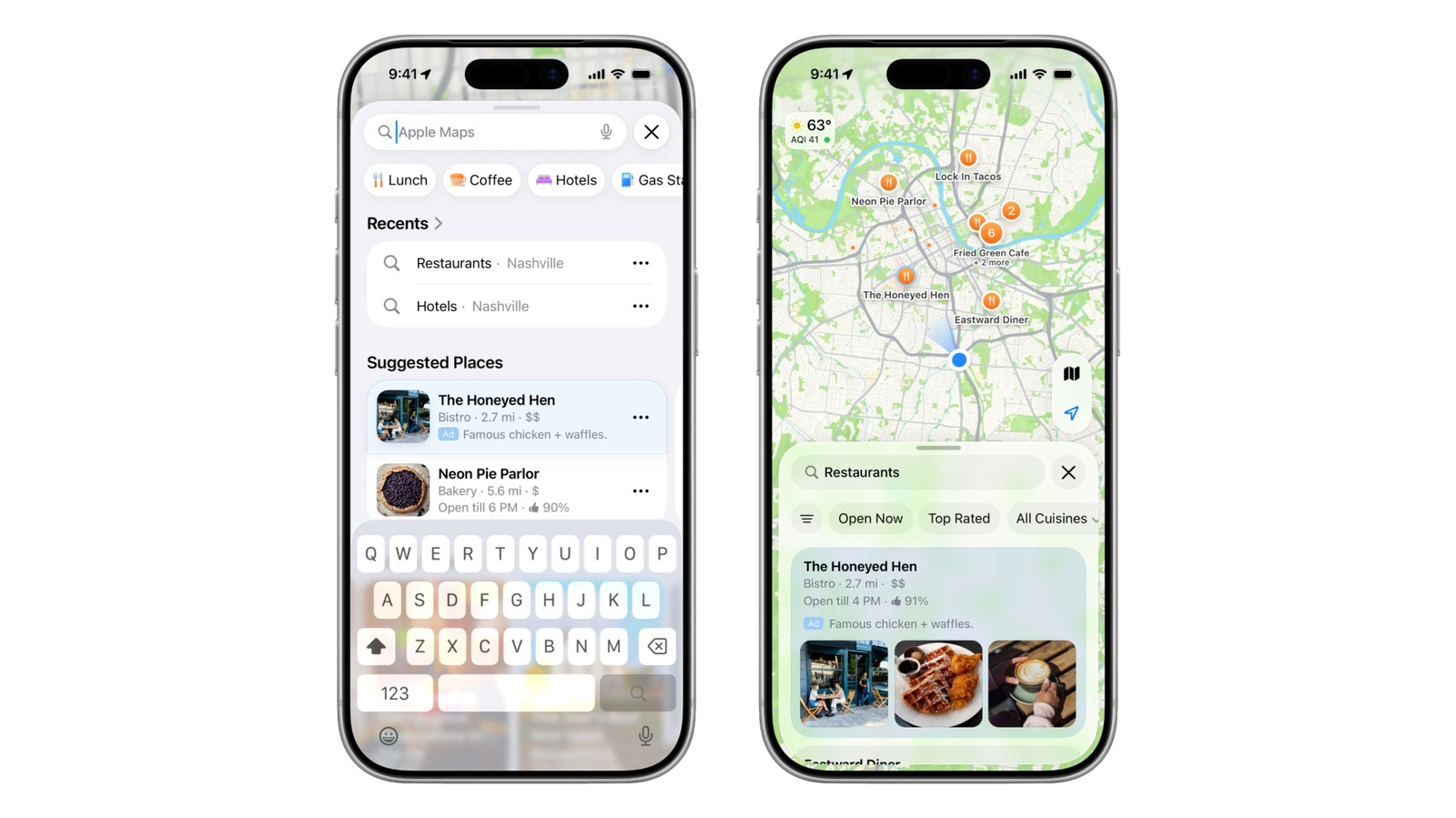
Apple is drawing sharp lines around Maps advertising
Apple’s push into Maps advertising is taking shape with a notable restriction: home services ads will not be allowed. New ad guidelines published by the company bar content that directly or indirectly promotes categories such as plumbing, electrical work, locksmith services, HVAC, pest control, roofing, and general contracting. The rules arrive ahead of Apple’s planned Maps ad rollout in the United States and Canada this summer, offering one of the clearest signs yet of how the company wants the product to differ from established rivals.
The policy matters because it reveals something broader than a simple prohibited category list. It suggests Apple is trying to define Maps ads as a discovery product built around destinations and points of interest, not as a catch-all marketplace for local intent. That may sound subtle, but in digital advertising it is a strategic distinction with consequences for merchants, users, and the competitive balance between Apple and Google.
A discovery model, not a utility marketplace
In describing the upcoming product, Apple frames Maps as a place where people explore nearby businesses and decide where to go. Its own positioning emphasizes coffee shops, restaurants, stores, and landmarks. That is a narrower and more curated commercial use case than the one many users know from Google Maps, where searches can just as easily surface electricians, plumbers, or other urgent service providers.
By excluding home services, Apple appears to be reserving ad inventory for categories more closely aligned with browsing, leisure, and local foot traffic. The distinction matters because the economics of those ads are different. A user looking for lunch or a boutique hotel may be open to suggestion and branding. A user locked out of a house at night is driven by urgency, availability, and search relevance. Apple seems to be designing for the first case, at least initially.
That approach could make Maps ads feel less intrusive to some users. A promoted restaurant or museum can be presented as part of exploration. A promoted pest control listing can feel more transactional and more obviously commercial. Apple’s apparent bet is that if ads are inevitable, they may be tolerated more easily when they blend into place discovery rather than emergency service search.

What the new rules actually say
The guidelines include several familiar restrictions that mirror rules seen elsewhere in Apple’s ecosystem, including limits on deceptive, defamatory, profane, drug-related, and political content. What stands out is the specificity of the Maps exclusions. The company is not only setting broad brand-safety rules; it is shaping the commercial identity of the product through category-level decisions.
Home services are the clearest example, but they are not the only revealing omission. The report also notes Apple’s prohibition on ads for bail bonds and cryptocurrency ATMs. Taken together, those exclusions suggest Apple wants Maps advertising to project a cleaner, more consumer-friendly image than the rougher local ad ecosystem that exists on some competing platforms.
That image management is likely important because Apple is entering a sensitive product area. Navigation apps are deeply tied to user trust. They guide movement in the physical world, and many people still expect them to behave more like utilities than ad-supported media. A tightly constrained launch may be Apple’s way of testing how much monetization users will accept before the experience feels compromised.
The business context behind the move
Apple announced plans in March 2026 to bring ads to Maps, but it has not yet given an exact launch date beyond saying the rollout is expected this summer in the U.S. and Canada. The updated guidelines therefore function as an early policy signal in the absence of a full product reveal.
The company’s interest is not difficult to understand. Advertising is already part of Apple’s Services business, alongside subscriptions, platform fees, and other recurring revenue streams. Apple sells ads in Apple News and across parts of the App Store, and Maps represents another high-intent surface where commercial placement can be valuable. People searching for a place to go are often close to making a purchase decision, which makes the context attractive to advertisers.
At the same time, Apple has long positioned itself as more privacy-conscious and less ad-dependent than some competitors. That creates a balancing act. The company wants new revenue, but it also wants to preserve the idea that its products are not built around aggressive ad targeting. One way to manage that tension is to limit what kinds of businesses can buy visibility and how ad units fit into the overall experience.

Why local businesses should pay attention
For restaurants, cafes, retailers, and destination-based businesses, Apple’s approach could create a more focused ad environment with less clutter from unrelated local categories. If the available inventory is concentrated around discovery-oriented searches, those advertisers may face a more relevant audience and less competition from service providers willing to pay heavily for urgent leads.
For home services companies, the message is the opposite. Apple Maps will not be another place to buy attention, at least under the rules now published. That does not remove demand for those categories, but it reinforces the dominance of other local search channels for urgent service discovery.
There is also a strategic signal for the broader market. Apple is not simply copying Google Maps monetization and applying its own branding. It is defining a narrower lane that fits its product philosophy and commercial comfort zone. Whether that remains true over time is an open question. If Maps ads become successful, Apple could later expand allowed categories. But the initial posture is unusually selective for a company entering a lucrative advertising space.
A small policy with larger implications
On the surface, banning home services ads may look like a niche policy choice. In practice, it says a lot about how Apple wants Maps to function. The company appears to be treating the app less as a universal local search engine and more as a polished discovery layer for places people may want to visit.
That could shape user expectations from the start. If Apple maintains the restriction, Maps ads may feel closer to sponsored recommendations than to the crowded local ad stacks found elsewhere. If it later loosens the rules, the current policy will still stand as evidence that Apple knew the user experience tradeoff from the beginning.
For now, the key development is straightforward: ahead of its summer 2026 rollout in the U.S. and Canada, Apple has published Maps ad rules that exclude home services. It is a small but telling decision, and one that hints at a carefully managed advertising strategy rather than an open-ended rush for local ad dollars.
This article is based on reporting by Engadget. Read the original article.

Originally published on engadget.com


