Therabody’s newest device targets fatigue through the hands
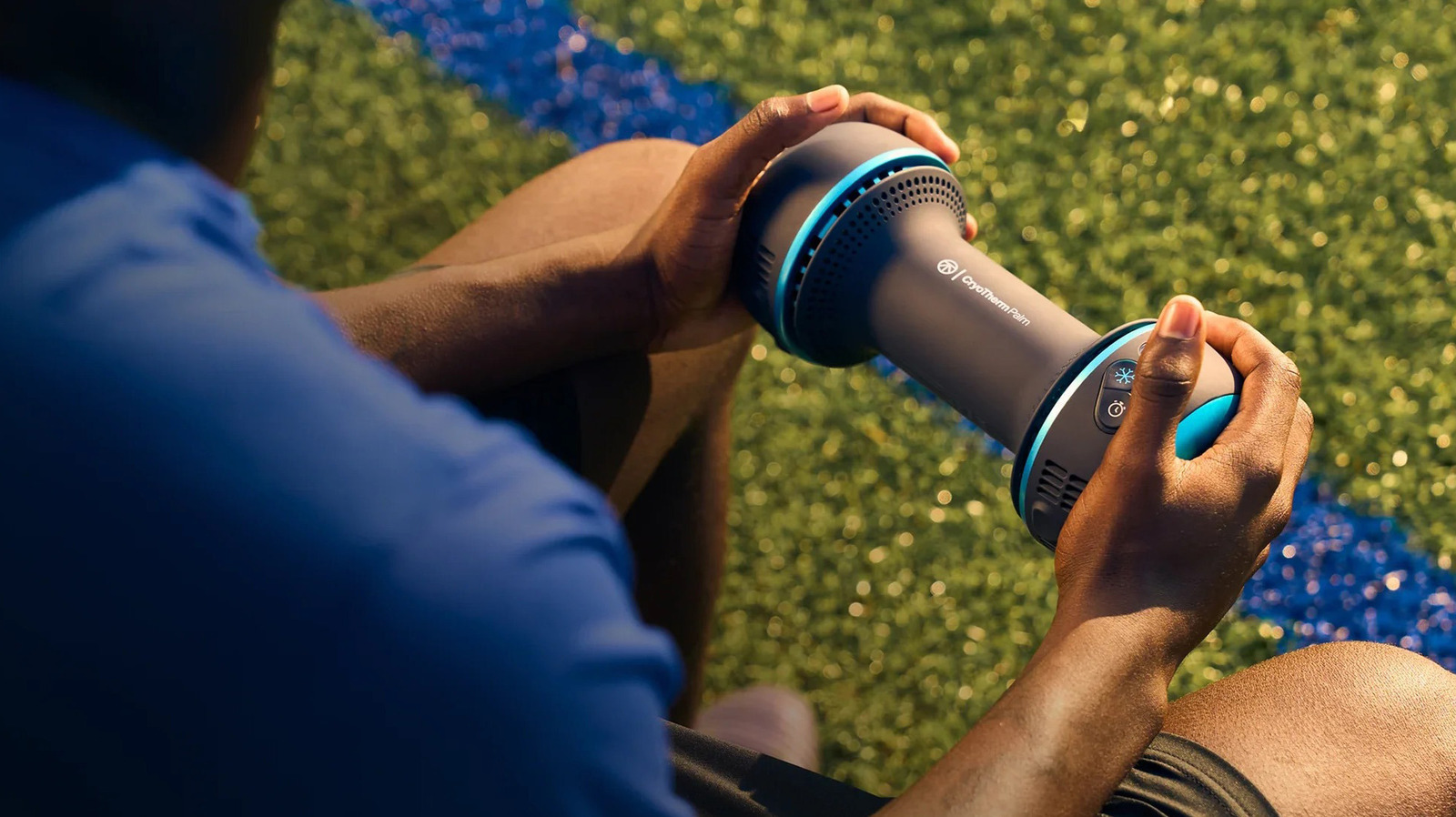
Therabody has introduced a new recovery and performance device called the CryoTherm Palm, expanding its catalog beyond massage guns and face-focused wellness hardware into a more specific claim: that cooling the palms can help delay fatigue and preserve grip strength during exercise.
The product, priced at $399.99, is designed to be used during breaks in training rather than during movement itself. Users place their palms on each end of the device for one to three minutes at a time and choose among three levels of cold therapy, three levels of heat therapy, or a contrast mode that combines hot on one side and cold on the other.
In product terms, the launch fits a recognizable strategy. Therabody has been broadening its lineup into niche recovery tools aimed at turning specific physiological ideas into premium consumer devices. The CryoTherm Palm is the latest example of that playbook.
The company’s central claim
According to Therabody, cooling the hands can push back the onset of fatigue and help maintain grip strength. To support that claim, the company points to real-world testing involving University of Southern California soccer players, saying athletes completed 58% more repetitions in their final set when using the CryoTherm Palm.
That figure is eye-catching and will likely do much of the commercial work behind the product. It suggests the device is being positioned not just as a comfort or recovery accessory, but as a performance aid with measurable training impact.
At the same time, the available source material leaves important questions unanswered. It does not describe the testing protocol in detail, identify sample size, or specify how broadly the result should be generalized across sports, body types, or training settings. That does not invalidate the claim, but it does place it firmly in the category of promising company-backed evidence rather than settled consensus.

What the device actually does
The CryoTherm Palm is notable for being simple in concept. Unlike a massage gun or wearable compression gear, it does not work by percussive force or continuous contact during a workout. Instead, it turns rest periods into a treatment window. Athletes or recreational users place their hands on the unit between sets, choosing either cooling, heating, or contrast therapy depending on preference.
The design also includes a built-in stopwatch function and a maximum battery life of 120 minutes. Those details reinforce the intended use case: structured sessions in gyms, training rooms, or recovery environments where users are likely to move through timed sets and brief intervals.
Therabody’s framing suggests the product sits somewhere between sports performance hardware and wellness gadgetry. That positioning may help it reach both serious exercisers and consumers already familiar with the brand’s higher-end recovery products.
The broader business context
The launch is part of a wider pattern for Therabody. The company built its reputation around massage guns, but has increasingly moved into more specialized devices aimed at particular use cases or body areas. The report notes that last year the company introduced the TheraFace Mask Glo, an LED-based product aimed at reducing facial wrinkles. That expansion shows Therabody is less interested in being defined by one category than by a broader identity around personal recovery and body optimization.
From a business standpoint, that can be powerful. A company that successfully turns targeted physiological concepts into premium hardware can keep extending into adjacent niches. But it also raises the burden of proof. The more specific the claim, the more consumers will ask whether the benefit is meaningful, repeatable, and worth the price.

The challenge is value, not feature count
The CryoTherm Palm includes enough functionality to sound versatile. It cools, heats, alternates temperatures, and tracks time. But at $399.99, the real question is not whether it works at all. It is whether the magnitude of benefit justifies the cost for anyone outside a narrow circle of committed users.
That question applies especially in the current recovery-tech market, where premium devices routinely ask consumers to pay hundreds of dollars for gains that may be real but incremental. The source report is right to note that skepticism is reasonable. Performance and wellness hardware increasingly lives in a space where users must separate branded confidence from broadly established evidence.
A product that tests the limits of the recovery boom
Therabody’s new device captures both the ambition and the tension of modern fitness technology. The ambition is clear: translate a physiological intervention into a polished consumer product. The tension is equally clear: premium pricing demands strong evidence and obvious use cases.
For now, the CryoTherm Palm stands as a focused, high-cost bet on palm cooling as a useful training aid. The company has supplied an encouraging performance statistic and a straightforward feature set, but the available evidence remains limited in detail. That leaves the product in a familiar position for emerging wellness hardware: plausible, polished, and potentially helpful, but still dependent on whether users believe the benefit is substantial enough to matter.
This article is based on reporting by Engadget. Read the original article.

Originally published on engadget.com


