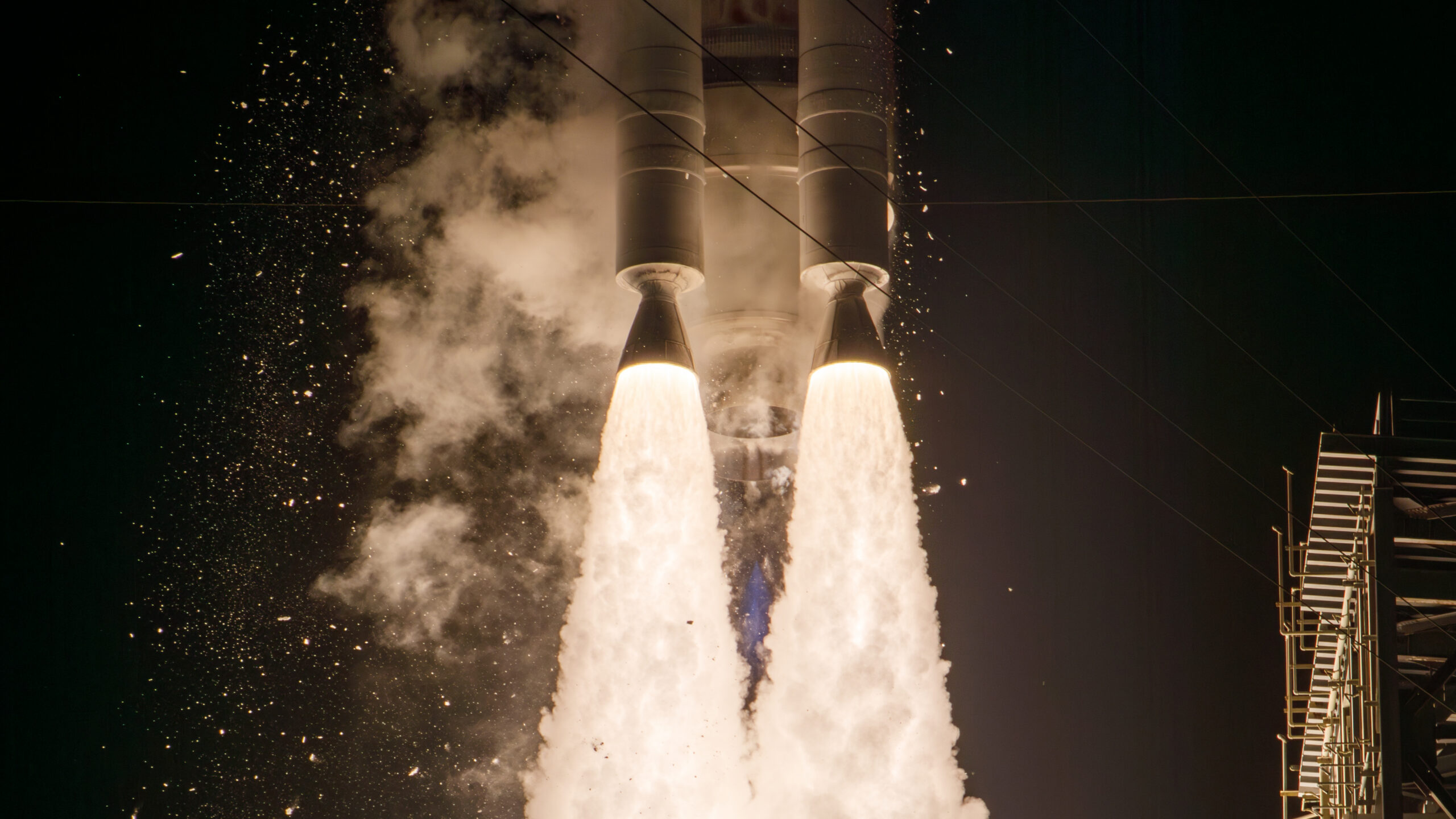
Vulcan’s second grounding is changing the Pentagon’s launch calculus
The US Space Force is reassessing how it assigns some of its most important national security launches after repeated issues with United Launch Alliance’s Vulcan rocket. In remarks reported on April 15, Space Systems Command chief Lt. Gen. Philip Garrant said the recent problems with Vulcan will directly shape how the military thinks about future launch procurement.
That matters because Vulcan is not a side program. It is one of the two main rockets the Space Force relies on for placing high-value satellites into orbit, alongside SpaceX’s Falcon 9. Roughly half of the service’s major launches over the next four years are currently assigned to Vulcan, giving the vehicle a central role in military access to space.
Reliability concerns are now affecting procurement strategy
Vulcan has flown only four times since its January 2024 debut, despite a backlog approaching 70 launches. Two of those four flights experienced anomalies involving a solid rocket booster. In the first incident, during an October 2024 mission, one booster’s exhaust nozzle blew off. A similar problem appeared to occur again on a February 2026 launch.
Both missions still reached their target orbits, but that outcome has not erased the deeper concern. Repeated hardware issues on a rocket used for military missions raise questions not just about individual flights, but about schedule confidence, industrial execution, and the ability to sustain a dependable cadence. One industry source cited in the candidate text said the Space Force may not fly another mission on Vulcan before the end of the year.
Garrant’s remarks make clear that the consequence is no longer limited to engineering reviews. The launch vehicle’s performance is now shaping acquisition decisions. From the military’s perspective, a rocket that is technically successful but persistently delayed or grounded still creates strategic risk when satellites are waiting to fly.
SpaceX stands to benefit if mission readiness becomes decisive
The core issue for the Pentagon is not only which rocket can fly, but which rocket can fly when a spacecraft is ready. That emphasis favors providers with higher cadence and fewer unresolved questions. In that environment, SpaceX is well positioned to absorb missions that might otherwise remain with ULA.
The candidate text suggests that a significant number of launches could move from ULA to SpaceX, especially if Vulcan’s return-to-flight timeline stretches further. Even without an outright policy shift, schedule pressure alone can redirect business. If satellites are completed and available for launch, the Space Force has a strong incentive to match them with the most readily available vehicle.
This would mark a notable change in a market where ULA long held a reputation for dependable national security launch service. The company’s Atlas V and Delta IV programs built that standing over nearly two decades, and the source text notes that no ULA mission has failed to place its payload into orbit. But reputational capital in launch only lasts as long as current performance sustains it.
A broader signal for the next competition
The bigger story is what this episode may mean for the Pentagon’s next round of launch-service awards. Garrant said Vulcan’s recent experience will “absolutely” influence the military’s thinking. That points to a procurement environment where schedule certainty and demonstrated hardware reliability carry even more weight.
For the Department of Defense, access to space is not just a transportation problem. It is a readiness issue tied to communications, missile warning, surveillance, and other mission sets that cannot drift indefinitely because of launcher setbacks. A vehicle that is grounded for months at a time complicates planning across the rest of the national security space architecture.
ULA still has time to recover, and the company’s history ensures it will remain a major force in the market. But the latest Vulcan grounding has changed the tone of the conversation. The Pentagon is no longer talking about a temporary technical setback in isolation. It is openly weighing how those setbacks should change who gets the next launch contract, and how many missions any single provider should carry.
- Vulcan has flown four times since January 2024 and experienced booster anomalies on two flights.
- The Space Force says those issues will shape future launch-buying decisions.
- SpaceX could gain more missions if schedule readiness becomes the deciding factor.
This article is based on reporting by Ars Technica. Read the original article.
Originally published on arstechnica.com


