Snap is turning chat into ad inventory
Snapchat has introduced a new advertising format that places branded AI agents directly inside the app’s Chat tab. Called AI Sponsored Snaps, the product gives companies a way to appear not just as display ads or promoted content, but as conversational entities that users can message and question inside Snapchat itself.
The move is notable because it pushes advertising into one of the most active and intimate behaviors on social platforms: direct messaging. Snap is effectively betting that branded chat, powered by AI, can become a commercially useful layer between standard ad placement and customer support.
How the format works
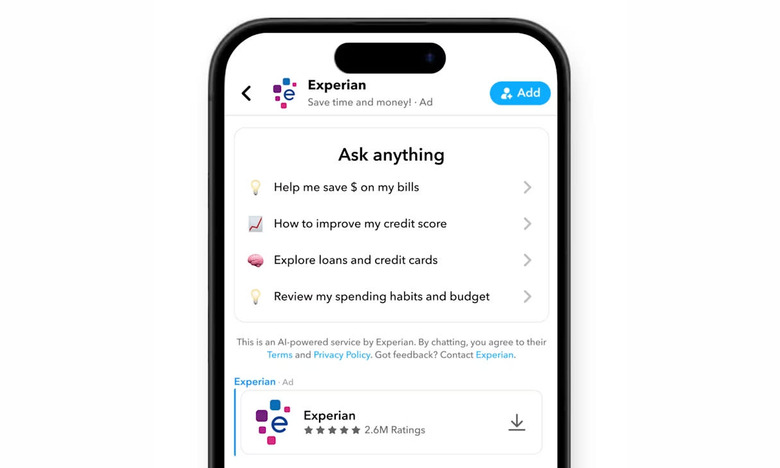
According to the source text, AI Sponsored Snaps appear in the Chat tab with an “Ad” notation next to the brand name. Once a user opens the conversation, they can ask the AI agent questions about the sponsoring company. Snap’s first example comes from Experian, whose bot is presented as a place to ask about topics such as saving money, improving credit and exploring financial products including loans and credit cards.
That setup matters because it changes the role of the ad. Instead of a short message trying to win a click, the brand now has an interactive channel that can keep a user engaged, answer follow-up questions and guide the conversation toward a business goal. In effect, the ad becomes a lightweight sales or recommendation interface.

Conversational advertising is the point, not a side effect
Snap’s own framing leaves little ambiguity about the strategy. The company sees conversation as a prime commercial surface, with AI accelerating the shift by making it cheaper and easier to create responsive branded presences. Rather than placing static ads near chat, Snap is redesigning the ad unit so it behaves like chat.
That is an important distinction. For years, platforms have tried to make commerce feel more native to social interactions. AI agents give them a new mechanism to do that. A brand no longer needs a human representative online at all times to sustain a dialogue. It can outsource first-contact persuasion, product discovery and some degree of qualification to a model-driven interface.
The result is a new kind of ad inventory: persistent, interactive and potentially more personalized than a conventional promoted post. If users adopt it, other platforms are likely to copy it quickly.
The value proposition for brands is obvious
From a marketer’s perspective, the attraction is clear. A sponsored AI agent can answer far more questions than a banner ad, potentially keep people in-platform longer and steer the discussion toward actions that generate revenue. In the Experian example, the topics are not just educational. They sit close to financial product discovery, which suggests the commercial path is built into the design.
This kind of format could be useful for brands with complicated offerings, regulated products or high-friction decisions where users want information before clicking through. It may also appeal to advertisers that already invest heavily in chat-based support or lead generation.
For Snap, the upside is not just ad revenue per impression. It is deeper monetization of the Chat tab, an area that has historically been central to user behavior but less straightforward to monetize without damaging the experience.

The consumer case is less settled
The harder question is whether users will actually trust brand-owned AI agents enough to make them useful. A sponsored chatbot is not a neutral assistant. Its job is to represent the sponsor and nudge behavior in a direction that benefits that sponsor. That may still be acceptable in practice, but it creates a tension between convenience and credibility.
Users can already ask general-purpose AI systems broad questions about products, finance or services without interacting directly with a branded bot. Snap’s format may feel more seamless inside the app, but it also makes the commercial motive more direct. Whether that tradeoff works will depend on how transparent, helpful and non-intrusive the interactions feel.
Safety history shadows the rollout
Snap is also launching this format with some baggage. The company notes that more than half a billion people have messaged its My AI feature since it launched three years ago, demonstrating large-scale usage. But the source text also points to a troubled early period, when researchers and journalists posing as young teenagers were able to get the bot to provide troubling guidance, including advice related to masking the smell of alcohol or cannabis and setting the mood for sex.
That history does not automatically predict failure for sponsored agents, but it does raise the bar. If platforms want users to treat AI chat as a place for product advice and real-time decision support, they will face stronger scrutiny over safety, targeting and the boundaries between assistance and manipulation.

What this launch says about platform economics
More broadly, Snapchat’s rollout shows how quickly AI agents are moving from productivity and support into media monetization. The first generation of consumer AI tools was pitched as helpful personal assistance. The next phase is increasingly about embedding those tools inside the business models of platforms. That means commerce, lead generation and advertising are not peripheral use cases. They are becoming central.
Sponsored AI agents fit neatly into that transition. They offer brands more conversational control, platforms a new monetization layer and users a more interactive but more commercially loaded experience. The format may prove effective precisely because it collapses the distance between marketing and dialogue.
That makes this launch more than a feature update. It is a small but meaningful sign of where social advertising is heading: away from passive impression-based units and toward AI-mediated conversations in which the ad does not just interrupt attention. It participates in it.
This article is based on reporting by Engadget. Read the original article.
Originally published on engadget.com


