Midjourney’s next product is not another image model
Midjourney, the company best known for generating images from text prompts, says it is building a full-body ultrasonic scanner that aims to map the human body in less than 60 seconds. The project marks a sharp turn from consumer AI software into medical hardware, and Midjourney is framing it as the first step in a new unit called Midjourney Medical.
According to the company’s announcement, the system is designed to create a detailed 3D map of the body at a speed far beyond a conventional full-body MRI. Midjourney said it wants the experience to feel less like a hospital appointment and more like a casual wellness visit, and it is pairing the machine with plans to open dedicated “Spa” locations where people could be scanned.
That combination of imaging hardware, purpose-built locations and eventual diagnostic ambitions makes this one of the more unusual diversification moves in AI. The company is not presenting the scanner as a small side project. It says the device is its first hardware product, and it is laying out a multi-year path that includes research trials, further hardware iterations and a push for regulatory approval.
How the scanner is supposed to work
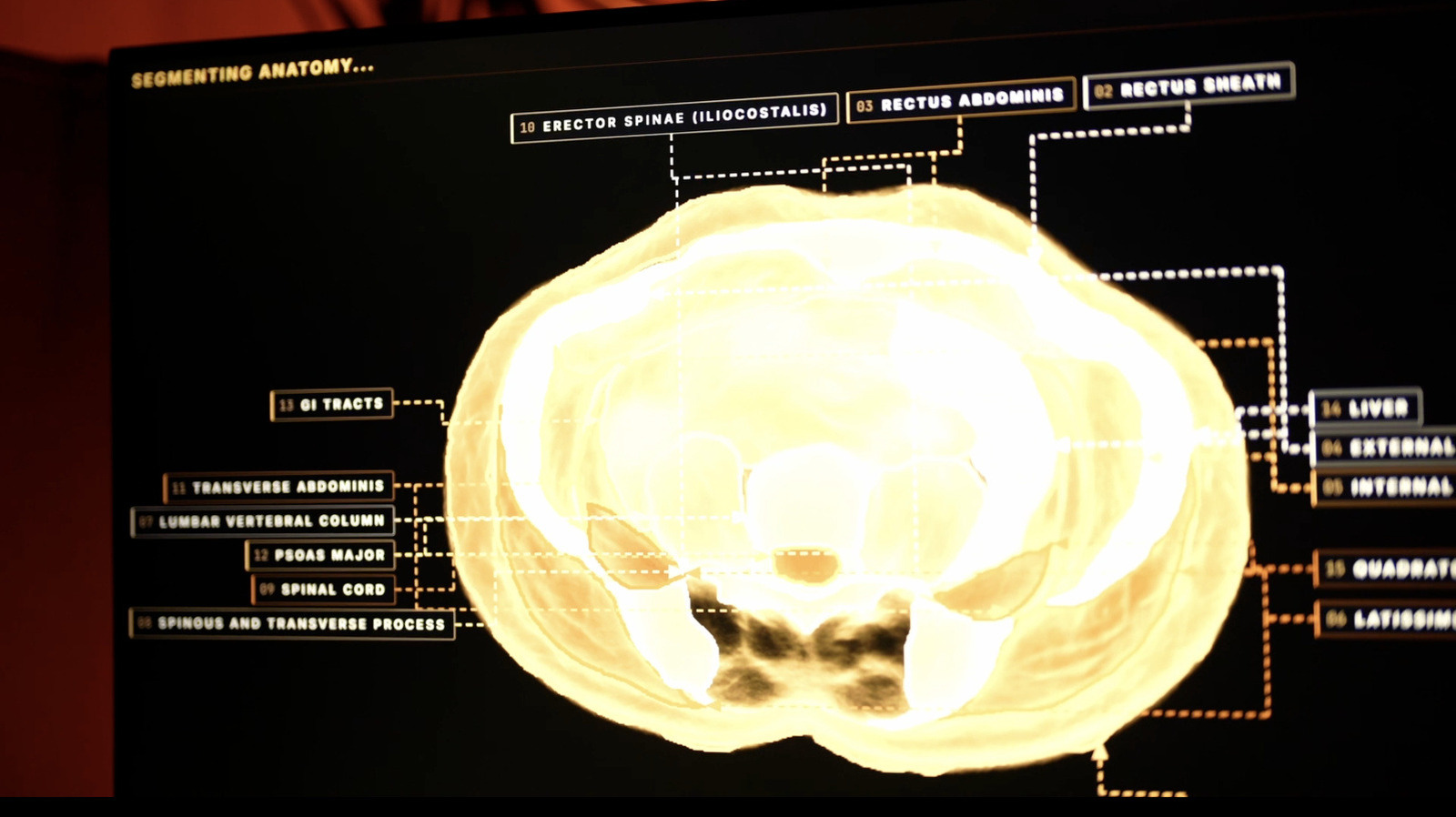
Midjourney described the scanner as a system that places a person on a platform and then submerges the body in water at a rate of roughly two inches per second. As that happens, the person passes through a ring containing what the company says are half a million square elements, each about the size of a grain of sand. Those elements emit ultrasonic waves and record the returning signals.
The company compared the process to echolocation, saying the machine uses reflected sound waves to reconstruct a detailed model of the body from many angles at once. Midjourney’s claim is that the resulting output looks similar to modern MRI imagery while operating at nearly 100 times the speed. In practical terms, it said the target is a scan that takes under a minute, compared with the roughly 60 to 90 minutes often associated with full-body MRI procedures.
The source text does not provide independent validation of those performance claims, and Midjourney has not yet said the device is cleared for diagnostic use. But the company’s public description makes clear that speed is central to the pitch. The scanner is being positioned as a way to compress a long, expensive and infrastructure-heavy imaging workflow into something faster and more widely deployable.

Why this is a significant bet
For a company associated with generative AI art, the move raises two immediate questions: why medical imaging, and why now? Midjourney addressed that indirectly in its announcement by saying it has been asking how it wants to be different and what it wants to become. Its answer appears to be a broader identity built around imaging systems, not just image generation.
That may sound abrupt from the outside, but the project already has some industrial grounding. The company is developing the scanner with Butterfly Network, a maker of handheld ultrasound devices. Midjourney secured exclusive rights to Butterfly’s ultrasound-on-chip technology through a licensing agreement signed in November 2025, according to the supplied source text. That gives the effort a clearer technical base than a pure concept reveal would suggest.
The hardware program is being led by Ahmad Abbas, identified by Midjourney as its head of consumer hardware projects. Abbas joined the company in late 2023 after working on Apple’s Vision Pro, another signal that Midjourney has been building internal capability for physical products, not just software research.
Together, those details suggest the scanner effort is not being described as a speculative moonshot with no operating plan behind it. Midjourney has a named external technology partner, a licensing agreement, a hardware lead and a staged roadmap. That does not guarantee clinical success, but it moves the idea well beyond a one-off teaser.
The spa model is as notable as the machine
One of the most striking parts of the announcement is not the scanner itself but the proposed setting. Midjourney says it is building spas where people can get scanned, with the first location planned for San Francisco next year. The message is clear: the company is trying to recast advanced body imaging as something more routine, faster and less intimidating than a hospital-based exam.
That approach could help explain the company’s commercial logic. A dedicated location model gives Midjourney more control over the customer experience, the operating environment and early deployment. It may also allow the company to build familiarity around a device that could otherwise seem highly unconventional. In effect, the scanner and the spa concept are being introduced as a single product experience.
At the same time, that framing could invite scrutiny. If the product aspires to medical relevance, it will have to navigate the gap between a consumer-friendly wellness setting and the standards expected of diagnostic technologies. Midjourney itself acknowledges the next major milestone is regulatory: it says the machine’s diagnostic capabilities would need approval from the US Food and Drug Administration.

What happens next
Midjourney said the next 12 months will focus on fine-tuning the scanner and its algorithms, conducting research trials and working on a second-generation hardware design. That sequence matters because it shows the current system is still in development rather than ready for broad rollout. The company is effectively saying that engineering, validation and product refinement will all continue before any larger expansion.
Its longer-term ambitions are also explicit. After opening a first San Francisco Spa sometime next year, Midjourney says it hopes to expand to more cities in 2028. The source text indicates that the FDA pathway sits between those steps and any broader diagnostic positioning.
For the wider technology industry, the announcement stands out less because an AI company is entering healthcare and more because of how directly it is doing it. Many AI firms talk about enabling medicine through models, analysis or software assistance. Midjourney is instead proposing a branded imaging device, a physical service environment and a regulated medical product strategy.
Whether that becomes a viable business will depend on evidence the company has not yet presented publicly, especially around image quality, safety, repeatability and clinical usefulness. But on the information available, Midjourney is making a real attempt to cross from generative media into biomedical hardware. If it works, the company could end up defining itself less by the pictures it creates and more by the pictures it captures inside the body.
This article is based on reporting by Engadget. Read the original article.
Originally published on engadget.com