A court has intervened in a dispute over online speech and platform pressure
A federal judge in Illinois has granted a preliminary injunction to the creators of two ICE-monitoring projects, marking an important early ruling in a case about whether government officials crossed the line from criticism into unconstitutional coercion.
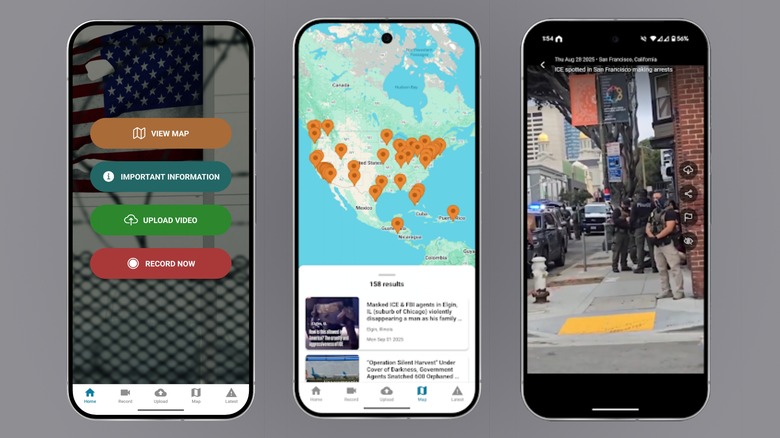
The projects at the center of the case are the Facebook group “ICE Sightings - Chicagoland” and the Eyes Up app. Both used publicly available information to track and share sightings of Immigration and Customs Enforcement activity. After pressure from Trump administration officials, the projects were removed from Facebook and Apple’s App Store, according to the complaint. Similar ICE-monitoring apps, including ICEBlock and Red Dot, were also taken down from Apple’s App Store and Google Play.
Judge Jorge L. Alonso of the US District Court for the Northern District of Illinois found that the plaintiffs are likely to succeed in their case, which alleges violations of the First Amendment. At this stage of the litigation, that does not end the case, but it is a significant finding. Preliminary injunctions are typically granted when a judge believes the plaintiffs have shown a meaningful likelihood of prevailing and that immediate relief is justified before final resolution.
The legal question is whether the government coerced private platforms
The underlying issue is not simply whether officials disliked the apps. Government officials are free to criticize speech. The constitutional problem arises if state power is used to pressure or strong-arm private companies into removing lawful expression that the government could not directly suppress on its own.
That is the theory advanced by the plaintiffs, Kassandra Rosado and Kreisau Group. Their case argues that federal officials did more than express concern. According to the source report, the lawsuit points to social media posts by former US Attorney General Pam Bondi and former Homeland Security Secretary Kristi Noem that demanded and then took credit for the removal of the ICE-monitoring efforts.
Judge Alonso described those posts as “thinly veiled threats,” according to the filing cited by Engadget. That phrase is central because it signals the court’s view that the government’s conduct may have carried implied coercive force rather than mere persuasion.

Why the ruling matters beyond these apps
The case lands in a broader debate over the relationship between government agencies and major digital platforms. In recent years, courts, lawmakers, and civil-liberties groups have repeatedly asked when official requests to moderate content remain voluntary and when they become unconstitutional pressure.
This dispute adds a particularly charged context because the targeted projects tracked law-enforcement activity. The creators say they were using public information to help communities monitor government operations. Critics may argue that such tools could complicate enforcement activity. But the court’s preliminary ruling suggests that any government response still has to operate within First Amendment limits.
The practical implications go beyond immigration enforcement. If the plaintiffs ultimately prevail, the case could reinforce a principle with wide relevance across social media, app stores, and digital publishing: officials cannot bypass constitutional protections by leaning on intermediaries to silence speech they disfavor.
That principle matters in a platform-dependent information environment where access to Apple, Google, Meta, and other major distribution systems often determines whether a speech product can function at all. When an app is delisted or a social group is removed, the effect can be similar to suppression even if the state did not press the delete button itself.
What the injunction does and what comes next
The preliminary injunction does not resolve the full factual record, nor does it provide a final answer on damages or permanent relief. It does, however, block the government from continuing the alleged coercive conduct while the case proceeds. That is a meaningful procedural win for the plaintiffs and for the Foundation for Individual Rights and Expression, which is defending them.
FIRE said it was “extremely encouraged” by the ruling and framed the case as part of a larger fight to ensure that the First Amendment protects the right to discuss, record, and criticize law-enforcement activity conducted in public. That framing will likely remain central as the case develops.
Several open questions remain. The case will still need to address the exact nature of communications between officials and platforms, whether the platforms acted because of explicit or implicit threats, and how far any government involvement extended beyond public statements. The full evidentiary picture may be more complicated than the early filings suggest.
Even so, the preliminary ruling signals that the court sees the constitutional claim as credible enough to warrant immediate judicial protection.

The larger tension between public safety claims and speech rights
Cases involving speech about law enforcement are often politically fraught because officials may argue that limiting distribution is necessary for safety or operational reasons. Courts, however, do not simply accept that rationale at face value when protected speech is involved. The constitutional system is built around the idea that state power must be constrained precisely when public officials feel pressure to suppress criticism or inconvenient information.
The ICE-tracking dispute sits squarely inside that tension. The projects reportedly relied on publicly available information rather than secret government databases or unauthorized access. On the record supplied here, the issue is not unlawful data acquisition but whether people have a protected right to assemble and distribute public observations about government action.
That distinction may prove decisive. Public officials do not gain a veto over lawful speech merely because the speech is unwelcome or politically adversarial.
An early but important First Amendment marker
For now, the ruling is best understood as an early but consequential marker rather than a final constitutional settlement. Still, preliminary injunctions in speech cases often matter because timing shapes the injury. A speaker whose platform is removed during litigation can lose audience, momentum, and relevance long before the case is finally decided.
By granting interim relief, the court signaled that the plaintiffs’ claim deserves more than ordinary procedural patience. It deserves protection while the facts are tested.
That makes this more than a narrow dispute about a Facebook group and an app. It is also a case about how digital speech rights operate when government officials try to influence the gatekeepers that control modern distribution. The final judgment may still be years away. But the court has already made one point clear: public criticism from officials can become unconstitutional if it is backed by the force of implied retaliation.
This article is based on reporting by Engadget. Read the original article.

Originally published on engadget.com


