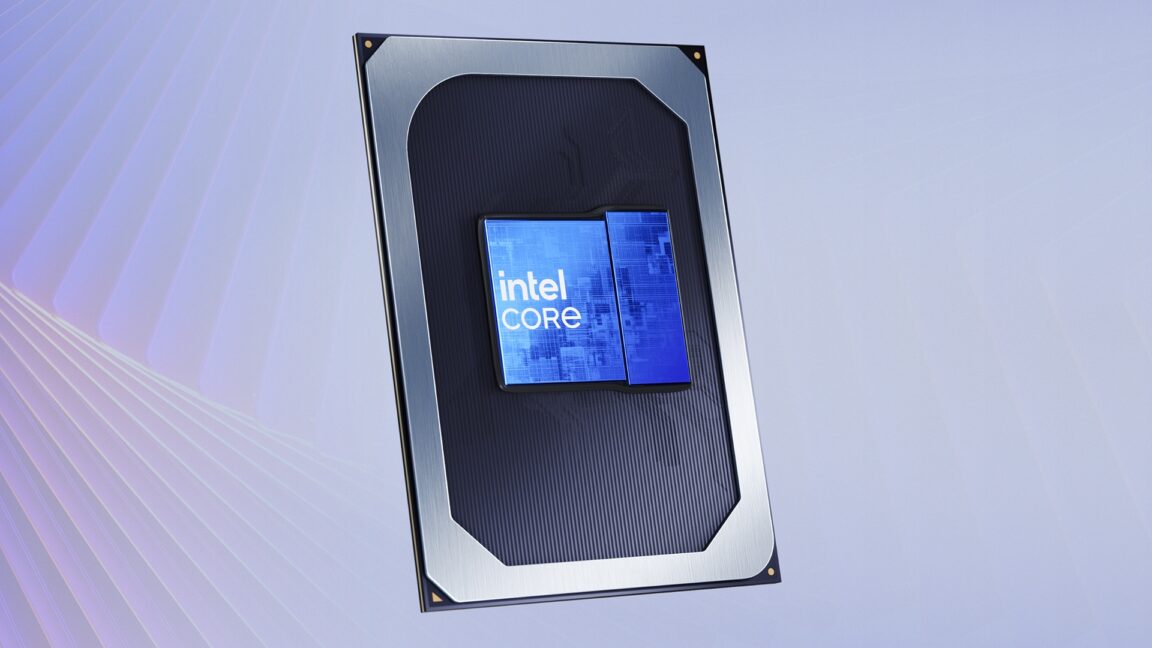
Intel refreshes the middle of its lineup
Intel’s newest non-Ultra Core Series 3 processors are notable less for headline-grabbing peak performance than for what they signal about the company’s broader product strategy. According to the supplied report, the chips, codenamed Wildcat Lake, are the first non-Ultra Core processors in some time to arrive as genuinely new silicon rather than rebadged or lightly revised versions of older designs.
That matters because Intel’s non-Ultra products had increasingly come to represent the hand-me-down part of the lineup. While Core Ultra parts carried new CPU and GPU architectures and newer manufacturing approaches, the regular Core chips remained tied to older Raptor Lake-era foundations. Wildcat Lake changes that pattern. It suggests that at least some of the improvements introduced at the high end are starting to filter down into more mainstream laptop hardware again.
What Wildcat Lake includes
The report describes Wildcat Lake as a simpler, lower-power design that still shares some DNA with Panther Lake, Intel’s Core Ultra Series 3 platform. Each chip uses two silicon tiles: a compute tile with up to two Cougar Cove performance cores and four Darkmont efficiency cores, plus an integrated GPU with one or two of Intel’s Xe3 graphics cores. Most versions also include a neural processing unit rated for up to 17 trillion operations per second.
That combination places Wildcat Lake squarely in the modern laptop playbook. General CPU performance remains central, but integrated graphics, on-device AI acceleration, and connectivity features now shape purchasing decisions just as strongly for many classes of systems.
The platform controller tile, built on a non-Intel process according to the article, supports up to two Thunderbolt 4 ports, Wi-Fi 7, Bluetooth 6.0, and six PCIe 4.0 lanes. Memory support reaches up to 48GB of LPDDR5X-7467 or up to 64GB of DDR5-6400. Intel lists a 15-watt base power level and a 35-watt maximum boost power level.
Why this launch is strategically important
Wildcat Lake is not being positioned as Intel’s most powerful silicon. Its importance is architectural and commercial. For several product cycles, Intel’s branding structure left buyers with a split market: the most current technology lived in premium machines, while less expensive systems often used substantially older foundations. That is a workable segmentation tactic, but over time it can make the middle of the portfolio feel stagnant.
A fresh design in the non-Ultra family gives PC makers more reason to update mainstream notebooks with current features instead of relying on branding alone. It also gives buyers a clearer path to modern connectivity, newer graphics architecture, and local AI hardware without having to step up to the highest-priced category.
The NPU is especially relevant here. At up to 17 TOPS, it is not aimed at the most demanding AI workloads, but it reflects how quickly dedicated inference hardware has become standard even outside flagship processors. Software developers, OEMs, and enterprise buyers increasingly expect some level of on-device AI capability for background assistance, video effects, or productivity features.
A more balanced trickle-down model
The deeper takeaway is that Intel appears to be restoring a more recognizable form of platform progression. Historically, mainstream and premium chips often shared many of the same generation-to-generation advances, even when they differed materially in core counts or performance ceilings. The report argues that Wildcat Lake is a return to that pattern.
If that proves true in shipping systems, the change could help Intel maintain relevance in laptop segments where efficiency, integrated features, and platform maturity matter more than raw benchmark leadership. A midrange processor with current I/O, competent graphics, and integrated AI can be a stronger product than an older design with slightly higher theoretical throughput.

What to watch next
The available information still leaves open questions about how Wildcat Lake will perform in actual laptops, how widely manufacturers will adopt it, and how it will compare with competing low-power designs. But the supplied details already establish the key point: Intel has moved beyond simple relabeling in this part of its product stack.
That alone may make the launch more consequential than its positioning suggests. In PCs, the most meaningful changes are not always the ones at the very top of the market. Sometimes the larger shift is when new architecture, new graphics, and new platform features become normal in systems that more people can realistically buy.
For Developments Today, Wildcat Lake looks less like a spectacular leap and more like a structural correction. Intel’s mainstream customers have been waiting for new silicon, not just new names. This release indicates the company understands that distinction, and that the health of the broader PC ecosystem depends on fresh technology reaching beyond the flagship tier.
This article is based on reporting by Ars Technica. Read the original article.
Originally published on arstechnica.com


