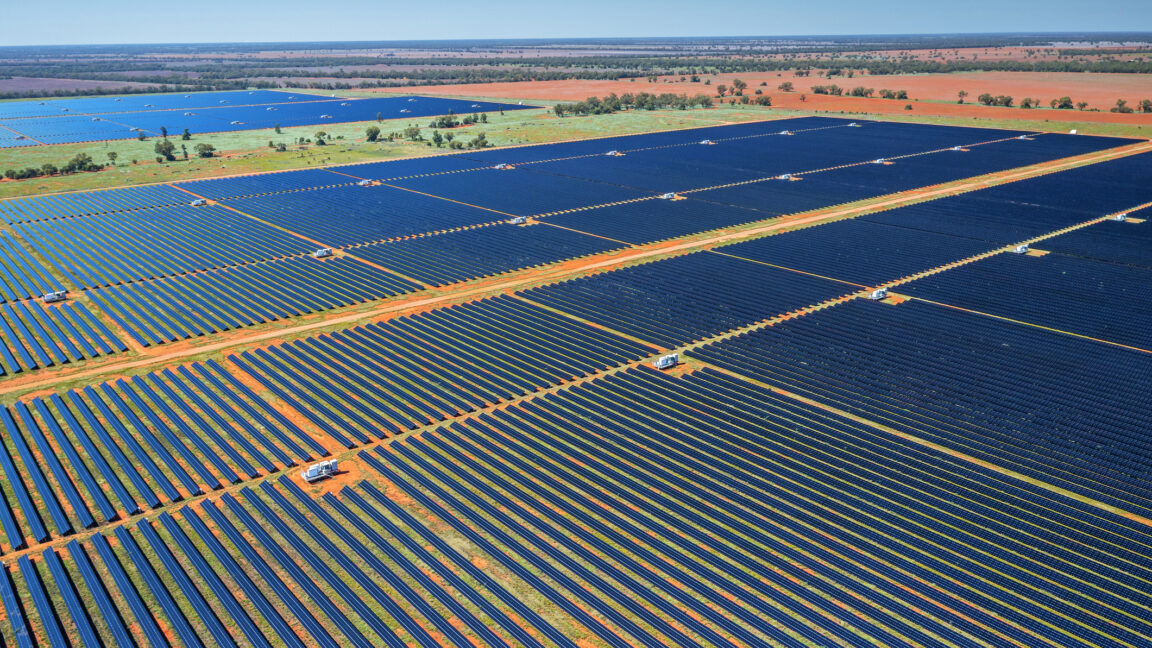
Solar’s rise is no longer a side story in the global energy system
The International Energy Agency’s latest global review of 2025 energy trends makes a bold claim: the world has entered the “Age of Electricity.” At the center of that shift is solar, which the IEA says delivered the largest growth ever observed for any single energy source.
That is a remarkable threshold, and not merely because it flatters renewable advocates. It suggests the structure of global energy demand is changing in a way that is visible across electricity, transportation, and building systems at the same time. The change is still incomplete, but the balance of momentum is becoming harder to ignore.
Why the IEA thinks this is a turning point
The IEA report tracks the entire energy economy, not just power generation. That means it captures how electricity demand is being pulled upward by multiple transitions at once, including electric vehicles and the electrification of heating. According to the report, electricity demand grew at twice the rate of overall energy demand in 2025.
That divergence is the key to the “Age of Electricity” framing. Modern economies are not simply consuming more energy in aggregate. They are shifting more of their activity onto the electric side of the ledger.
Solar is the standout driver of that change. The IEA says carbon-free energy growth outpaced rising demand, and solar was the dominant component of that increase. Battery storage also grew sharply, reinforcing the role of solar by helping absorb and shift intermittent generation.

What the numbers say about competing fuels
The report does not describe a world that has suddenly stopped using fossil fuels. Oil demand still rose in 2025, but only by 0.7%, less than half the average increase of the previous decade. Natural gas use rose 1%, with colder weather in populated regions pushing building-sector demand.
Those details matter because they show the transition is uneven rather than absolute. Fossil fuels remain deeply embedded, but their rate of growth is weakening as electricity gains share in more sectors and as renewables provide a larger fraction of new supply.
The IEA’s framing therefore avoids a simplistic narrative. This is not a declaration that electricity has won outright. It is a declaration that electricity is increasingly the central arena where energy demand, infrastructure investment, and decarbonization are now being decided.
EVs and heat pumps are changing the shape of demand
Electric vehicles were a major part of that picture. The IEA says EV demand rose by nearly 40%, with electric cars accounting for a quarter of all vehicle sales in 2025. That is already large enough to influence grid demand, even if the total displacement of oil remains at an early stage.
Heat pumps were a more mixed story. Sales were largely flat last year, though in several countries previous growth has already made heat pumps the majority of new heating-unit sales. That suggests electrification progress can continue to reshape the market even in years without fresh acceleration.
Taken together, these trends matter because they are cumulative. Every EV sold and every heat pump installed increases the baseline importance of electricity in future years, regardless of whether annual growth rates bounce around.

Why solar’s record growth matters beyond climate goals
Solar’s milestone is important for emissions, but its significance is broader than decarbonization alone. A source that can scale this quickly changes industrial strategy, grid planning, storage deployment, and the geopolitical logic of energy systems.
When a technology becomes the largest source of incremental growth, policy begins to shift from “Can it scale?” to “How do we integrate it well?” That means more focus on transmission, storage, grid flexibility, and market design. In other words, the bottleneck moves from generation cost toward system management.
The surge in battery storage matters here. Solar and storage together are increasingly behaving as a package rather than separate trends. That does not remove the need for other resources, but it does strengthen the argument that renewables can claim a larger operational role than critics once allowed.
The transition is accelerating, not settled
There are still obvious constraints. Weather affected gas demand. Oil consumption remains huge in absolute terms. Infrastructure bottlenecks and regional policy differences will continue to shape how fast electrification proceeds. And in 2026, the report notes, geopolitical disruption in the Middle East could accelerate some of these trends in unpredictable ways.
Even so, the IEA’s language captures a real shift in center of gravity. Electricity is increasingly where transport, heating, industrial adaptation, and clean generation intersect. Solar’s record growth is not just a stat about panels. It is evidence that the underlying architecture of the energy economy is being rewritten.
The most important implication may be psychological as much as technical. Energy debates for decades revolved around how difficult it would be for new systems to make a visible dent in global demand. The IEA is now saying that dent is no longer hypothetical. Solar has become the fastest-growing source the world has ever recorded, and electricity is becoming the main organizing logic of the energy transition.
That does not end the debate over pace, cost, or reliability. It does mean the debate is now taking place inside a system whose direction is far clearer than it was a few years ago.
This article is based on reporting by Ars Technica. Read the original article.

Originally published on arstechnica.com


