A Masterpiece That Defies Genre
Released in 2000, Ang Lee's Crouching Tiger, Hidden Dragon shattered expectations of what a martial arts film could be. Based on the fourth novel in Wang Dulu's Crane-Iron pentalogy, the Mandarin-language film earned 10 Academy Award nominations and won four, including Best Foreign Language Film, Best Cinematography, Best Art Direction, and Best Original Score. It became the highest-grossing foreign-language film in American history at the time.
The film stars Chow Yun-fat as the warrior Li Mu Bai and Michelle Yeoh as Yu Shu Lien, two fighters whose deep, unspoken love for each other is restrained by duty, honor, and grief. Their story unfolds against the backdrop of 19th-century Qing dynasty China, with Zhang Ziyi delivering a breakout performance as the rebellious young aristocrat Jen Yu.
Choreography as Emotional Language
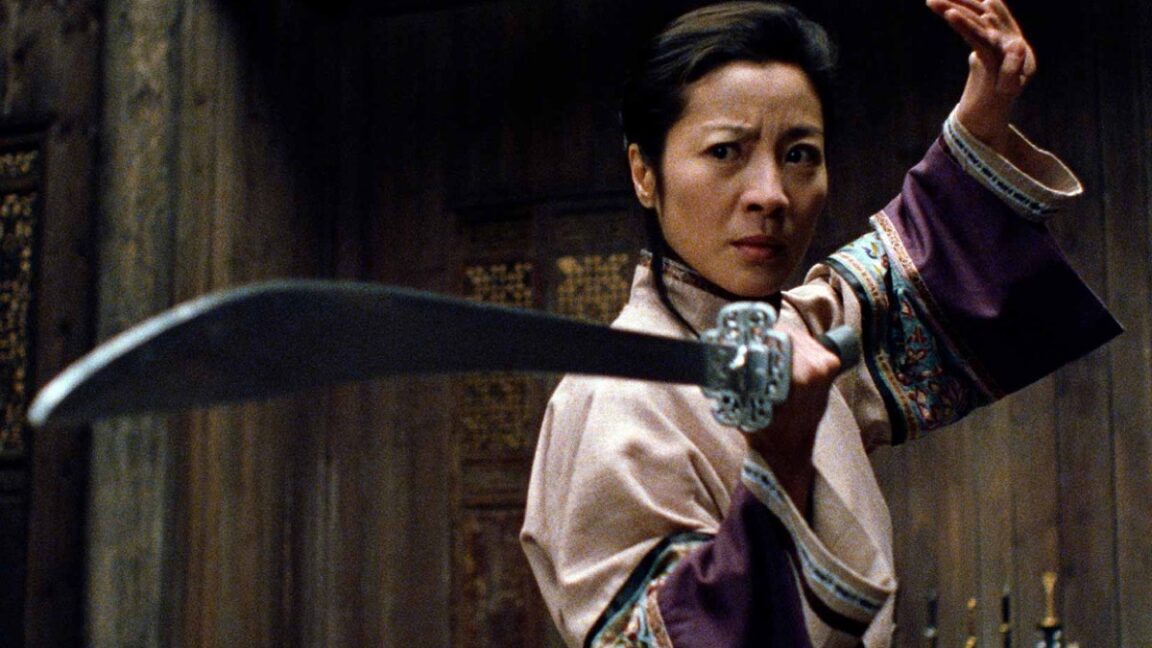
Yuen Woo-ping's wire-assisted fight choreography, including the iconic bamboo forest duel and the rooftop chase across Beijing, was revolutionary for Western audiences unfamiliar with the wuxia genre. But what elevates these sequences beyond spectacle is how Lee uses physical movement as emotional expression. Every sword clash and gravity-defying leap carries the weight of repressed desire, duty, and sacrifice.
Peter Pau's cinematography captures both the intimate and the epic, from the misty landscapes of Xinjiang to the claustrophobic interiors of Beijing's aristocratic compounds. Tan Dun's cello-driven score, performed by Yo-Yo Ma, provides the emotional throughline that binds the film's parallel love stories together.

Two Love Stories, One Tragedy
The film weaves two romances in parallel. Li Mu Bai and Yu Shu Lien represent love restrained by convention, their feelings acknowledged only in the film's devastating final moments. Jen Yu and the desert bandit Lo embody passionate, reckless love that defies social boundaries but cannot escape consequences. Both stories end in sacrifice, making the film a meditation on what is lost when love goes unexpressed.
An Enduring Valentine's Day Classic
Twenty-six years after its release, Crouching Tiger, Hidden Dragon remains a film that rewards revisiting. Its fusion of breathtaking action, visual poetry, and emotional depth offers something rare: a love story that feels genuinely earned and genuinely heartbreaking. For those seeking Valentine's Day viewing beyond the conventional romantic comedy, Ang Lee's masterpiece delivers.
This article is based on reporting by Ars Technica. Read the original article.

Originally published on arstechnica.com


