Apple has reportedly laid off more than 200 employees from its Vision Pro and Siri software teams, marking a significant internal restructuring as the company turns its attention toward smart glasses and next-generation AI technologies. The news, first reported by Engadget, underscores the evolving priorities at one of the world's most influential tech companies.
The Reported Layoffs: Scope and Impact
While Apple has not issued an official statement, the report indicates that the job cuts are focused on two critical areas: the software teams responsible for the Vision Pro spatial computing headset and the Siri virtual assistant. More than 200 roles have been affected, according to the report. These layoffs likely reflect a reallocation of talent and resources rather than a simple downsizing; Apple is known for shifting engineers and designers between projects to align with its long-term roadmap.
The affected employees reportedly worked on a range of software projects, from the visionOS operating system to Siri's underlying framework. For a company that rarely conducts mass layoffs, the scale of this cut is notable. Apple has historically been cautious about workforce reductions, often preferring to reassign staff or rely on attrition. The decision to let go of over 200 people suggests a decisive shift in strategy.
Vision Pro: A Product Struggling for Traction?
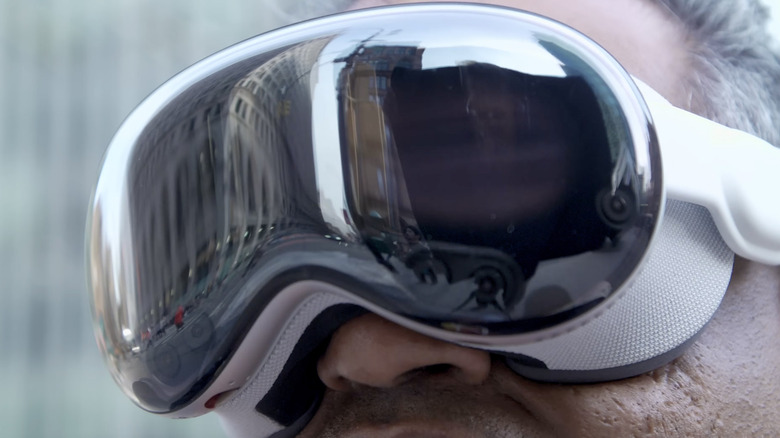
The Vision Pro, Apple's first spatial computing headset, launched to considerable fanfare and a $3,499 price tag. While it was hailed as a technical tour de force, its high cost and relatively niche use case have reportedly limited its appeal. The layoffs within the Vision Pro software team suggest that Apple may be scaling back its immediate commitment to the platform, or at least refining its approach to the hardware-software ecosystem.
This is not to say that Apple is abandoning the Vision Pro entirely. The company has a pattern of iterating on first-generation products, eventually delivering more polished and affordable versions. However, the shift toward smart glasses could be a strategic pivot away from a headset form factor toward a more wearable, everyday accessory. Smart glasses promise the ability to overlay digital information onto the physical world without the immersive bulk of a VR headset, and they have long been rumored to be in development at Apple.
The Siri Team and the AI Imperative
Siri, Apple's voice assistant, has faced mounting criticism in recent years for lagging behind competitors like Amazon's Alexa, Google Assistant, and, most notably, the generative AI chatbots that have taken the tech world by storm. The reported layoffs in the Siri software team may be a sign that Apple is reorganizing its approach to AI. Instead of expanding the existing Siri team, the company might be looking to build new systems from the ground up or integrate more advanced large language models (LLMs) into its ecosystem.
The mention of "next-gen AI tech" in the report is a broad but clear signal. Apple has been rumored to be working on its own generative AI models, and the company has already integrated some AI features into its operating systems. The restructuring of the Siri team could be an attempt to consolidate AI efforts under a new leadership or to free up resources for more ambitious projects, such as an on-device LLM that prioritizes privacy and efficiency.
Smart Glasses: The New Frontier
Apple's known interest in smart glasses goes back years, with multiple patents and acquisitions in the field. The shift in focus toward smart glasses aligns with the broader industry trend. Companies like Meta have already made strides with the Ray-Ban Stories and the next-generation Quest devices, while startups like Xreal are pushing the boundaries of what wearable displays can do.
For Apple, smart glasses offer a unique opportunity to bridge the gap between the iPhone and the physical world. A pair of lightweight glasses could deliver notifications, navigation, and camera features directly to the user's field of view, all without requiring the bulk of the Vision Pro. The challenge, however, lies in balancing functionality, battery life, and aesthetics. Apple is known for its design prowess, and smart glasses could be a natural fit for its product lineup.
The layoffs in the Vision Pro and Siri teams may be an indication that Apple is redeploying engineers with expertise in sensor fusion, computer vision, and natural language processing to work on smart glasses and next-generation AI. The synergy between these fields is obvious: a smart glasses product would rely heavily on advanced AI to understand and interact with the environment, and Siri could become the primary interface for such a device.
Implications for Employees and the Industry
The job cuts will undoubtedly have a human cost, and affected employees will need support during this transitional period. Apple has not publicly commented on the layoffs, and details about severance packages or outplacement services remain unclear. However, the tech industry is no stranger to restructuring, and Apple's decision may be seen as a rational move to stay competitive in a rapidly changing market.
For the industry, the news is a bellwether. Apple's strategic priorities often set the tone for the entire tech sector. If Apple is scaling back its immediate Vision Pro ambitions and pivoting to smart glasses, we may see other companies follow suit. Likewise, the focus on "next-gen AI tech" is a reminder that the AI race is far from over, and even the creators of Siri are not resting on their laurels.

The Road Ahead: What to Watch For
As Apple recalibrates its software teams, watch for announcements about new product categories. The company's annual Worldwide Developers Conference (WWDC) has traditionally been the stage for major software and AI updates. It is likely that Apple will reveal more about its smart glasses plans in the coming months, along with significant updates to its AI strategies.
Investors and consumers will also be watching to see how the Vision Pro is supported going forward. A reduced team might mean slower feature updates, but Apple could also be planning a more affordable version or a successor that learns from the original's missteps. In the meantime, those who rely on Siri can expect changes in how the assistant is powered, possibly with a more conversational and context-aware experience.
The reported layoffs are a reminder that even the biggest tech companies must adapt to survive. Apple's willingness to make difficult decisions in the face of changing technology is a sign that it is committed to remaining at the forefront of innovation. As the company shifts its focus to smart glasses and next-gen AI, the coming years are likely to be some of the most exciting in its history.
This article is based on reporting by Engadget. Read the original article.
Originally published on engadget.com