A Stage Built for the Camera as Much as the Crowd
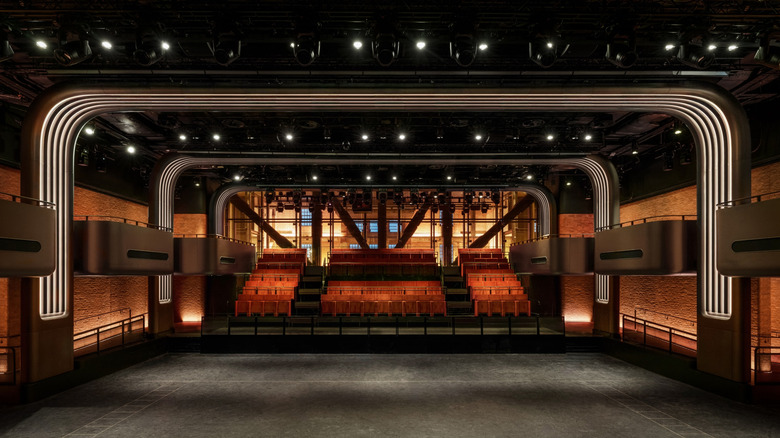
Apple has opened Apple Music Hall, a dedicated concert venue in London, and the framing surrounding it is unusually specific for a company that is not, traditionally, in the business of operating rooms with a stage at one end. As Engadget puts it, the venue looks tailor-made for Apple Music live concerts — a space whose purpose is to serve the company's own streaming and recording ambitions rather than to function as just another stop on a touring circuit.
Two capabilities define the project as it has been described: spatial audio and multi-camera video recording. Taken together, those are not the specifications of a nightclub. They are the specifications of a capture facility — a room where the acoustics, the microphone plan and the camera positions are decided in advance so that every performance that happens inside it can be turned into a finished product with minimal friction.
That distinction matters. Most live recordings are compromises. A band plays a venue built for sightlines and bar revenue, and a crew then tries to wrestle a usable mix and a watchable edit out of a room that was never designed for either. A purpose-built hall inverts that logic: the performance is the raw material, and the room is the apparatus that shapes it.
Spatial Audio and the Case for a Purpose-Built Room
Of the two headline capabilities, spatial audio is the one with the longest runway inside Apple's ecosystem. The company has spent years pushing immersive, object-based mixes into its music service and pairing them with its earbuds, speakers and headset hardware. Live music is the format's natural frontier, because live performance is where three-dimensional sound is not a gimmick but the default experience — audiences in a room hear reflections, depth and direction without thinking about it.
Reproducing that feeling through headphones or a speaker array is hard under the best circumstances. It is considerably harder when the source material is a stereo board feed captured in a room with unpredictable acoustics. A dedicated venue changes the problem: engineers can plan microphone placement and mix positions knowing the room's behaviour stays constant from show to show, and knowing the resulting multitrack will be handed to an immersive mixing stage rather than a stereo one.
Why the Format Needs Its Own Architecture
Immersive audio has an adoption problem that is partly technical and partly editorial. Listeners need convincing that the extra channels are worth the extra attention, and the content that convinces them tends to be exactly the kind of performance a venue like this is designed to host — intimate enough to hear the room, arranged well enough that individual instruments occupy distinct places in space. If Apple Music Hall succeeds at anything, it will be at manufacturing that convincing material at a steady rate.

Multi-Camera Video Turns Performance Into Programming
The second capability, multi-cam video recording, is arguably the more commercially interesting one. A venue wired for multiple simultaneous camera angles is not just recording a concert; it is generating an editable asset. Multiple feeds allow a post-production team to choose framing after the fact — close on a performer's hands, wide on the audience, a locked-off angle on a guest who walks out unannounced.
That flexibility changes the economics of live content. A single-camera shoot has to get the shot in real time. A multi-camera shoot can be assembled, re-cut, shortened, reformatted vertically or horizontally, and repurposed across a streaming service, a social feed and a promotional campaign from one night's work.
- One performance can yield a long-form concert film, short clips and promotional material.
- Editing decisions can be deferred until the creative team knows which moments actually landed.
- Consistent camera positions across shows create a repeatable visual language for the venue's output.
- Immersive audio mixes and multi-angle video can be packaged together as a single premium product.
London as a Deliberate Choice
Locating the hall in London is a decision worth noting. The city is one of the densest live-music markets in the world, with a deep pool of session players, engineers, directors and post-production houses within easy reach of a central stage. For a company that wants to record frequently rather than occasionally, that density is an operational advantage: crews can be assembled, talent can be booked, and finished material can move through post-production without long-distance logistics.
London also carries cultural weight that a venue in a less storied market would not. A room in the city that gave the world so much of the modern popular canon inherits some of that association, and Apple gains a stage that artists may treat as a credible destination rather than a corporate side project.

The Vertical Integration Logic
Seen from a business perspective, Apple Music Hall is a vertical integration play. Apple already owns the distribution layer — a music service, a hardware ecosystem and the software that ties them together. What it has historically rented rather than owned is the moment of capture. Building a venue means the company controls the acoustics, the camera plan, the multitrack files and the release schedule, and it removes the licensing friction that comes with filming in someone else's building.
From Stage to Device
Control at the point of capture also tightens the link between content and hardware. A performance mixed specifically for spatial audio gives listeners a reason to use compatible earbuds, speakers or headsets, and it gives Apple a demonstration of what its own format can do when nothing in the chain is compromised. That is a marketing argument as much as an audio-engineering one.
What Artists Gain, and What They Give Up
For performers, the pitch is straightforward: a well-equipped room, a professional capture, and a distribution channel with global reach. The trade-off is that a venue owned by a platform is not a neutral space. Terms, exclusivity, editorial direction and the question of who owns the resulting recording all become part of the negotiation rather than an afterthought.
Smaller and mid-sized acts stand to benefit most from the production quality on offer, but they also have the least leverage when discussing how their performance gets used. That imbalance is likely to be the most contested aspect of the project as it matures.

What Remains Unanswered
Plenty of practical detail is not part of the material available here. Capacity, opening schedules, ticketing, the balance between public shows and invitation-only sessions, and whether independent promoters will have access to the room are all open questions that will determine whether Apple Music Hall functions as a genuine venue or primarily as a private studio with seats.
There is also the question of cadence. A capture facility is only as valuable as the volume of material flowing through it; a handful of marquee events a year would make the investment look like a showcase, while a steady weekly schedule would make it a genuine production engine.
The Bottom Line
Apple Music Hall is best understood not as Apple opening a concert hall but as Apple building a factory for live content — one where spatial audio and multi-camera video are the two products on the line. The venue gives the company something it has never had: a stage it controls completely, feeding formats it is trying to establish. Whether audiences embrace the results depends less on the room than on the performances booked into it, but the infrastructure question is now answered.
This article is based on reporting by Engadget. Read the original article.
Originally published on engadget.com