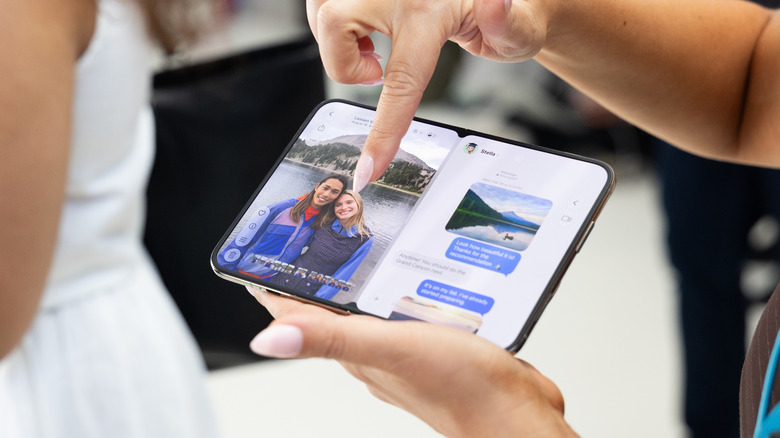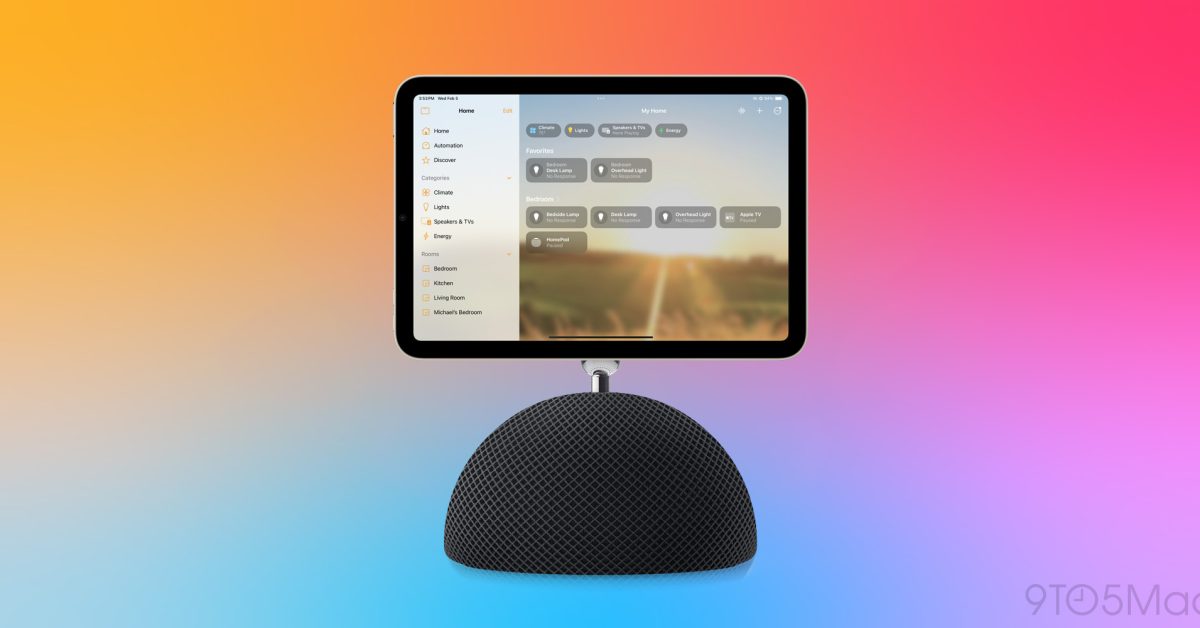
Newly surfaced evidence suggests that Apple's long-rumored smart home hub — commonly referred to as the HomePad — may share part of its setup process with the company's planned foldable iPhone, which has appeared in leaked code references under the name iPhone Duo. The same leaker credited with previously finding iPhone Duo features inside Apple's software has reportedly now done the equivalent for the HomePad, pointing to at least one common element in how the two devices are brought online.
The specifics are thin, and Apple has not commented on any unreleased hardware. Even so, the claim lands alongside a separate Bloomberg report — credited to Ben Lovejoy and dated September 30, 2026 — stating that the HomePad smart home hub is launching on October 13 with a design inspired by the iMac G4. Read together, the two threads describe a product that appears to be close to release, close enough that code-level traces of its onboarding are starting to leak out.
What the Leak Actually Claims About HomePad Setup
According to the report, the HomePad's setup process includes a feature that also shows up on the foldable iPhone. The leak does not spell out what that shared element does, and the framing suggests it is a step inside the onboarding flow rather than a piece of hardware. That distinction matters, because setup is where a platform decides how a device joins an account, how it discovers companion hardware, and how much configuration happens automatically rather than through manual prompts.
The leaker's method is by now a familiar route for early Apple details: combing the company's own software for strings, references, and other traces tied to unreleased products, then reporting what those fragments imply. What stands out here is the pairing. The same approach that previously produced references to the iPhone Duo has now produced references to the HomePad, which hints that the two products are being developed on a similar timeline — or at minimum that their software is being written with overlapping assumptions about how users get started.
The report also notes a detail that is easy to overlook: this is not the first time the leaker's iPhone Duo findings have drawn attention. That earlier work established a track record that gives the HomePad claim more weight than a standalone rumor would carry, though it does not make the claim conclusive.

Bloomberg's Reported Launch Date and iMac G4 Design Cue
The Bloomberg report adds the firmest anchor point in the story so far. It places the HomePad launch on October 13 and describes the device's design as inspired by the iMac G4, the early-2000s all-in-one whose silhouette — a domed base carrying an adjustable flat display — became one of the most recognizable shapes in Apple's history. A smart home hub borrowing from that reference suggests a product meant to sit in a living space rather than hide in a server closet, with industrial design treated as part of the pitch.
If the October 13 timing holds, the HomePad would arrive at a moment when the smart home category is crowded but still unsettled. Competing platforms have spent years trying to make the hub the natural center of a connected household, with mixed results. A launch in early October would also place the device ahead of the traditional holiday shopping season, giving Apple a window to establish the product before the heaviest buying period of the year.
Why the Setup Process Is Worth Watching
Onboarding tends to be undervalued in coverage of unreleased hardware, but it is often where a smart home product succeeds or fails. A hub has to be introduced to a household, connected to the network, associated with the owner's account, and then linked to whatever lights, locks, sensors, and speakers already exist in the home. Every one of those steps is a place where a user can stall.
That is why a leak about setup — rather than about chips or screens — is worth attention. If the HomePad and the foldable iPhone genuinely share an onboarding mechanism, the most likely explanations involve the mechanics of pairing and account handoff rather than any shared component. Apple has a history of reusing setup conventions across product lines, so a common step between two upcoming devices would not be unusual, but it would tell us something about how the company expects both products to fit into an existing device ecosystem.
It is also possible the shared behavior is narrower than the leak implies. Code references can point to a feature that ships partially built, ships later, or never ships at all. Leaked strings describe intent, not a final product.
Questions the Leak Leaves Open
- What the shared feature does. The report identifies a common setup element without describing its function, so its practical role for owners of either device remains unknown.
- Whether the foldable iPhone timing is real. Code traces for the iPhone Duo indicate development activity, not a confirmed release window, and the two products may not arrive together.
- How closely the HomePad follows the reported iMac G4 inspiration. Bloomberg's description concerns design direction; the degree to which it shows up in the finished product is unverified.
- What happens on October 13. The date comes from a single reported source, and launch dates for unreleased Apple hardware have slipped before.
What to Watch Next
Two signals are worth tracking in the days ahead. The first is whether additional code references appear that describe the setup feature in more detail — more strings usually mean a more complete picture, and often a product closer to shipping. The second is whether the October 13 timing is corroborated by other outlets or by Apple itself, since a confirmed event would shift the HomePad from rumor to scheduled product.
For now, the story rests on two distinct pieces of evidence: a leaker's reading of Apple's software, and a reported launch date with a design cue. Neither alone would settle much. Together, they sketch an outline of a smart home hub that Apple appears to be preparing to introduce soon, and a foldable phone that may share a small but practical piece of the journey from box to first use.
The takeaway is not a specification sheet, because none has been credibly reported. It is that Apple's next smart home device seems to be entering the phase where details stop being theoretical and start appearing in shipping code — the stage that typically precedes an announcement. Whether the HomePad and the iPhone Duo end up sharing more than a setup step is a question only Apple's roadmap can answer, and that roadmap has not yet been made public.
This article is based on reporting by 9to5Mac. Read the original article.

Originally published on 9to5mac.com