A direct exchange resumes after weeks of uneasy calm
Iran launched a new barrage of missiles at Israel on June 7, according to statements cited by both Israeli and Iranian outlets, abruptly raising the risk that the ceasefire reached on April 8 could unravel. The strike came hours after Israel said it had attacked what it described as a Hezbollah command center in Beirut’s Dahieh area.
The immediate military facts were still developing at publication time, but the political meaning was already clear. A ceasefire that had paused direct Iranian missile fire toward Israel is now under visible strain, and officials on both sides are signaling the possibility of further escalation.
What has been confirmed so far
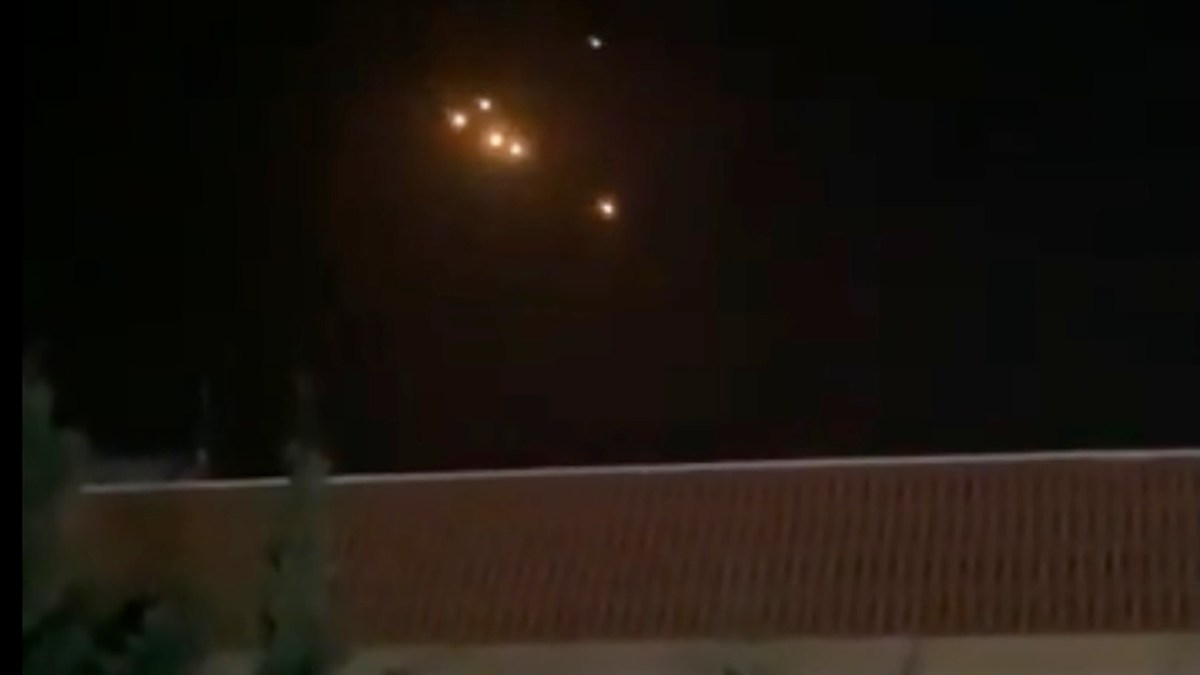
The Israeli Defense Forces said it had identified missiles launched from Iran toward Israeli territory and that defensive systems were operating to intercept the threat. It also said sirens sounded in multiple areas of the country. Iranian officials, according to the source report, acknowledged the launch.
The exchange is notable because it is described as the first such Iranian strike since the April 8 ceasefire. That timing matters. Ceasefires often erode first at their edges, through retaliatory logic and signaling strikes that both sides present as limited or compelled. Once that pattern resumes, the practical distinction between deterrence messaging and open conflict can narrow quickly.
Video circulating on social media appeared to show Israeli air defenses intercepting inbound missiles, as well as footage purporting to show launches from Iran. The source report also cited an Israeli media account quoting a senior Israeli official as saying there would be a forceful response. At the time of that report, there were no initial reports of injuries or damage tied to the intercepted missiles.
The Beirut trigger
According to the report, Iranian officials said the missile barrage was a response to Israel’s bombing of Beirut earlier the same day. Israel had said it struck a Hezbollah command center in Dahieh, a district long associated with the group.
That sequence points to the broader regional problem facing the ceasefire. Even if the truce had reduced direct Iran-Israel fire, it did not remove flashpoints involving Hezbollah, Lebanon, or other theaters where actions by one actor can trigger retaliation by another. In that sense, the latest missile attack is not only a bilateral event between Tehran and Jerusalem. It also reflects how fragile de-escalation remains when allied forces and proxy-linked fronts remain active.
Why the ceasefire now looks more fragile
The significance of the barrage is less about the number of missiles publicly described in early reporting and more about the fact of renewed direct fire. Ceasefires depend not only on formal terms but also on restraint, communication, and shared assumptions about what does or does not justify retaliation. Once one side argues that a strike elsewhere has crossed a line, the space for those assumptions collapses.
The report frames the core question directly: with Israel under direct attack from Iran, how much longer the ceasefire can hold is now uncertain. That uncertainty is strategic as well as diplomatic. Israeli air defenses may limit immediate battlefield damage, but interception alone does not restore deterrence or guarantee that leaders will choose containment over counterstrike.
For military planners, the renewed exchange revives a familiar risk. A missile barrage can be militarily limited yet politically expansive. If it prompts a visible Israeli response inside Iran, Lebanon, or elsewhere, both governments may find themselves pulled into a faster escalation cycle than either initially intended.
What to watch next
The next signals will likely come from three places. First is the scale and character of any Israeli response. Officials have already suggested that one is likely, but the form of that response will shape whether this becomes a brief exchange or the start of a larger campaign. Second is whether Iran portrays its strike as a one-off retaliation or part of a broader sequence. Third is whether additional regional actors become involved, particularly through Lebanon.
Air defense performance will also matter. Interceptions can reduce casualties and infrastructure loss, but repeated defensive operations impose their own strain and can alter political calculations over time. When both offensive launches and defensive responses become routine, leaders can begin treating instability as manageable right up until it is not.
A crisis with little buffer left
The latest barrage does not by itself prove that the ceasefire is dead. But it does show that the truce is no longer functioning as a reliable barrier against direct state-to-state fire. That is a meaningful shift. The April 8 ceasefire had created at least a temporary pause in this specific form of confrontation. June 7 broke that pattern.
For now, the most defensible conclusion is also the narrowest one. Iran fired missiles at Israel, Israel activated its defensive systems, and both the military and political thresholds around the ceasefire have become less stable. Whether the moment ends as a contained reprisal or broadens into a larger regional confrontation will depend on decisions made in the next phase, not the last one.
This article is based on reporting by twz.com. Read the original article.

Originally published on twz.com