A microscope vendor is targeting one of chip analysis’s hardest workflows
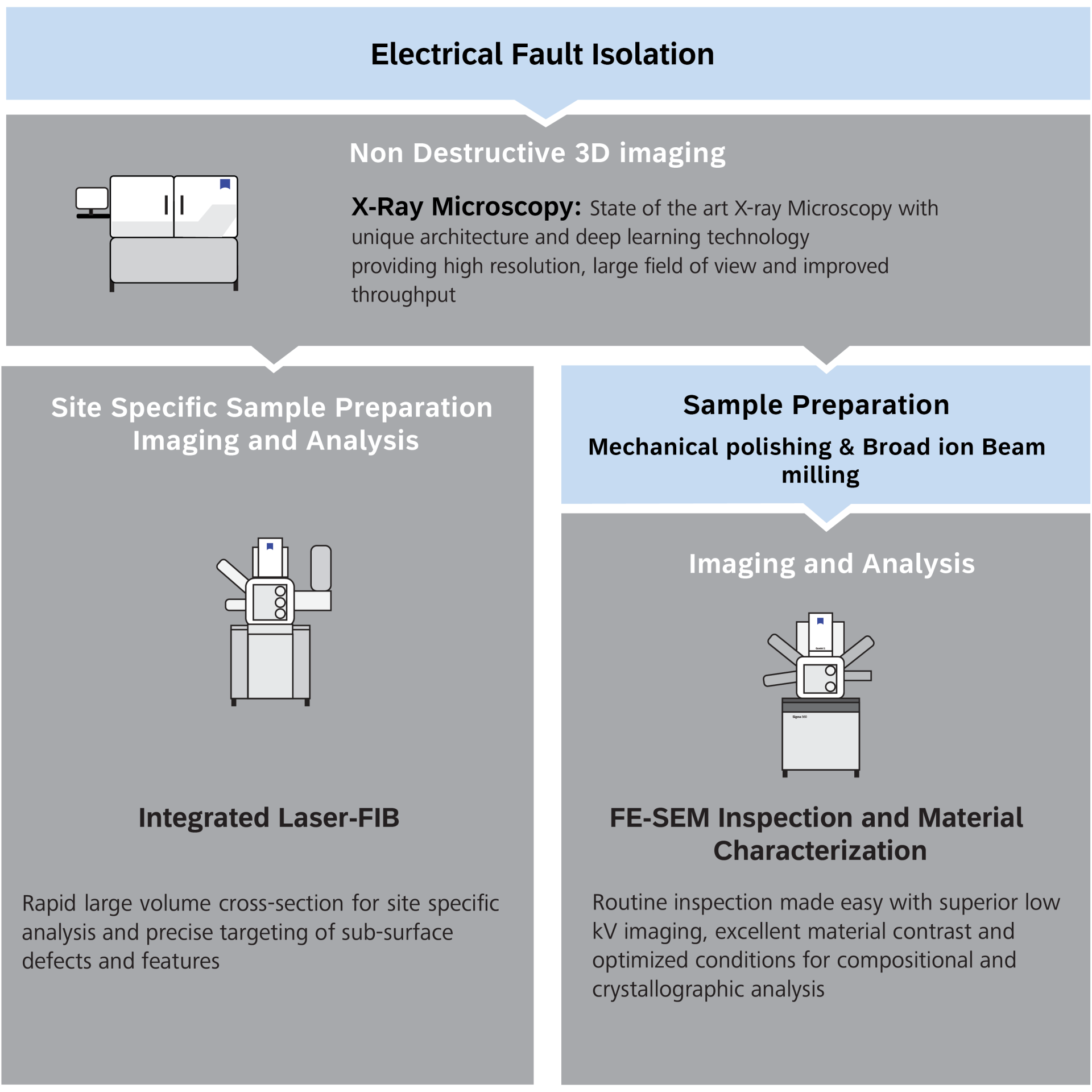
Zeiss is using an upcoming June 10 virtual seminar to showcase what it says is a more precise and lower-damage workflow for semiconductor failure analysis built around its Crossbeam 750 FIB-SEM platform. The event listing supplied here centers on demanding use cases such as TEM lamella preparation, tomography, advanced nanofabrication, and lift-out workflows for atom probe tomography.
Although the source is promotional rather than an independent technical review, it still points to a meaningful trend in semiconductor tooling: as devices continue to scale, the challenge is no longer only imaging smaller structures. It is also preparing samples with less damage, shorter turnaround times, and enough confidence that analysts can stop milling at the right moment.
What Zeiss says is new
The company’s pitch focuses on SEM-guided low-kV FIB finishing and what it calls “see while you mill” capability. According to the event description, the Crossbeam 750 combines a new Gemini 4 SEM objective lens, a double deflector, and a next-generation scan generator intended to improve resolution, signal-to-noise ratio, and usable field of view while reducing acquisition times.
The workflow emphasis is as important as the hardware list. In advanced semiconductor failure analysis, poor endpoint visibility or excessive ion-beam damage can ruin a sample before it reaches downstream characterization. If users can get cleaner visual feedback during milling, they can make earlier stop decisions and reduce rework.
The value of cleaner feedback during milling
The seminar description highlights a mode called HDR Mill plus SEM, described as an interwoven scanning approach that suppresses FIB-generated background and provides immediate visual feedback even while adjusting the milling pattern live. The implied benefit is more confident endpointing without interrupting the process, along with surfaces better suited to metrology and subsequent analysis.
That is a targeted but important claim. In leading-edge failure analysis, small gains in sample quality and first-pass success can translate into faster root-cause diagnosis for yield teams and materials scientists. Any improvement that cuts rework or makes turnaround more predictable can matter in fabs where time-to-insight directly affects engineering cycles.
A sign of where semiconductor tools are heading
The broader significance is that analysis tools are increasingly being optimized around process confidence, not just raw instrument specification. As chip structures become more complex, the bottleneck often lies in whether engineers can prepare the right slice, in the right place, with the right surface condition, quickly enough to make the data useful.
Zeiss’s seminar framing reflects that market reality. Rather than selling only magnification or beam performance, it is selling a more reliable path from sample to insight. That includes shorter acquisition times, cleaner milling visibility, and lower damage at low accelerating voltages, at least as described by the company.
What to watch
Because the source is an event announcement, not a peer-reviewed benchmark or third-party evaluation, the claims should be read as vendor positioning. Still, the positioning is revealing. Semiconductor failure analysis is under pressure from shrinking geometries and rising process complexity, and toolmakers are competing on workflow integration as much as on optics or beam physics.
If the Crossbeam 750 performs as advertised, it would represent another step toward more deterministic, less damaging analysis workflows at the leading edge. Even at the level of a seminar preview, the message is clear: in advanced chip debugging, seeing better while milling may be just as important as milling finer.
This article is based on reporting by events.bizzabo.com. Read the original article.
Originally published on events.bizzabo.com