Introduction
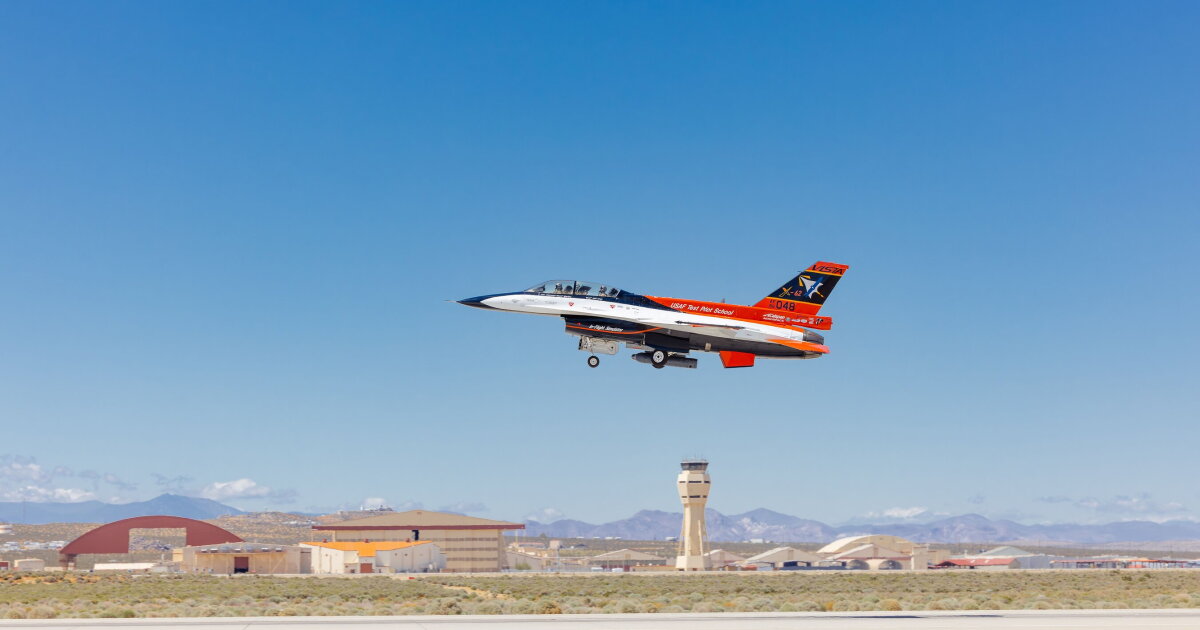
In a significant leap for autonomous aviation, the U.S. Air Force's X-62A VISTA test aircraft has successfully completed the first fully autonomous air intercept missions using live sensor data. The flights, conducted over Edwards Air Force Base in California, mark a departure from previous tests that relied on simulated sensor feeds. This achievement brings the reality of AI-piloted combat aircraft one step closer, with implications for the future of aerial warfare and human-machine teaming.
The X-62A VISTA: A Testbed for Autonomy
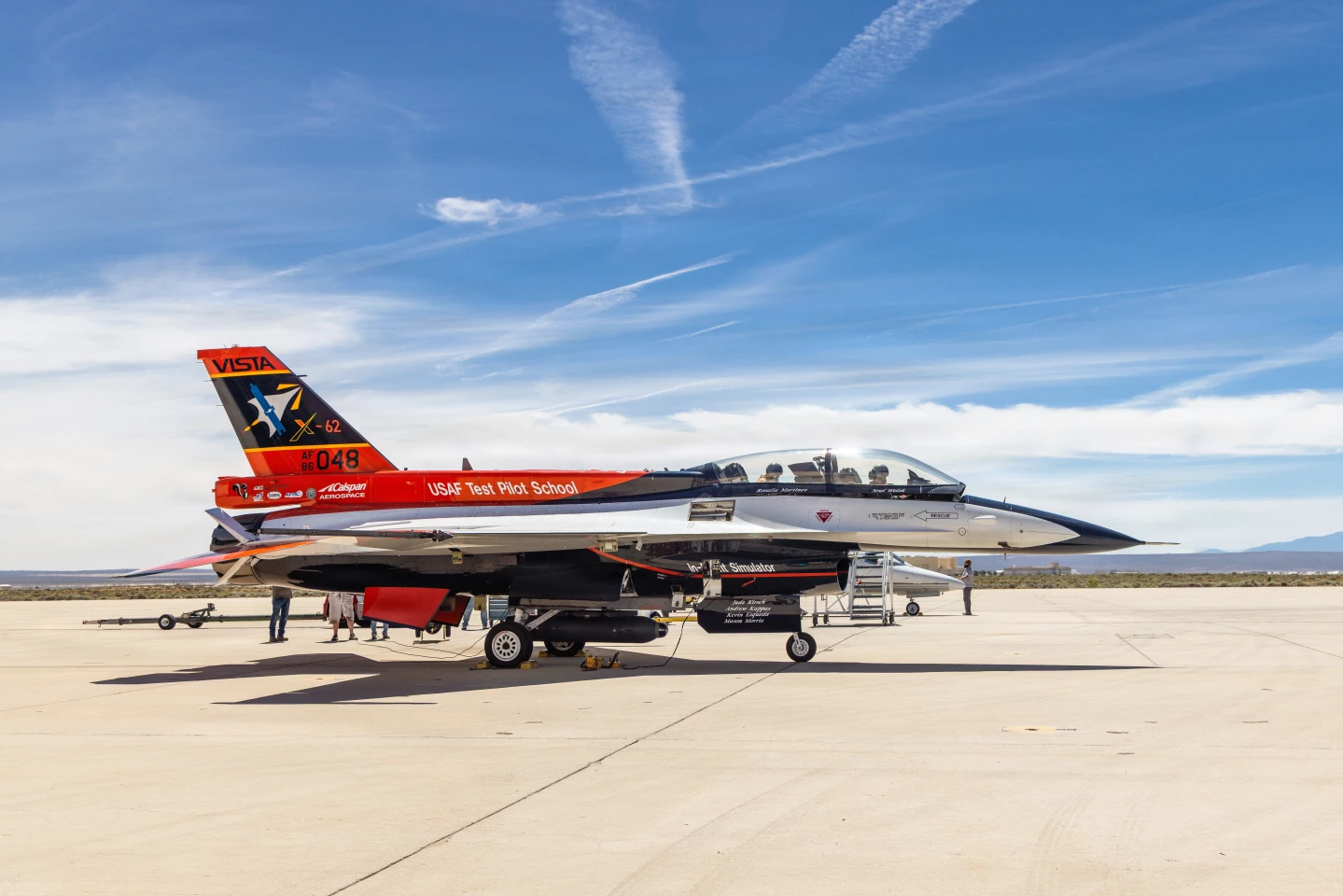
The X-62A, a modified F-16D, serves as the U.S. Air Force's primary platform for testing advanced autonomy and artificial intelligence in flight. Known as VISTA (Variable In-flight Simulator Test Aircraft), it has been instrumental in developing and validating technologies that will shape next-generation combat aircraft. Its unique capabilities allow it to mimic the flight characteristics of various aircraft, making it an ideal testbed for autonomous systems that must adapt to different performance envelopes.
The recent HAVE HEAT test series, conducted by the Air Force Test Pilot School and the Air Force Research Laboratory, in collaboration with Lockheed Martin's Skunk Works, pushed the boundaries of what the X-62A could do. Over eight flights, the aircraft executed 27 tactical intercepts against a live T-38 Talon acting as a threat aircraft. Crucially, these intercepts were driven by the AI's interpretation of real-time data from an optical sensor in the Legion Pod's Infrared Search and Track (IRST) system, rather than pre-programmed or simulated inputs.

Why Live Sensor Data Matters
To understand the significance of this milestone, it's essential to appreciate the challenges of using live sensor data in autonomous flight. Real-world sensors are noisy, ambiguous, and often provide incomplete information. A target might be obscured by clouds, confused with other objects, or lost momentarily due to atmospheric interference. In contrast, simulated data is clean and predictable, allowing engineers to focus on specific aspects of the autonomous system without the added complexity of imperfect inputs.
Previous autonomous flight tests often relied on digital simulations to simplify the problem. A target aircraft might exist only as a data file, and radar signals or ground station inputs could be generated artificially. This approach is standard in engineering tests, where isolating variables is crucial. However, it doesn't fully prepare an AI for the chaotic reality of combat, where sensor data is far from perfect.
By using live sensor data, the X-62A's AI had to contend with the same challenges a human pilot would face. It had to filter out noise, track a moving target, and make decisions based on incomplete information. The fact that it successfully completed 27 intercepts demonstrates that AI can handle the unpredictability of real-world sensors, a critical step toward deploying autonomous systems in operational scenarios.
How the Test Was Conducted
The HAVE HEAT series involved a carefully choreographed scenario. The X-62A, with a safety pilot aboard, was tasked with intercepting a T-38 Talon flying as a red air threat. The AI controlled the aircraft's flight path, using data from the Legion Pod's IRST sensor to detect and track the T-38. The IRST system provides passive detection, meaning it doesn't emit radar signals, making it stealthier and more realistic for certain combat situations.
Over the course of eight flights, the AI performed 27 intercepts, each involving a different set of circumstances. The safety pilot was present to take over if needed, but the AI operated the aircraft autonomously throughout the intercepts. This was not a simple follow-the-leader exercise; the AI had to maneuver the X-62A into a position where it could achieve a simulated kill, requiring complex calculations and rapid adjustments.
The fact that the tests used live data is a testament to the maturity of the AI algorithms. The system had to process the IRST data in real time, distinguish the target from background noise, and execute appropriate maneuvers. This is a far cry from earlier tests where the AI might have relied on a perfect digital representation of the target's location.

Implications for Future Combat Aircraft
This milestone has significant implications for the development of future combat aircraft. The U.S. Air Force is exploring concepts like the Collaborative Combat Aircraft (CCA), which would fly alongside manned fighters and perform missions such as reconnaissance, electronic warfare, and strike. These drones would need to operate autonomously in contested environments, where sensor data is often degraded and the enemy is actively trying to confuse or jam systems.
The ability to use live sensor data effectively is a prerequisite for such autonomy. If an AI cannot handle the noise and ambiguity of real-world sensors, it cannot be trusted to make combat decisions. The HAVE HEAT tests demonstrate that AI can indeed rise to this challenge, at least in the realm of air-to-air intercepts.
Moreover, the success of the X-62A tests could accelerate the integration of AI into manned aircraft as well. AI could assist human pilots by managing sensor fusion, suggesting maneuvers, or even taking over during high-stress situations. This human-machine teaming is seen as a key to maintaining air superiority in future conflicts.
Challenges and Next Steps
Despite the success, there are still hurdles to overcome. The HAVE HEAT tests were conducted in a controlled environment with a cooperative target. Real combat would involve non-cooperative targets that are actively trying to evade, and the sensor environment would be even more chaotic. The AI would also need to handle multiple threats simultaneously, as well as integrate data from a wider array of sensors, including radar, electronic support measures, and data links.
Additionally, the question of trust and reliability remains. Autonomous systems must be proven to be at least as safe and effective as human pilots, and they must be able to operate within the rules of engagement and ethical guidelines. The U.S. Department of Defense has been developing principles for the ethical use of AI in warfare, and any deployment of autonomous combat aircraft will have to adhere to these.
The X-62A team is likely to continue testing, expanding the envelope to include more complex scenarios, such as beyond-visual-range engagements, evasive maneuvering by the target, and the use of multiple sensors. Each step will bring the technology closer to operational reality, but there is still a long way to go before autonomous aircraft are a common sight in the skies.

Conclusion
The X-62A's successful autonomous intercepts using live sensor data represent a major step forward in the field of autonomous aviation. By proving that AI can handle the messy, real-world data that comes from actual sensors, the U.S. Air Force has laid the groundwork for a new era of combat aircraft that can operate with varying levels of human oversight. While challenges remain, the HAVE HEAT test series has demonstrated that the technology is advancing rapidly, and the future of air combat may be more automated than ever before.
This article is based on reporting by New Atlas. Read the original article.
Originally published on newatlas.com