A DNA Computer That Runs Without a Constant Power Supply
Researchers at Maynooth University in Ireland have built what is being described as a world-first unpowered DNA computer, and the system has reportedly set a speed record. The work, led by computer scientist Damien Woods, points to a different way of thinking about computation at a moment when conventional silicon machines are consuming ever more electricity.
The headline result matters because it challenges a default assumption: that useful computing must involve transistors flipping on and off under a continuous electrical current. Instead, the Maynooth team turned to the chemistry of life, using DNA strands and their interactions as the basis for calculation. The approach is not meant to replace every laptop or data center tomorrow. It is a proof of principle that molecular systems can carry out computational tasks with far less ongoing power draw.
Why Computing's Energy Demand Is Drawing Attention
The urgency behind low-power alternatives is easy to see in the numbers. By 2050, as much as 20% of the electricity consumed by the US commercial sector is expected to be used for computing. Data centers alone are projected to double their electricity demand within the next few years. That growth puts pressure on grids, climate goals, and the economics of digital services.
The problem is not limited to the United States. Woods notes that 23% of Ireland's electricity already goes into computing and data storage. As more workloads move to the cloud and artificial intelligence expands, the energy burden could become even harder to manage. Efficiency improvements in chips have helped, but they have not erased the fundamental cost of moving electrons through vast networks of switches.
Woods argues that the industry has been limited by looking at only one kind of computer. Silicon machines dominate, but they are not the only possible model. The human brain, he points out, performs remarkable feats while drawing very little power. Nature has had billions of years to optimize such systems, which makes biological and chemical inspiration worth exploring.

Transistors Versus DNA Strands
Modern computers encode information as on and off states in transistors. Changing those states to perform even a simple calculation requires a small electrical charge. Individually the charge is tiny, but billions of transistors switching billions of times per second turn that tiny charge into a huge aggregate demand.
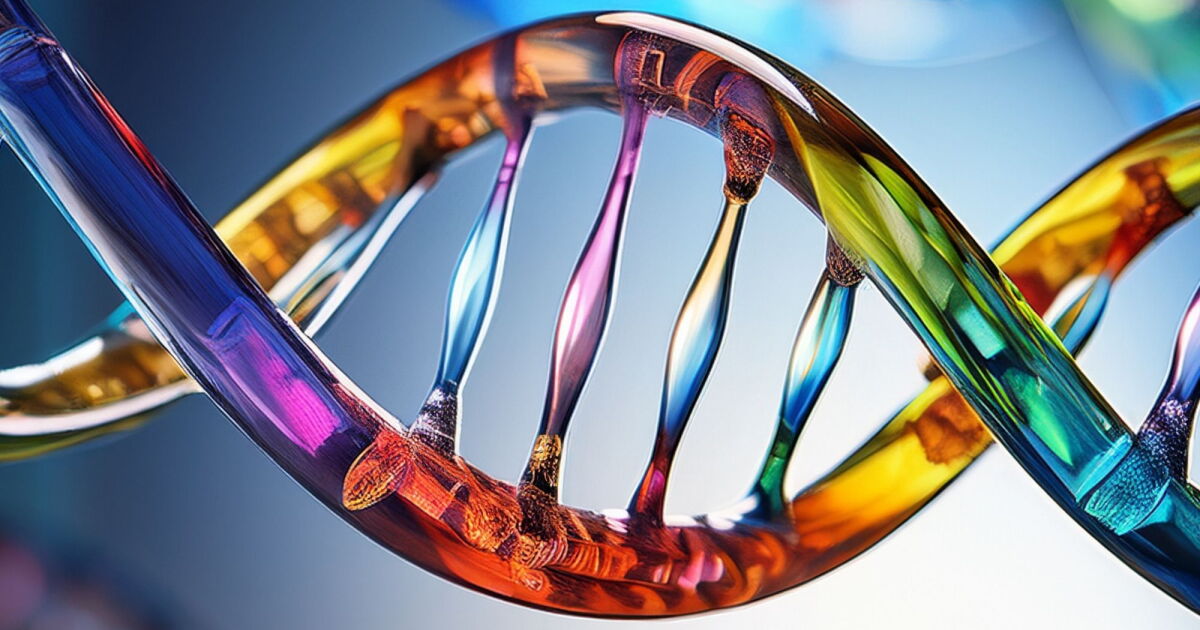
DNA offers a different information system. The molecule is built from four chemical units, often represented by the letters A, C, G, and T. Those units can store data, and their sequences can participate in algorithmic reactions. In DNA computing, calculation can emerge from competition between different sequences rather than from a transistor being switched by an external voltage.
This idea is not brand new. In the 1990s, University of Southern California computer scientist Leonard Adleman famously solved the traveling salesman problem using strings of nucleotides and biochemistry. Since then, researchers have developed many ways to program chemical recipes for computational tasks. The field has shown that molecules can, in principle, process information, but practical machines have remained difficult to build.
The Challenge of Making DNA Computing Practical
One persistent hurdle is making a DNA computer that is energetically favorable, stable, and reliable. Many molecular computing schemes require careful intervention, including tweaks and top-ups, to reach a final answer. That undermines the promise of low-power, autonomous operation. A system that needs constant babysitting is not much of a computer in the everyday sense.
Woods and his colleagues took a different route, one closer to the emerging science of DNA origami than to the older approach of simple strand competition. DNA origami uses a long nucleic acid scaffold combined with short DNA segments. When mixed in a warm saline solution and then cooled, the components settle into a low-energy configuration. In effect, the molecular pieces find their own arrangement, guided by thermodynamics rather than by a stream of electrical instructions.
This self-assembly process is central to the reported advance. If the computing happens as the mixture cools toward its lowest energy state, then the system may not need a continuous external power supply. The DNA computer can be described as unpowered in the sense that it does not require a constant electric current to drive each logical operation. It still relies on chemical and thermal conditions, but the energy strategy is fundamentally different from that of a silicon processor.
What the Speed Record Suggests
The claim of a speed record adds another dimension. DNA computing has sometimes been portrayed as slow, valuable for parallel search but not for fast calculations. A world-first unpowered system that also sets a speed record suggests that molecular computation can be more competitive than expected, at least for certain tasks and benchmarks.
That does not mean DNA computers will soon run spreadsheets, games, or large language models. The technology faces questions about stability, reliability, scalability, and integration with existing systems. A laboratory demonstration is not the same as a commercial product. Still, a record-setting result can shift how researchers think about the boundaries of the field.
Low Power, Not Zero Cost
It is important to be precise about the word unpowered. No computer can operate without energy in some form. The Maynooth system appears to avoid a constant supply of electricity, instead using the physics and chemistry of DNA hybridization and folding. In that sense, it is closer to a self-organizing material than to a conventional electronic device.
That distinction matters for sustainability. Data centers consume electricity for computation and for cooling. If some calculations could be performed through passive molecular assembly, the energy profile of computing could change. The source of energy might shift from grid electricity to chemical preparation and thermal cycling, which have their own costs. The net benefit would depend on the specific application and lifecycle.

Why Researchers Keep Returning to Biology
Biology is full of examples of efficient information processing. Cells respond to signals, copy genetic material, and regulate complex networks without a central processor or a wall socket. The brain is the most familiar example, but DNA itself is a storage and processing medium that has been refined over evolutionary time.
DNA computing researchers are trying to borrow some of that efficiency. The Maynooth team's use of DNA origami is one example of how biological structures can be repurposed for engineering goals. By designing scaffolds and short strands, scientists can program interactions that lead to a desired computational outcome.
- DNA can store information in its sequence of four chemical units.
- Calculations can arise from competitive binding rather than transistor switching.
- DNA origami uses a scaffold plus short strands to self-assemble into low-energy shapes.
- Unpowered operation means no constant electricity supply, not zero energy input.
- Practical challenges include stability, reliability, and avoiding manual top-ups.
The Road Ahead
The Maynooth result is a reminder that the future of computing may not be monolithic. Silicon will likely remain dominant for general-purpose processing, but molecular systems could find niches where low power, self-assembly, or massive parallelism matter. A world-first unpowered DNA computer with a speed record is a signal that the field is advancing.
Future work will need to show whether the approach can be scaled, whether it can be programmed reliably, and whether it can interface with conventional electronics. If those questions can be answered, DNA computing could move from a laboratory curiosity to a complementary technology. For now, the achievement stands as evidence that computation does not always have to come with a constant drain on the power grid.
This article is based on reporting by New Atlas. Read the original article.
Originally published on newatlas.com